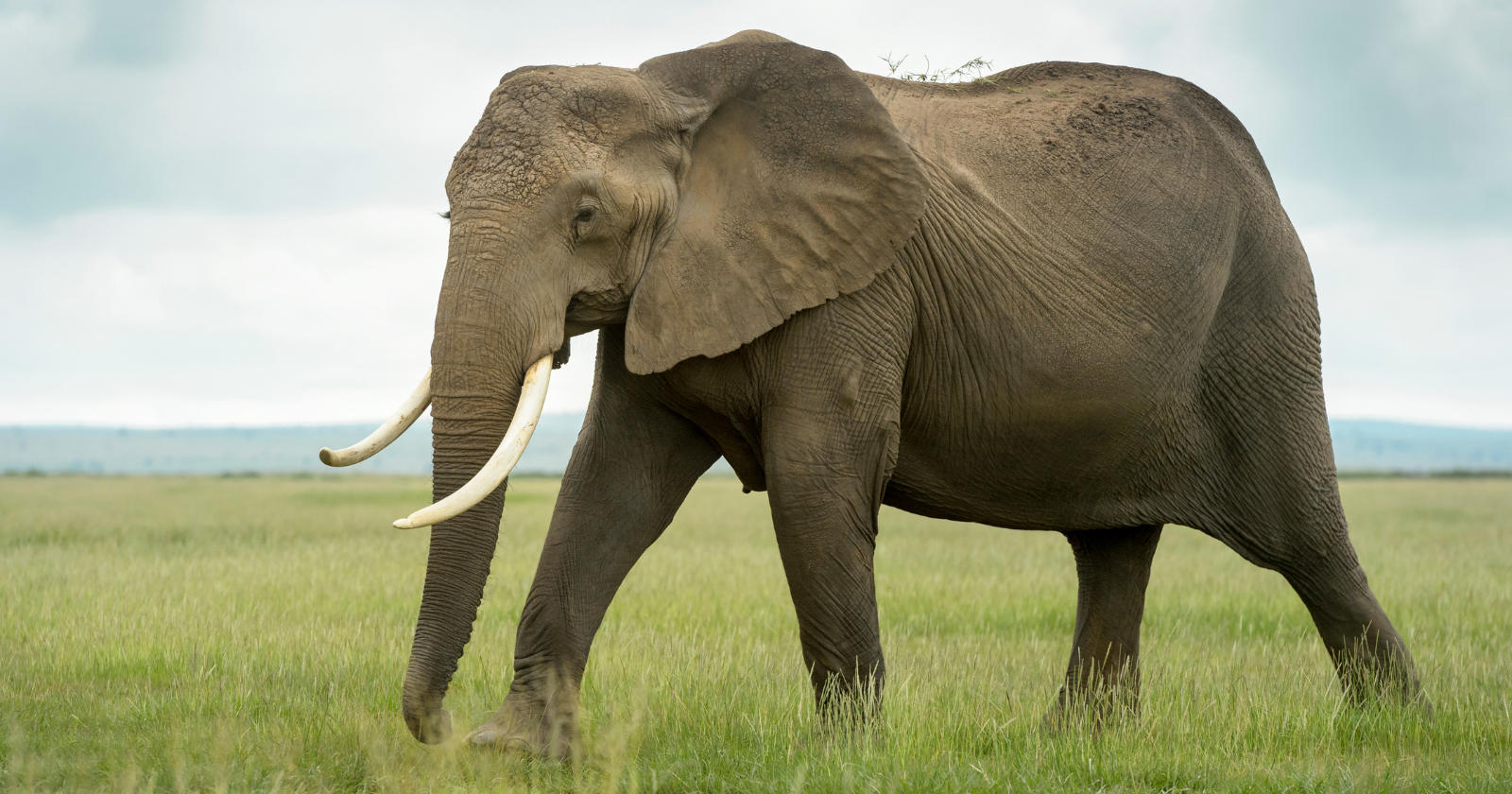
A hidden loudspeaker in Amboseli National Park says, in Maa, “Look, look over there, a group of elephants is coming.” The herd bunches immediately. Calves shuffle to the middle, adults turn outward, trunks lift to taste the air, and the whole family slides off into the grass. Play the same sentence in Kikamba and everyone keeps eating.
That gap is the finding of a 2014 playback experiment published in the Proceedings of the National Academy of Sciences, run by Karen McComb and Graeme Shannon of the University of Sussex with Katito Sayialel and Cynthia Moss of the Amboseli Trust for Elephants. Elephants in southern Kenya sort human voices by who is likely to hurt them.
Why it matters which human is talking
The Maasai are pastoralists. They share water and grazing with elephants, and when cattle or people are killed, elephants are sometimes speared in return. The Kamba, living in the same ecosystem, mostly farm or work in the park, and rarely present a danger to elephants inside its boundaries.
That makes “human” a fairly useless category if you happen to be an elephant.
McComb’s team recorded Maasai and Kamba men saying that identical line in their own languages, then played it from a concealed speaker to 47 elephant families and filmed the results. Responses were scored on bunching (the defensive huddle, calves in the centre, adults facing out), investigative smelling and retreat. Maasai male voices produced far more of all three.
Gender and age come through too
Send a Maasai boy to speak that line instead and the herd barely stirs. Maasai women get a similarly muted response. Spearing is work reserved for grown men, and the elephants seem to have registered that division with some precision.
Then the researchers cheated. They resynthesised the recordings, shifting male voices to sound female and female voices to sound male, and played the altered versions instead. The elephants still reacted most strongly to whichever recording had originally come out of an adult man. Whatever cue they are keying on, it survives a fairly brutal edit to pitch.
Understanding the words themselves is a separate question, and none of the researchers are claiming the elephants can do that. As reported by Science, primatologist Frans de Waal called the finding remarkable, noting that while plenty of animals learn to link a sound with danger, sorting threat out of human speech at this level of detail is a different order of trick. Keith Lindsay of the Amboseli Elephant Research Project offered the sharper read to AFP, in coverage carried by Phys.org: the herds moved off alert rather than bolting, as though they had worked out that men calmly talking are unlikely to be hunting.
They were already doing this by smell
Voices were not the first channel. Seven years earlier, Lucy Bates and colleagues at the University of St Andrews reported in Current Biology that Amboseli elephants showed more fear of clothing worn by Maasai men than of garments worn by Kamba men. Those researchers also found the elephants reacted aggressively to plain red cloth, the colour of Maasai dress. Catching Maasai scent on a garment, they moved off downwind and kept going until they reached grass tall enough to hide in.
Where the knowledge comes from
No elephant is born knowing which language to fear, so it has to be learned, and there is decent evidence for how that works. In a 2011 paper in Proceedings of the Royal Society B, the Sussex team played lion roars to Amboseli families and found older matriarchs were markedly better at registering the greater danger posed by male lions, while younger ones under-reacted.
That age effect largely vanished with human voices. Families led by younger matriarchs got the Maasai and Kamba distinction right as well, which hints that contact with people is frequent enough for everyone to learn it early.
A separate, much smaller footnote: elephants may also address each other with individually specific, name-like calls, according to a 2024 study in Nature Ecology and Evolution, though even its authors stop short of calling them names outright.
The counter-example comes from Pilanesberg National Park. Its elephants were founded in the early 1980s from young, largely unrelated orphans relocated from elsewhere in South Africa. Writing in the journal Animals in 2022, Graeme Shannon, Karen McComb and colleagues found that population could not distinguish one roaring lion from three. Amboseli’s intact families managed it easily.
Break the social structure and the inherited threat assessment goes with it.