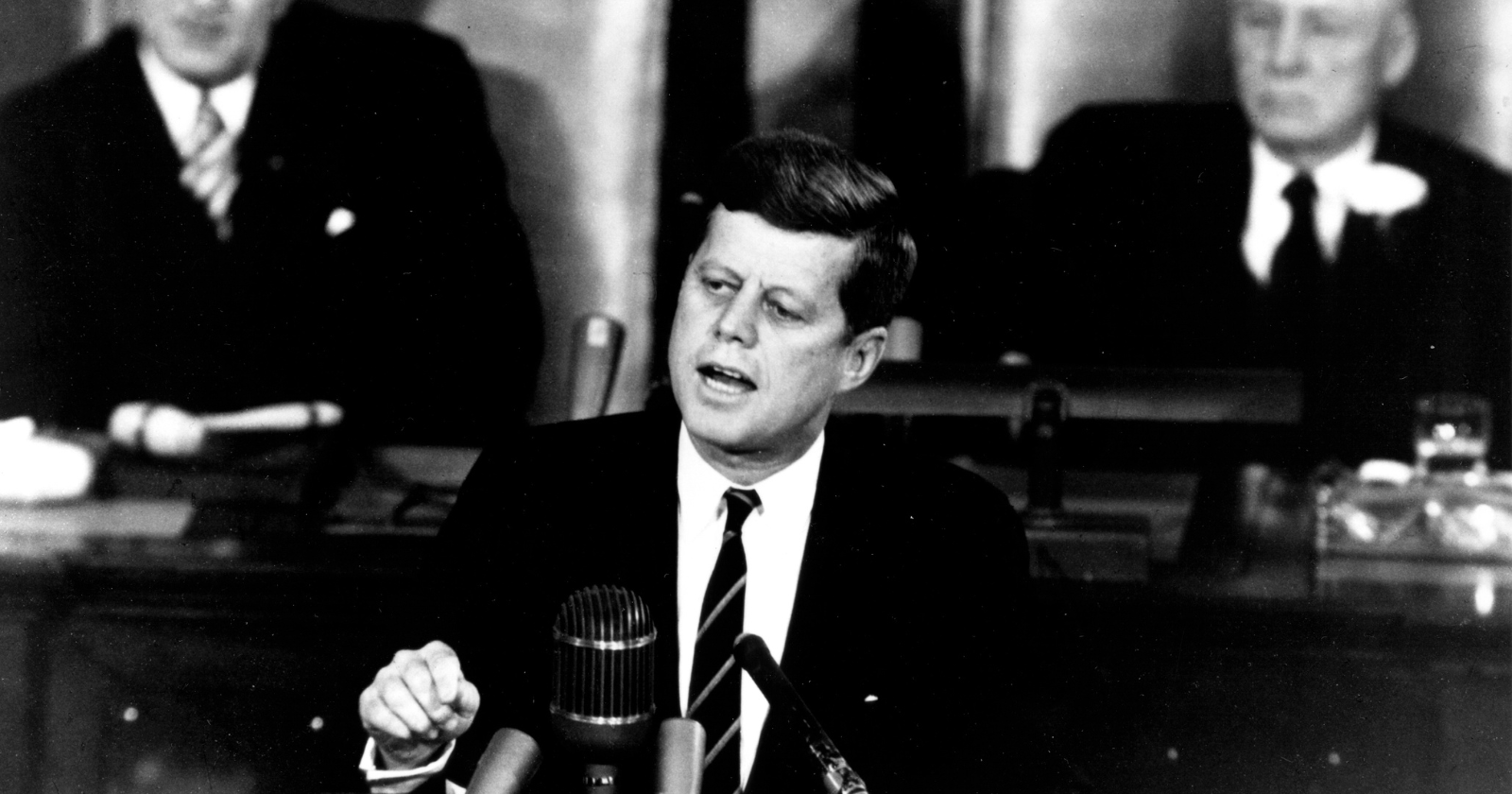
In 1961, President John F. Kennedy’s administration pushed the space program to put a Black man into astronaut training.
The pilot chosen was Ed Dwight, an Air Force test pilot with an aeronautical engineering degree who had joined the service in 1953. That decision sent him into the Air Force training pipeline that fed candidates toward NASA’s astronaut corps.
He was set up, on purpose, to become the first African American in space.
He never got there. Not in the 1960s, anyway. It took another sixty-odd years, and by the time he did, the story had turned into something stranger and better than a straight line from candidate to astronaut.
Recommended, then passed over
In 1963, the Air Force recommended Dwight for NASA’s astronaut corps, but he wasn’t among those finally picked. He was one of 26 people recommended by the Air Force; NASA selected 14 for Astronaut Group 3, and Dwight wasn’t one of them.
Years later, Dwight remembered his superior officers trying to steer him away from the whole thing. As he recalled it, one warned that “They will make hamburger out of you, Dwight.”
His mother pushed the other way. Speaking to CBS News, Dwight said she framed it as a duty, not a choice: “You’re being offered this great opportunity. Think of all the kids you’ll get excited about this and how you’ll help the race.”
Kennedy’s assassination in November 1963 changed the political environment around Dwight. Pressure on NASA to fly a Black astronaut waned afterward, and Dwight was reassigned. He left the Air Force in 1966, three years after the president who had championed his path was killed.
The second life
Dwight went into business, working at IBM and later running a barbecue restaurant chain and a real estate development company. Then he changed course completely. He earned a master’s degree in sculpture from the University of Denver and became a sculptor.
The reason he chose that subject matter came from a conversation he never forgot. Colorado’s lieutenant governor, George Brown, asked him a question that stuck. Dwight remembered it this way: Brown asked if he knew who Harriet Tubman was, and Dwight said no. “He went down the list. Frederick Douglass.” Dwight was 42, a former astronaut candidate realizing how much of his own history had never been taught to him.
He spent the next fifty years filling that gap in bronze. Dwight created more than 130 memorials honoring figures from Black history. That’s not a consolation-prize career. It’s a body of public work most artists would give a lot to have. And it says something that a man who nearly went to space in the 60s is now known, to many people, as the sculptor first.
Ninety years old and finally off the ground
On May 19, 2024, Dwight climbed into Blue Origin’s New Shepard capsule for the NS-25 flight. The rocket carried him to about 65.7 miles above Earth. The whole trip lasted 9 minutes and 53 seconds.
At 90 years, 8 months and 10 days, he became the oldest person to reach space, surpassing William Shatner, who had set the previous record on a Blue Origin flight in 2021, also at 90. Roughly six decades separated the candidacy from the seat.
Dwight’s reaction afterward carried a little surprise at himself. “I thought I really didn’t need this in my life,” he said. “But, now, I need it in my life …. I am ecstatic.”
What to make of a sixty-year gap
It would be easy to call this a redemption story: the wrong finally righted, the astronaut who got his flight in the end. I don’t think that’s quite it. A ten-minute hop doesn’t undo being passed over during the Mercury and Gemini years. Nothing does. What’s interesting is that Dwight seems to have made peace with it a long time ago.
Before the flight, he laid out the math plainly: “I’ve had, you know, 60 years to sit on and think about all the parts and pieces of this.” And the candidacy never really left him in the public eye. “The fan mail has never stopped,” he told CBS News, describing generations of people who remembered exactly who he was.
My read of Dwight’s life is that the sculpting wasn’t something he did while waiting for the real thing. It was the real thing. More than a hundred bronze monuments to people whose stories he was never taught, made by a man who found out at 42 how much had been left out. The flight is a coda to that, a strange and lovely one, but a coda. The work was already done, in metal, standing in cities all over the country.