

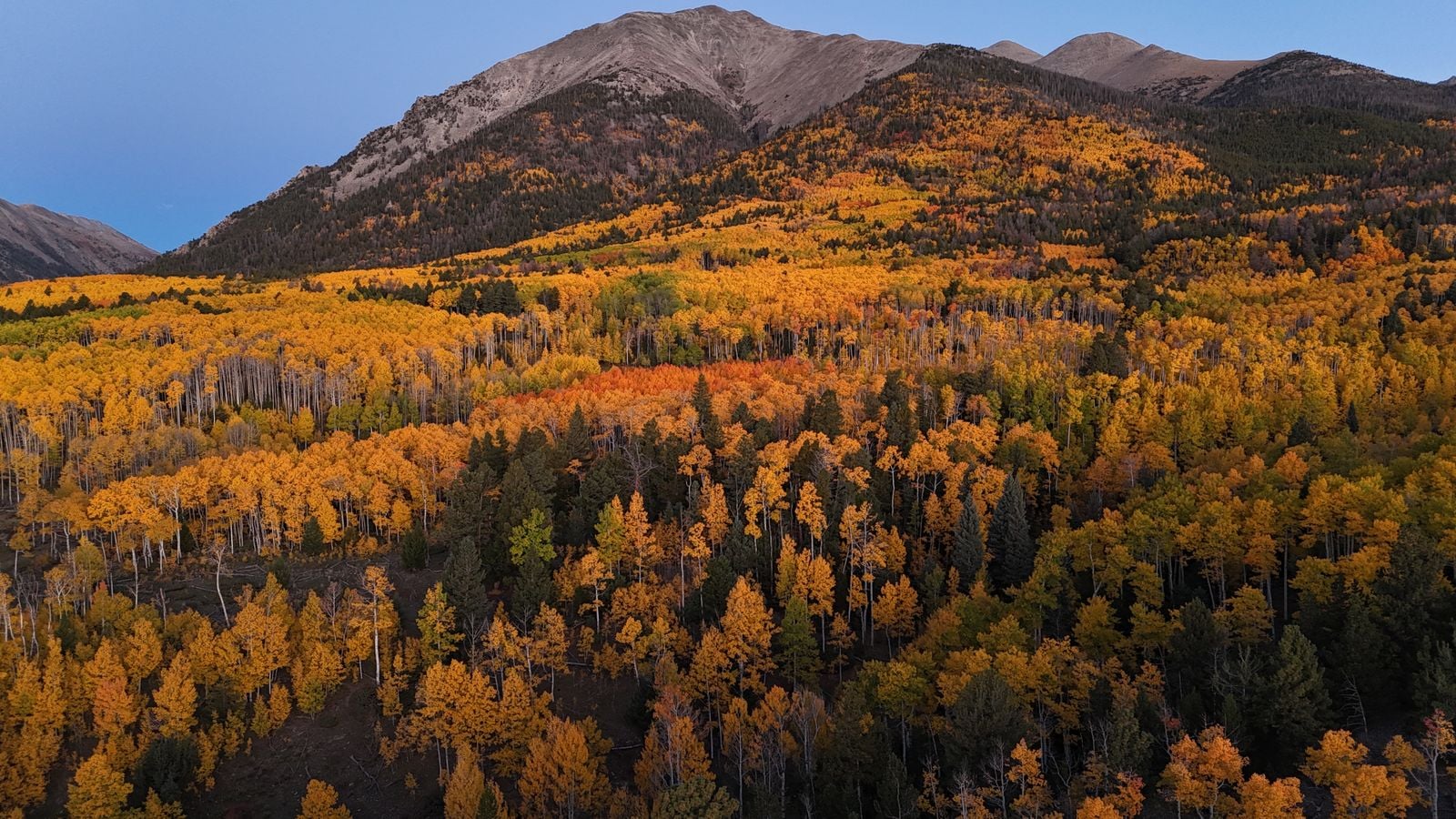
In the Fishlake National Forest of central Utah, a single organism has been quietly cloning itself since roughly the end of the last ice age. It looks like a forest. It behaves like a forest. Walk through it and you would swear you were among tens of thousands of separate trees, their pale bark catching afternoon light, their round leaves clattering in the smallest breeze. Every one of those trunks — about 47,000 of them, spread across 106 acres — is genetically identical, connected underground by a single root system that weighs roughly 6,000 tonnes. Its name is Pando, Latin for I spread, and by mass it is likely the heaviest living thing on Earth.
The U.S. Forest Service puts Pando’s weight at nearly 13 million pounds and its footprint at 43 hectares, a figure repeated in the recent genetic work led by Rozenn Pineau at the University of Chicago and summarised by Gizmodo after her team posted their preprint on bioRxiv in late 2024. That team’s best age estimate for the clone falls somewhere between 16,000 and 80,000 years. A separate, older estimate tied to post-glacial pollen records puts Pando at roughly 14,000 years — a figure that predates the genetic study and sits below its 16,000-year floor rather than inside its range.
What makes it one organism
Quaking aspen (Populus tremuloides) is one of the most widespread trees in North America, and its trick is that a single seedling can send up new stems — called ramets — from its root system for as long as the roots stay alive. Every ramet is a clone of the original. Cut one down and another rises from the same roots the next spring.
Pando is what happens when this process runs, uninterrupted, for millennia. The visible trunks live and die on a cycle of roughly 130 years. The roots underneath them do not. They keep sending up fresh stems, each one carrying the same DNA as the seedling that started the colony sometime deep in the Pleistocene.
Genetically, that identity is now well established. In a study covered by Nature’s news team, Pineau’s group sequenced more than 500 tissue samples — leaves, roots, bark — from Pando and neighbouring aspens. Every trunk in the clone traced back to a single ancestor. The variation the team did find came from somatic mutations, the kind that accumulate slowly in an organism’s own cells over its lifetime.
How the age estimate works
Dating a clonal organism is harder than counting tree rings, because the trunks you can core are only ever a century or two old. Pineau’s team used the rate at which somatic mutations pile up in Pando’s tissues to run the clock backwards.
The logic is straightforward. Each time a cell divides, there is a small chance of a copying error. Count the errors in a given lineage, know roughly how fast they accumulate, and you can estimate how long the lineage has been dividing. Because the team explored three different scenarios for how mutations are called from the raw sequence data, their age window came out wide: 16,000 to 80,000 years, as they told reporters covering the preprint.
Independent evidence from the sediment record lends some support to the estimate. Aspen pollen appears steadily in cores drilled from nearby Fish Lake, a pattern the research team says is broadly consistent with the clone’s age.
The width of that range is itself part of the finding: uncertainty in how mutations were called from the sequencing data, rather than any single number, is what stretches the estimate from 16,000 up toward 80,000. For the moment, a fair way to state Pando’s age is: at least in the thousands of years, and possibly much older, depending on which post-glacial or genetic estimate you trust. Space Daily has covered the sequencing work in more detail.
The Pineau team went into the project expecting Pando to behave the way most spatially spread organisms do: trunks close together should be more genetically similar than trunks far apart, because mutations in one part of the root system stay local. That pattern did show up. Just not nearly as strongly as they thought it would.
Something appears to be smoothing out the genetic differences across the whole 43-hectare body. The paper does not identify the mechanism. It could involve how mutant cell lines compete inside the growing tissues, or how the root system culls certain lineages, or something else entirely. The finding — a body this old with less genetic drift than expected — is what makes Pando scientifically interesting beyond its size.
What 6,000 tonnes actually looks like
The mass figure is worth sitting with. Six thousand tonnes is a little less than the weight of the Eiffel Tower’s 7,300-tonne iron framework, or about two fully fuelled Saturn V rockets on the pad. A blue whale, the largest animal alive, tops out somewhere around 200 tonnes. Pando outweighs the biggest whale by a factor of thirty.
Most of that mass is underground, in a root network you cannot see. The 47,000 trunks are the visible fraction, the surface expression of something that is really a horizontal organism buried in the soil of the Colorado Plateau. When people talk about the heaviest living thing on Earth, they are talking about a root system, not a forest.
The 106-acre footprint is roughly 80 American football fields, or about the area of Vatican City. All of it is one plant.
What is killing it
Pando has outlasted the woolly mammoth, the Neanderthal, and the last glacial maximum. It may not outlast the twenty-first century in its current form.
The Forest Service and independent researchers have been documenting a slow-motion collapse of the clone for at least three decades. The problem is not the roots. The roots are fine. The problem is that the new stems the roots keep sending up — the shoots that are supposed to replace the trunks that die on their 130-year cycle — are being eaten before they can grow.
The main culprits are mule deer and, in some sections, cattle. Wolves and grizzlies, the predators that would once have kept those ungulate populations moving and wary, have been absent from central Utah for a century. The deer stay. They browse. Every spring’s crop of young aspen shoots gets clipped back to the ground.
The result, documented by reporting drawn from ecologist Paul Rogers’ surveys, is a grove that is mostly middle-aged and old, with almost no young trunks in the pipeline. When the current generation of stems dies, and no replacements come up, the visible Pando starts to thin out. Fencing off portions of the clone has helped in trial plots. Fencing all 106 acres has not been done.
The comparison with other giants
Pando is often described as the largest, heaviest, and one of the oldest living organisms on Earth. Each of those claims needs a small caveat.
By continuous mass, Pando is often named the record holder, and Forbes’ summary of the recent research lays out the case. By footprint, it is beaten by a honey fungus (Armillaria ostoyae) in Oregon that sprawls over about 2,385 acres — though estimates of the fungus’s own weight vary so widely, from roughly 7,500 to 35,000 tons, that it’s not actually clear which of the two organisms is heavier. By age, the range depends entirely on the dating method, and clonal age is a genuinely different quantity from the age of any single trunk. The oldest individual tree by ring count is a bristlecone pine in California’s White Mountains, dated to just over 4,800 years. Pando’s individual stems are much younger. The organism they belong to is much older.
None of these superlatives are quite comparing the same thing. Pando is the record holder for one particular way of being large: a single genetic individual, expressed as many stems, held together by a single root.
Clonal organisms like Pando raise questions that ordinary biology does not have to answer. What does it mean for a body to be thousands of years old when none of its current cells are more than a century or two old? How does a genome stay coherent when it has been copying itself, cell by cell, for millennia? What stops the accumulated mutations from turning the organism into a genetic patchwork?
These are the questions Pineau’s team was really chasing. Their finding — that Pando’s genetic makeup is more uniform than the physics of root growth should allow — hints at some biological mechanism for keeping a very long-lived clone consistent with itself. Whatever that mechanism is, it has implications for how researchers think about somatic mutation, cancer, and ageing in long-lived species generally.
Space Daily has looked at other organisms and objects that stretch human notions of deep time, from a 7-billion-year-old grain of stardust in the Murchison meteorite to a 500-year microbiology experiment sealed in oak boxes. Pando sits somewhere in that same registry — a thing that has kept going while the categories humans use to measure it were still being invented.
What the trip actually shows you
Fishlake National Forest is a three-to-four-hour drive south of Salt Lake City. Pando itself sits on the southwest shore of Fish Lake, just off the Fishlake Scenic Byway (State Route 25), a few miles north of the highway junction near Loa. There is a small pullout and a sign. There is no gate, no ranger station, no ticket.
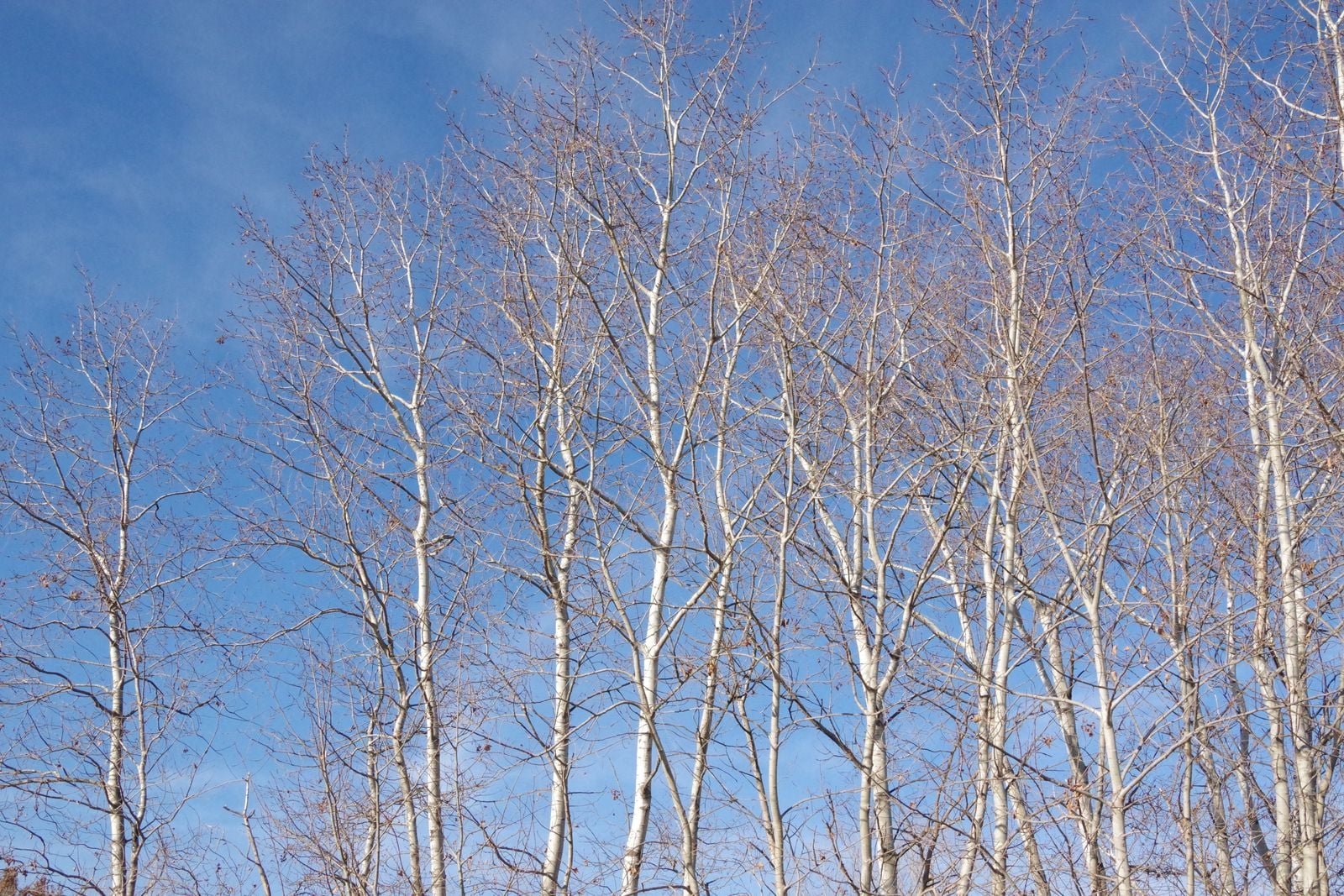
What visitors see is a stand of aspen. Pale trunks, dark eye-shaped scars where lower branches used to be, leaves that flutter on flattened stems in a wind you can barely feel. The PBS documentary series Untold Earth devoted an episode to it called This Is Not a Forest, which is the most honest description of the place anyone has written. It looks like a forest. It is one tree.
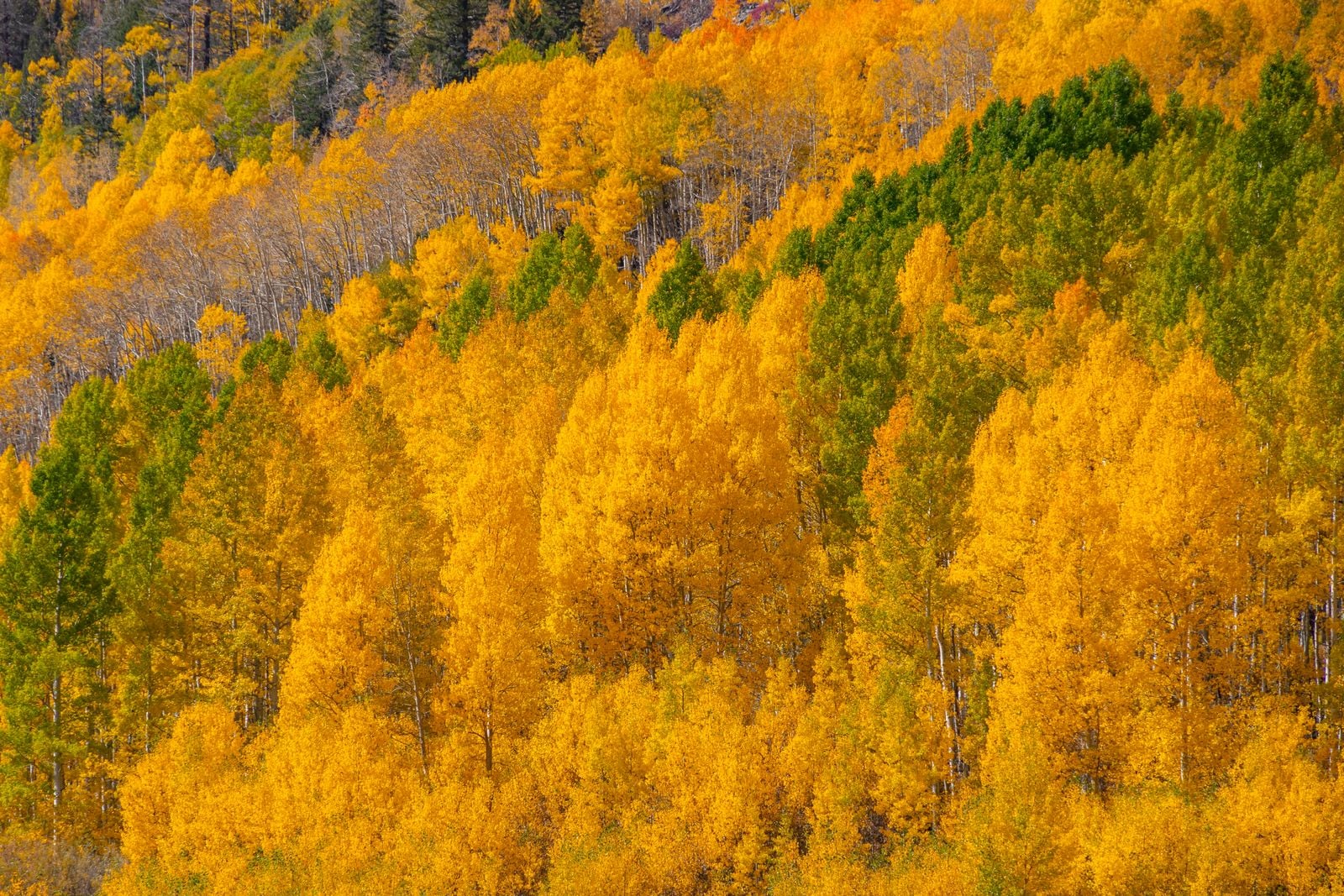
In autumn the leaves all turn gold at the same time, because they are the same organism responding to the same shortening days. The colour comes on in one long connected wave across all 106 acres. In a mixed aspen stand, different clones turn at different rates, and the hillside looks patchwork. In Pando, the whole thing shifts together.
That is the moment when the fact becomes visible without any equipment. One body. Forty-seven thousand stems. One long exhale of gold, from the same organism that was already old when the first humans crossed into the Americas.