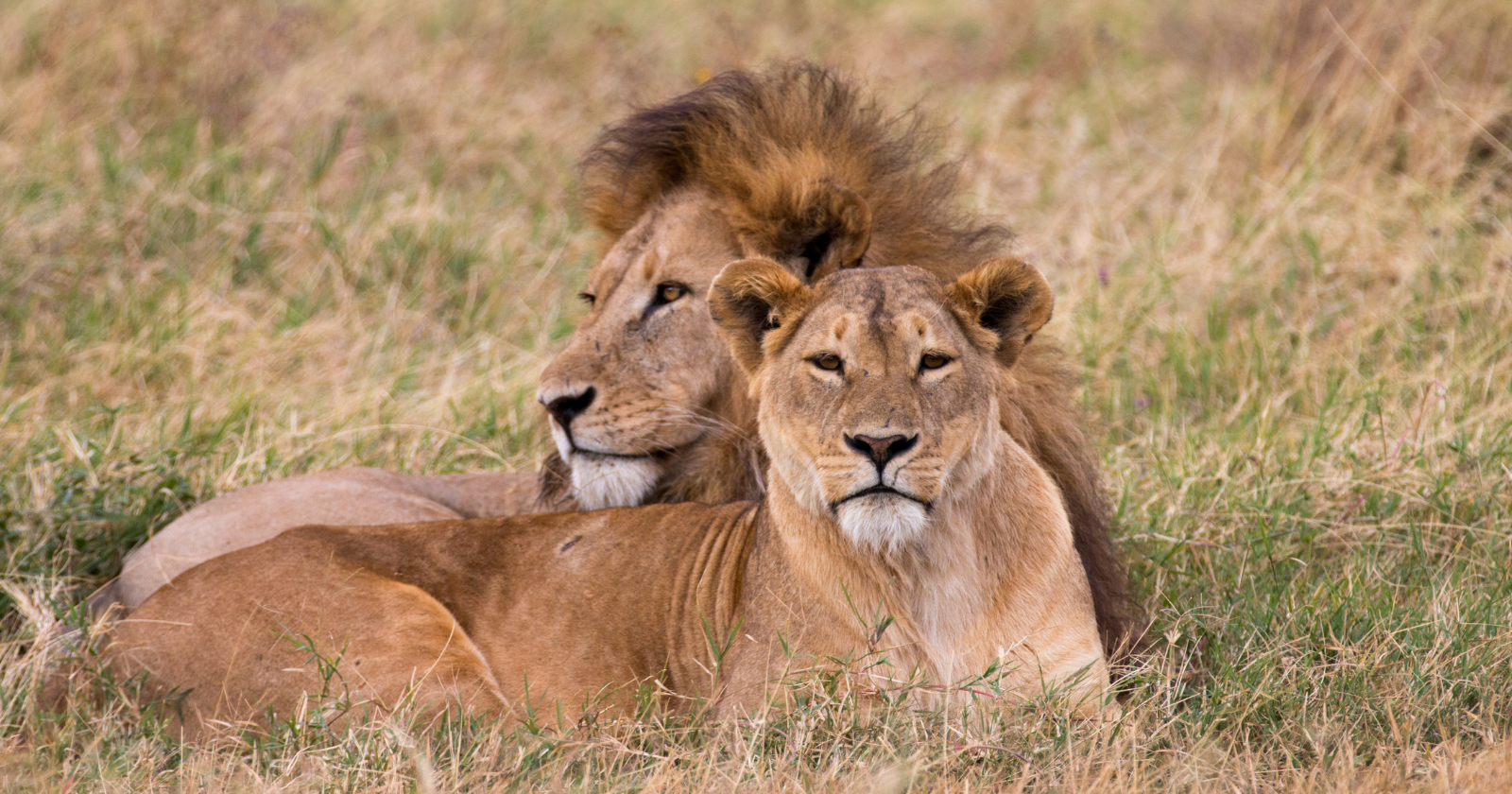
Out on the fringes of the Okavango Delta, several hundred cattle once wandered around with enormous eyes painted on their backsides, and not one of them got eaten by a lion.
That is a literal accounting, not a gag. Across four field seasons between 2015 and 2018, a team near the village of Shorobe in northern Botswana painted 683 cattle with big two-tone eyespots on the rump, gave 543 more a simple cross, and left 835 alone. Lions and leopards killed 15 of the unmarked animals and four of the cross-marked ones. Eyespot cattle killed: none. Cameron Radford, Neil Jordan and their colleagues published the tally in Communications Biology, and it remains one of the stranger results in livestock protection.
Why a lion walks away
Jordan got the idea watching a hunt collapse. He was in Botswana, a lion was stalking an impala, and the impala looked up at the wrong moment for the lion. “Lions are ambush hunters, so they creep up on their prey,” he told UNSW’s newsroom. Once the cat clocked that it had been seen, it quit.
Behavioural ecologists call this pursuit deterrence, and it turns up everywhere. Brown hares stand up and face approaching foxes. Guppies that swim over and inspect a predator get attacked less often than the ones that stay put. Butterflies carry fake eyes on their wings for the same reason.
No living mammal has evolved eyespots, which is presumably why nobody had thought to bolt them onto a cow.
What the paint had to survive
Fourteen herds took part, from six animals to 110, all belonging to farmers who had recently lost stock. Cattle there are penned overnight where possible, then graze unattended across the bush all day, and that is where most of the trouble happens. Painting happened at dawn as the animals filed through the crush, with acrylic paint and foam stencils glued to a plasterer’s float. Marks stayed sharp for roughly 24 days, so the crew returned monthly and redid them, 49 sessions all up. Annual spending on paint and supplies came to about a fifth of the price of one cow.
A sceptic would object that the painted cattle simply got lucky, or stayed closer to home. So the researchers fitted GPS loggers to animals from all three groups. No meaningful difference in nights spent outside the enclosure, none in how far they roamed.
The cross nobody expected
Here is where the tidy story wobbles. Cattle wearing a plain painted cross also survived better than their unmarked herdmates, which is not what a pure eye-recognition effect predicts. Jordan flagged it as a genuine surprise in UNSW Sydney’s summary of the findings, noting that “novel cross-marks were better than no marks at all, which was unexpected.”
Two explanations survive. Lions may be reading the eyes as a face turned towards them, or they may simply be wary of any bold, unfamiliar pattern on something they were planning to eat. The paper treats both as live options and rules out two rivals: that the marks divert attacks to other parts of the body, or that they mimic another predator.
Eyes get inside human heads too
Anyone inclined to feel superior to the lions should know it works on humans too. Researchers at Newcastle University mounted signs featuring a pair of staring eyes above bicycle racks that had been suffering repeat thefts, and reported in PLOS ONE that thefts at those racks fell by 62 per cent. Thefts elsewhere on campus went up by 65 per cent.
The eyes did not abolish the behaviour. They relocated it. Which is precisely the uncomfortable question hanging over the cattle.
What one study cannot settle
Only about a third of each herd carried eyespots. Lions always had unpainted alternatives standing right there, and Jordan conceded in 2020 that he did not know whether the trick would hold once those easier targets were gone. Painting every animal in a herd has not been tested. Nor has the wet season, when the crew stayed out of the field and predators turn to livestock as wild prey disperses.
Nineteen predation events are a thin base for a strong claim, in one landscape, with one set of predators. Eighteen of those kills were lions. A spotted hyaena took one animal from each group, which fits the theory rather than dents it, because hyaenas chase prey down instead of ambushing it and lose nothing by being seen early.
One paper is one paper.
The farmers themselves were not immediately convinced. “At first they thought it was a joke,” Radford told Atlas Obscura, before adding that they became glad to see the crew arrive. He also mentioned something more telling: informal copies had already started for leopards in India, jaguars in South America and predators in Nepal, back in 2020. No replication on the same scale has landed since. Cheap ideas travel faster than the evidence for them, and a bucket of acrylic paint travels faster than most.