

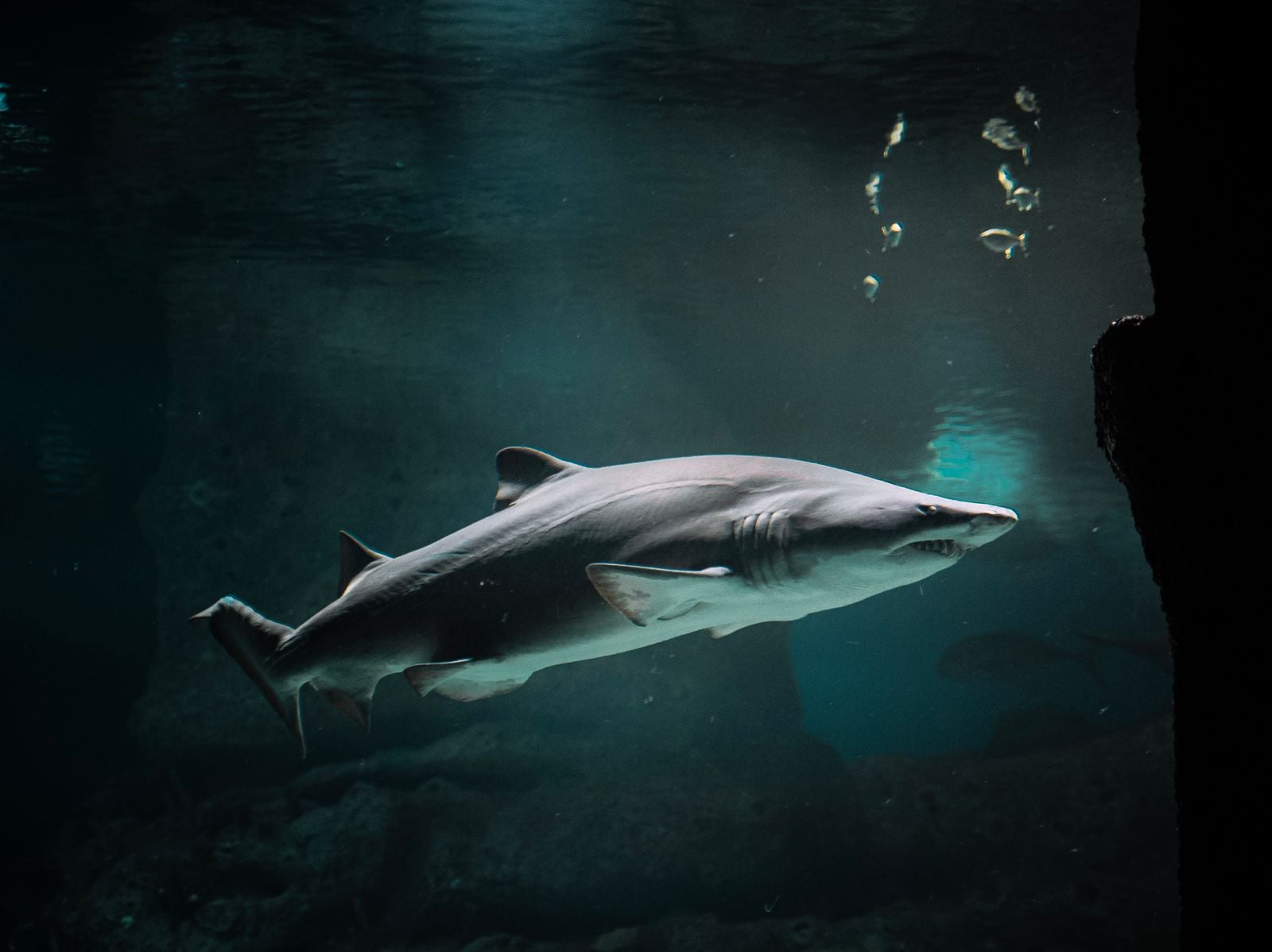
The Greenland shark, Somniosus microcephalus, grows at roughly one centimetre a year and does not reach sexual maturity until it is about 150 years old. That figure comes from a 2016 study in Science led by Julius Nielsen at the University of Copenhagen, which radiocarbon-dated the eye lenses of 28 female sharks caught as bycatch in the North Atlantic. A pup born in the cold water off Baffin Island this August will not be old enough to breed until sometime in the 2170s.
Read that sentence again. The pup’s first mating season will arrive more than a century and a half from now.
What the number actually means
One centimetre a year is a rate of growth so slow it barely registers on any human timescale. A shark that is 400 centimetres long — about the length of a small car — has been adding tissue at that pace since roughly the reign of Louis XV. The 2016 study found that the two largest sharks in the sample, at 493 and 502 centimetres, were estimated at around 335 and 392 years old.
The species’ average lifespan sits somewhere near 272 years. Individuals can plausibly push past 400. Only the ocean quahog clam, Arctica islandica, is known to live longer.
The one-centimetre figure is not a laboratory measurement in the usual sense. It is a rate inferred from recaptured sharks and from back-calculation against the radiocarbon ages of the eye lenses. One tagged Greenland shark has been documented growing only a small amount over more than a decade, which tells you something about why the biology of this animal has been so hard to pin down.
How you date a shark that has no growth rings
Most sharks can be aged by counting bands in their vertebrae, the way a forester reads a tree stump. Greenland sharks cannot. Their vertebrae are too soft and lay down no legible record.
So Nielsen’s team turned to the eye. The lens of a vertebrate eye grows in transparent layers throughout life, and the innermost tissue — the nucleus — is laid down before birth and never replaced. If you can extract that pre-natal tissue and measure its carbon-14 signature, you can locate roughly when the animal was born against the known atmospheric carbon record.
The technique works particularly well for sharks born after the mid-1950s because atmospheric nuclear weapons testing dumped a spike of carbon-14 into the environment. That spike, sometimes called the bomb pulse, shows up in the eye lenses of younger sharks and gives researchers a firm calibration point. Older animals sit below the pulse and their ages come with wider uncertainty bars — the oldest shark in the study was placed, with 95 percent certainty, somewhere between 272 and 512 years old.
That range is not a failure of the method. It is the honest shape of what radiocarbon dating can and cannot tell you about a creature that was alive before industrial carbon began skewing the atmosphere.
Why sexual maturity at 150 changes everything
Late maturity is the part of the story that reshapes how the species should be managed. A Greenland shark pup born in 2026 will spend its entire first century-and-a-half without contributing a single offspring to the population. If it dies at 140, it dies without ever having bred.
Compare that with smaller fish species that can mature in one to two years, or other shark species that mature within decades. Even other long-lived marine mammals reach sexual maturity far earlier in their lifespans.
For the Greenland shark, the reproductive clock runs on a scale that predates most nations. Any pressure on adult numbers — bycatch, warming, pollution — takes an unusually long time to show up in the population, and an even longer time to reverse. The slow replacement rate makes population recovery particularly challenging.
The animals a Greenland shark outlives
A shark born in the year the Great Fire of London burned would be about 360 today. One born the year Newton published the Principia in 1687 would be 339. A pup swimming under the ice off Svalbard right now will still be growing, if it survives, when the great-grandchildren of everyone reading this are old.
The shark shares this deep-time company with a small number of other animals that have taught biologists to distrust human intuitions about aging. Other long-lived species in cold northern waters provide similar insights into extreme longevity.
The Greenland shark is a different case. It ages, it slows, it eventually dies. It just does all of this at a rate that makes the human life-cycle look like a mayfly’s.
What the cold has to do with it
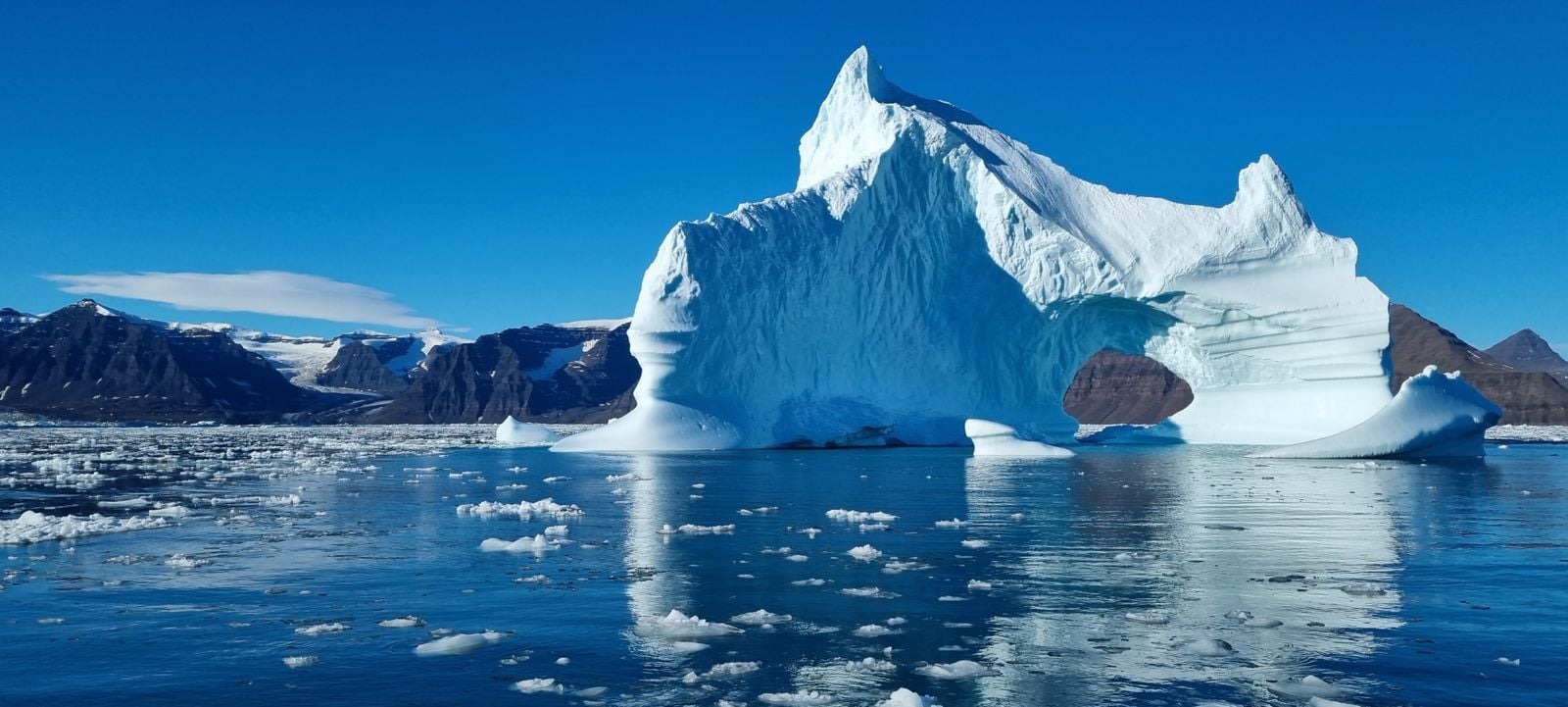
Greenland sharks live in water between minus 2 and 7 degrees Celsius, at depths that can reach 7,200 feet. They are extremely slow swimmers, moving at a pace that allows prey like seals to easily outpace them, and their tissues are laced with compounds that behave like antifreeze.
Cold and slow are the two variables that keep coming up in animals that live for centuries. Cold probably plays a role in extreme vertebrate longevity but is unlikely to be the whole story. Plenty of short-lived species share the same water.
Something else is going on inside those muscles. The Greenland shark’s cells have been contracting, dividing, and repairing themselves continuously since long before the theory of evolution was written down. Whatever biochemical maintenance keeps that machinery running is one of the more interesting open questions in the biology of aging.
What the study does not show
The 2016 Science paper sampled 28 females caught as bycatch. It did not sample males. It did not follow individuals across their lives — no one has, because no one lives long enough. The one-centimetre-per-year growth rate is an inference, and the 150-year figure for sexual maturity is estimated from the length at which females are first observed carrying developing pups, cross-referenced against the age-length relationship the eye-lens data produced.
That is the best evidence available. It is not the same as a longitudinal record. The upper age estimate of 392 years carries an uncertainty of roughly plus or minus 120 years, which is a window wider than the entire history of Australian federation.
The lower bound is the interesting number for conservation. Even at 272 years, the Greenland shark is the longest-lived vertebrate ever documented, and its late maturity is not in serious dispute.
What a 150-year adolescence looks like in practice
A female Greenland shark spends her first century-and-a-half in the dark, slow water of the North Atlantic and Arctic, eating what she can find. Stomach contents recorded by researchers have included fish, squid, and seals, along with occasional carrion.
She is often functionally blind, because a tiny crustacean parasite latches onto her cornea and scars it. This does not seem to inconvenience her much. In waters that dark, vision was never doing most of the work.
She grows a centimetre a year. She does not breed. She keeps moving.
By the time she reaches her 150th birthday, empires have risen and fallen at the surface. She is finally large enough to reproduce. If she is lucky, she has another 150 or 250 years ahead of her.
The Icelandic footnote
Greenland shark meat is toxic when fresh — concentrations of trimethylamine oxide and urea in the tissue can cause vomiting, disorientation, and convulsions, effects that Icelanders have traditionally associated with improperly prepared shark meat. The traditional preparation is to bury the flesh, let it ferment for weeks, then hang it to dry for months. The result, kæstur hákarl, is eaten in small cubes and has a reputation for being one of the more challenging foods on Earth.
Every cube of it is old. A single serving may contain tissue from an animal that was born before the founding of the United States.
The pups being born this year
Female Greenland sharks give birth to litters of around ten pups, each about 40 centimetres long. The pups drift down into the cold water and begin the slow work of adding a centimetre a year.
The ones being born this August will not breed until the 2170s. By then, the ice cover of the Arctic will look different, the shipping lanes will run through waters that are currently frozen, and whatever species is still tracking sharks with radiocarbon will be reading a bomb pulse that has faded further into the background carbon record.
The shark will still be growing. A centimetre a year, in the dark, under the ice, on a clock that does not care.