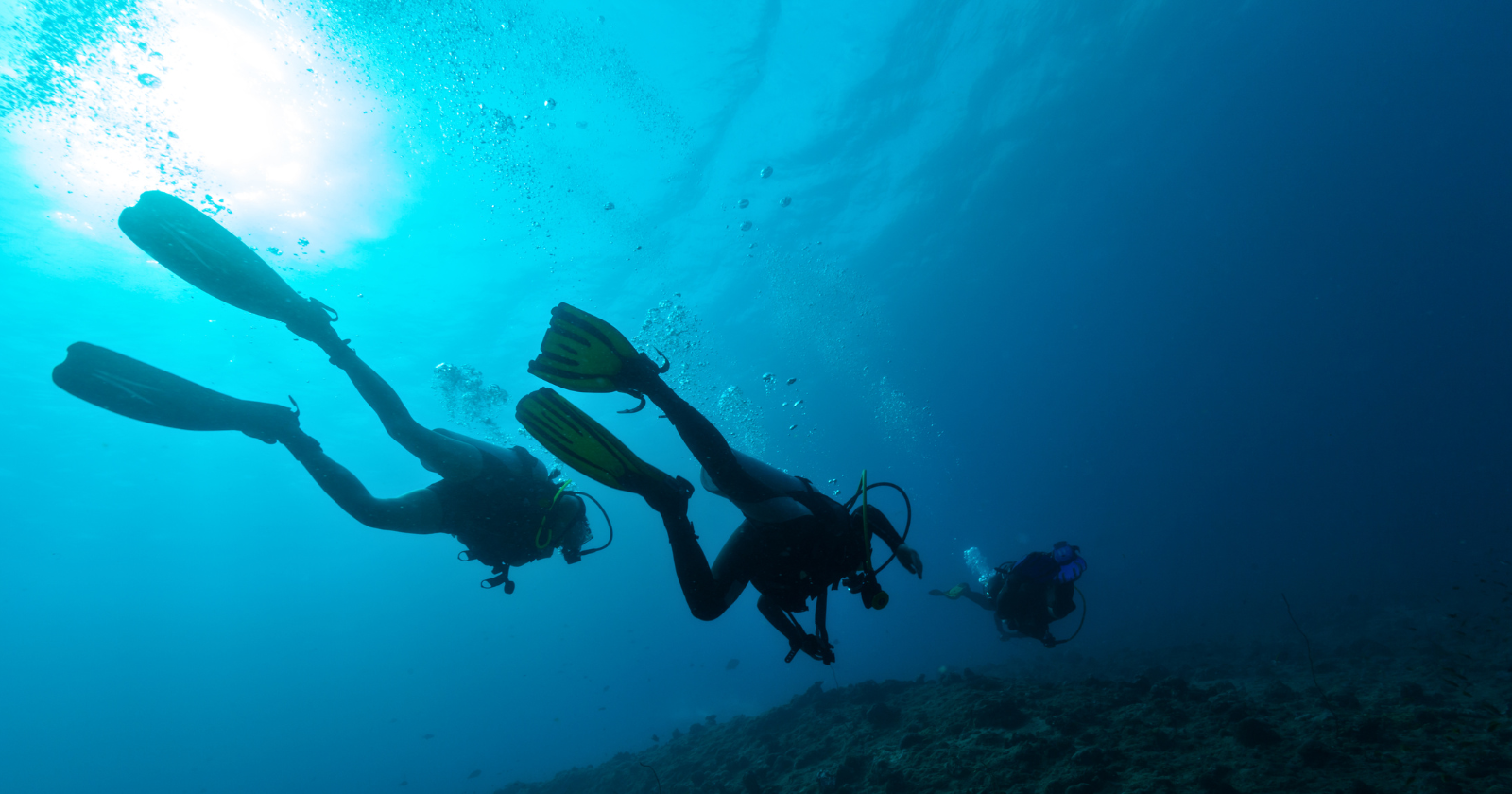
Somewhere off the coast of Jeju Island right now, a woman in her eighties is thirty seconds into a breath-hold, ten metres down, working an abalone loose from a rock with a metal hook.
She will surface, whistle out the used air, and go back down. Then she will do it again, for hours, until the cold or the tide decides otherwise.
These are the haenyeo, the sea women of South Korea’s volcanic southern island, and they may be the oldest professional workforce on earth doing genuinely dangerous work.
What the job actually involves
The kit is short to the point of rudeness: a mask, lead weights to speed the descent, a hooked tool for prising shellfish off rock, and a tewak, a basketball-sized float with a net slung underneath. No tank. No safety line.
UNESCO, which inscribed the culture of Jeju haenyeo on its Representative List of the Intangible Cultural Heritage of Humanity in 2016, describes divers harvesting for up to seven hours a day, around ninety days of the year. Each dive runs on roughly a minute of held breath, ending with a distinctive whistling exhale called sumbisori. Depth varies with the diver and the ground. Ten metres is routine, and UNESCO’s own account of the tradition has them working in water twenty metres deep.
Seniority is formalised into three tiers, hagun, junggun and sanggun, with the sanggun taking the hardest ground and guiding the rest. Before entering the water, prayers go to Jamsugut, goddess of the sea.
Nobody dives alone. Ever.
What a lifetime underwater does to a body
In May 2025, a team led by geneticist Melissa Ilardo at the University of Utah published a study in Cell Reports comparing thirty haenyeo with thirty non-diving women from Jeju and thirty-one from the mainland. Average age was sixty-five. Since you cannot drop seventy-year-old novices into the open ocean, the team simulated dives: participants held their breath and lowered their faces into cold water, which triggers the same reflexes.
Two things came out of it, and it pays to keep them separate.
The first is training. Haenyeo hearts slowed dramatically on submersion, far more than anyone else’s, and that looks like a product of practice. As documented by EurekAlert’s coverage of the study, Ilardo described watching one diver’s heart rate fall by more than forty beats per minute in under fifteen seconds. Slowing the heart stretches a finite oxygen supply, the whole game when your air comes in one gulp.
The second is genetics, and it isn’t limited to the divers themselves. The haenyeo proved more than four times likelier than mainland Koreans to carry a gene variant linked to lower blood pressure during a dive, plus a second variant associated with cold tolerance. Non-diving Jeju women carried both markers too, which is the striking part: genetically, divers and non-divers on the island are barely distinguishable. Ilardo’s proposed explanation is that centuries of women diving through pregnancy, when high blood pressure turns life-threatening, applied selective pressure to everyone born there.
As reported by Scientific American, Jeju’s stroke death rate sits around 24.3 per 100,000, below Seoul’s 25.7 and well below the United States figure of roughly 37. That is a suggestive number rather than a proven mechanism. One paper is one paper, the sample was ninety-one women, and the cold tolerance claim rests on genetics rather than any direct test of how the divers handle cold.
Why the women and not the men
Nobody knows for certain. Leading theories involve a historical tax levied on male divers, or a chronic shortage of men on an island that lost plenty of them to the sea and to war. What the arrangement produced is clearer: a semi-matriarchal household economy in a country where Confucian norms put men at the centre of everything.
The knowledge moves down through families, mother to daughter, and sideways through village fishery cooperatives that hold the local harvesting rights. In 2023 the FAO recognised the practice as a Globally Important Agricultural Heritage System, citing the half-farming, half-fishing rhythm the divers built around volcanic soil that grows very little.
The arithmetic is not kind
Per figures from the Jeju Provincial Government reported by The Korea Herald, active haenyeo numbered 2,839 in 2024, down 7.6 percent in a single year and down nearly forty percent from the 4,377 counted in 2014. More than ninety percent of them are sixty or older.
Rewind further and the drop is vertical: Jeju had more than 23,000 divers in the mid-1960s, before mandarin farming and tourism offered a living that skipped the winter water and the held breath.
Warming seas have taken care of the rest, thinning the seaweed beds that abalone feed on and shrinking the grounds worth diving.
Recruits, licences and cameras
Two haenyeo schools now enrol several dozen new candidates a year, and certification is no formality. A licensed diver must log sixty days in the water annually, earn at least 1.2 million won from it, and win approval from the fisheries cooperative and every other haenyeo in her village.
Lee Ah-ran, thirty-two, trained at the Beophwan school after a decade as a dental hygienist and marketer, then served a three-month internship before Hagwi-ri’s cooperative accepted her. Her seniors call her the baby. She films her dives, has 50,000 followers because of it, and feeds species counts back to divers who read that seabed before she was born.
Whatever survives on that coastline will be smaller, younger, filmed, and paid partly in tourism. Ilardo’s team went there to sequence an extraordinary population while there was still one to sequence, which tells you how the scientists rate the odds.