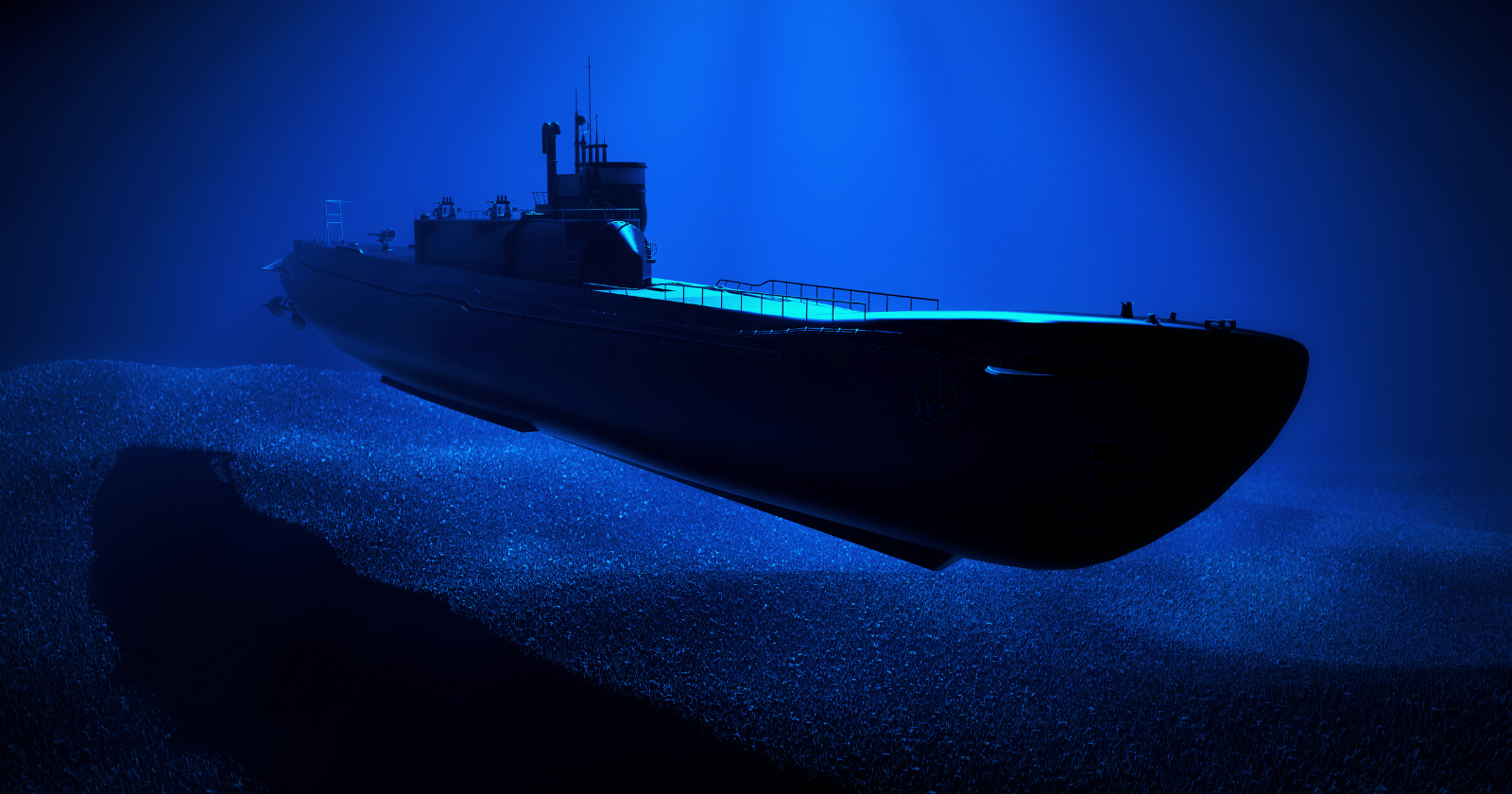
Sixty-five degrees Celsius in the engine spaces, failed refrigeration, and a noise outside the hull like someone working over an oil drum with a sledgehammer while you happen to be sitting inside it.
That was the working environment aboard Soviet submarine B-59 on 27 October 1962. Batteries were nearly flat, Moscow had gone quiet, and an American destroyer group overhead kept dropping small explosives into the water. Its captain had begun to suspect the Third World War had started without him.
Four submarines, one special weapon each
Operation Anadyr, the Soviet deployment that put ballistic missiles in Cuba, also quietly put four Foxtrot-class diesel submarines into the Atlantic. A September 1962 report from General Zakharov and Admiral Fokin to the Soviet Presidium, declassified and posted by the National Security Archive, laid out the plan to fit every boat in the brigade with one nuclear-tipped torpedo.
Foxtrots were built for the Barents Sea, not the Sargasso. Writing in Naval History magazine, former submariner Douglas Gilbert catalogued what that mismatch did to the crews. Interior temperatures hit 45 degrees Celsius forward and 65 in the engineering compartments. Gear ran too hot to service without burning your hands, men fainted from heat stroke, trench foot spread through the boat, and fresh water was rationed to a cup a day.
The depth charges were meant to be a doorbell
Nobody up top was trying to sink anything. Practice depth charges, roughly grenade-sized, were the agreed signal for “surface and identify yourself”, and Kennedy and his advisers talked the procedure through in the Executive Committee on 24 October. That notice went out to the fleet. It never reached the Soviet submariners, who had no way of telling a polite knock from the opening move of a war.
A deck log kept aboard the destroyer USS Beale records the tracking, the signalling and the eventual surfacing of contact C-19, which was the American catalogue number for B-59.
Vadim Orlov ran the radio intercept unit on board. In recollections translated by the historian Svetlana Savranskaya, he compared the sonar hammering to sitting inside a metal barrel while someone works the outside over, and remembered one blast heavier than the rest. His thought at the time was simple. This is the end.
What happened at the top of the ladder
Most retellings involve three officers, a vote, a two-to-one split and Vasily Arkhipov casting the deciding no. Documentary evidence describes something faster and considerably messier.
Arkhipov was chief of staff of the 69th Submarine Brigade and was riding on B-59 rather than commanding it. Per the reconstruction Savranskaya assembled from two decades of interviews and archival material, B-59 surfaced that night to charge its batteries. Captain Valentin Savitsky climbed to the conning tower and straight into a wall of searchlights, low overflights and cannon fire. Blinded and convinced he was under attack, he called for an emergency dive and for the nuclear torpedo to be readied.
Then he got stuck. A signalling officer and his equipment were blocking the narrow stairway back down. Arkhipov, still up top, could see what Savitsky had not had a chance to see, which was that the Americans were photographing and signalling rather than shooting to kill. He called the captain back and talked him round. That launch order never reached the man at the torpedo.
Gilbert tells it differently, with Arkhipov persuading Savitsky to fire a single sonar ping to test American intentions and the destroyers stopping in response. Both versions turn on the same judgement: nobody hunting a submarine that hard would bother if a war had already begun.
Forty years of official silence
Everyone involved buried the affair on their return, and their superiors were in no mood to celebrate anybody. Crews came home to armed guards on the pier and an investigation into how they had allowed themselves to be detected.
Arkhipov’s only public account arrived at a Moscow conference in October 1997, and as testimony it is a small masterpiece of saying nothing. He listed the aircraft passing metres above the tower, the searchlights, more than 300 shells fired past the hull, the shouting from loudspeakers. He used the word “nuclear” only when quoting the journalist who had leaked the story two years earlier. About his own part in it he said nothing whatsoever.
Everything else came from the officers and ratings around him, and none of them were standing on that tower. Captain Ryurik Ketov, who commanded a sister boat, published his own version in the Journal of Strategic Studies in 2005. What is known rests on a handful of participant accounts, recorded decades late, agreeing on the shape of the night and differing on its details.
What the near-miss was actually made of
Arkhipov died in 1998, before any of this became famous, and never heard himself called the man who saved the world. The Future of Life Institute gave its inaugural award to his family in 2017, fifty-five years to the day, with a London ceremony he would probably have found faintly ridiculous.
Strip out the heroism and what remains is a procedural farce with a warhead in it. A signal was invented and never explained to the people meant to read it. Submarines were sent into water their cooling systems could not handle. A crew was left half-poisoned by its own air, then startled by aircraft in the dark. What stopped the whole thing was a senior officer who happened to be aboard, on deck, with a clearer view than the man giving the orders.
Nobody designed that safeguard. Arkhipov was not supposed to be on B-59 at all. He was there because he outranked the captain and the brigade needed someone senior aboard the flagship, and the accident of his presence is the only reason the vote required three men instead of two.