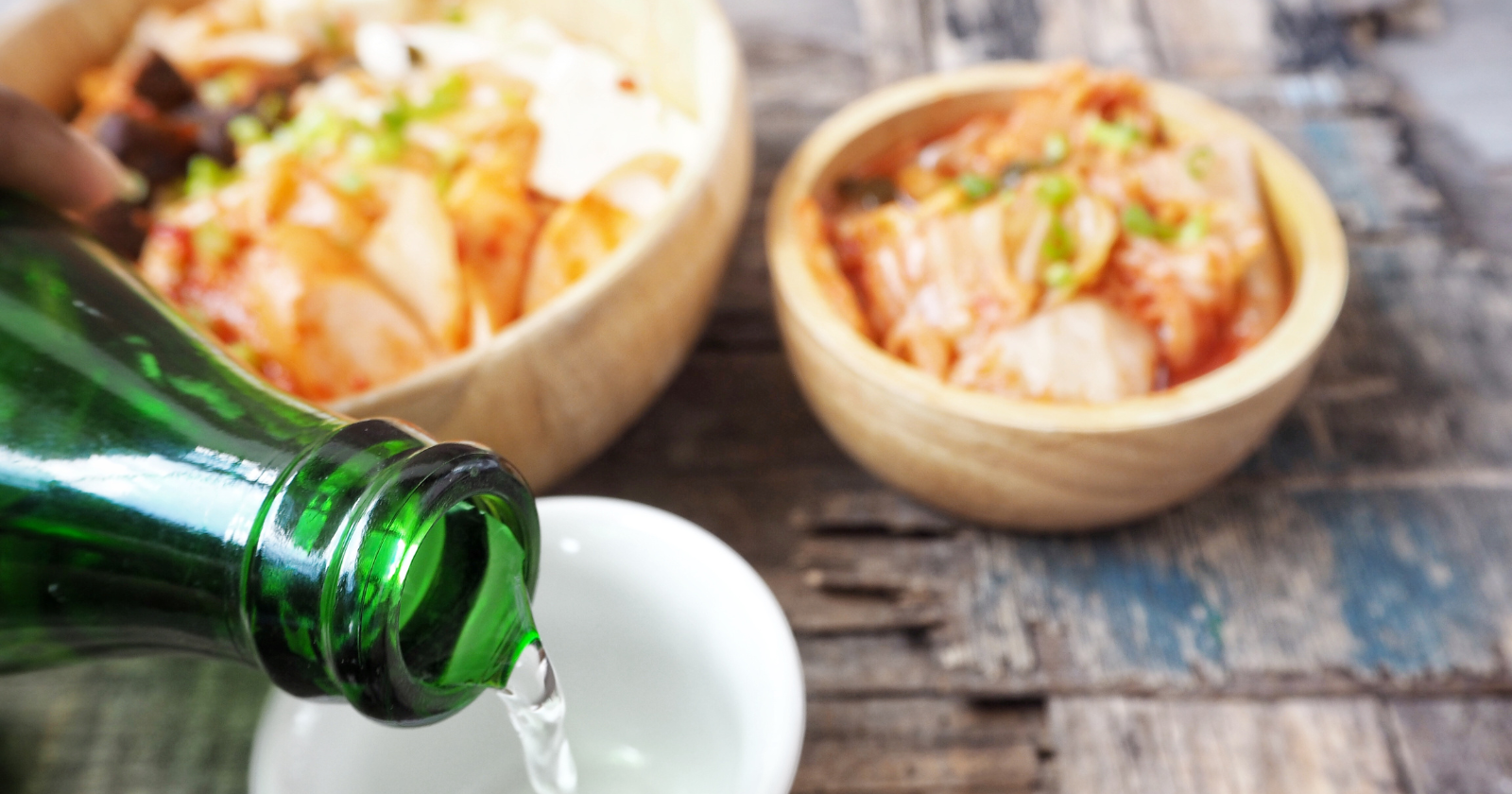
Ask most people to name the biggest-selling spirit brand on earth and you’ll get a familiar shortlist: a Scotch, a bourbon, a big vodka, maybe a global rum. Almost nobody says soju. And almost nobody names the brand that has actually held the crown, without a break, for a quarter of a century.
It’s Jinro, the green-bottled Korean soju made by HiteJinro. According to the UK trade magazine Drinks International, Jinro was named the world’s best-selling spirit for the 25th consecutive year. It sold 94.5 million standard nine-litre cases worldwide over the past year. That was more than twice the 40.8 million cases sold by gin Ginebra San Miguel.
One soju brand, built largely on a home market of about 52 million people, outsells every individual spirit brand the West thinks of as global. I keep turning that over.
How one brand ended up so far ahead
Twenty-five years is a long time to hold first place at anything, and the gap has rarely been close.
Look back at the survey for 2013 and you can see how lopsided it has been. Jinro sold 66.5 million cases. The second-placed brand, Emperador, sold 33.0 million. First place was just over double second.
For a long time the reason was simple: Korea drank a staggering amount of soju.
The numbers were hard to ignore. Using Euromonitor data, Fox News reported in 2014 that South Koreans drank an estimated 13.7 shots of liquor a week on average, the most among the countries examined and more than double the next country.
At the time, soju accounted for 97 percent of the country’s liquor market. So for most of Jinro’s reign, the story was really a domestic one. A whole nation drinking soju at dinner, after work and at gatherings, with one company owning most of that market, was enough to sit atop a global chart.
The export story is the new part
What makes the 25th win more interesting is that the home market has been cooling. Korean drinking habits are shifting, and HiteJinro has spent years pushing hard to sell soju abroad.
The Korea Times reported that overseas soju sales have soared even as home consumption declines, crediting the global popularity of Korean dramas and film. The same report put HiteJinro’s overseas soju sales at more than triple the 2017 level, rising from 57.1 billion won to 189 billion won. The company now sells its soju in 91 countries.
You can trace the strategy in the company’s own words. Back in 2020, with the home market full, an executive framed the overseas push as a matter of survival. “Considering Korean domestic market situations, we have no choice but to make all the efforts for the growth of soju in the global market,” Hwang Jungho said at the time. That’s a striking admission from the maker of the world’s number-one spirit brand. Being first at home wasn’t going to keep it first forever.
The bet seems to have paid off.
A forecast that landed
One detail worth noting about this run is that the industry saw the next milestone coming. In 2022, Drinks International editor Shay Waterworth wrote that Jinro “has the potential to become the first in history to break the 100 million case threshold”.
The following year, Drinks International reported that Jinro had sold more than 100 million cases in 2022.
Set that next to this year’s 94.5 million. The number is down from that peak, and the 25th win came during a broad global slump in alcohol sales. Staying number one through a soft market, with the home country drinking less, is arguably a harder trick than winning during a boom.
The company, predictably, is leaning into the milestone. HiteJinro’s Hwang Jung-ho said Jinro was further cementing its position as the world’s leading soju brand, and laid out the ambition plainly: the company wants to make soju an everyday drink alongside whiskey, beer and wine. That last part is the interesting stretch. A spirit brand can be the best-selling on earth and still be, in most of the world, something you’d only run into at a Korean barbecue place.
Whether Jinro can turn 25 years of dominance into genuine everyday familiarity outside Korea is the open question. The chart says it already won. The bar cart in most homes outside Asia says the job isn’t finished.