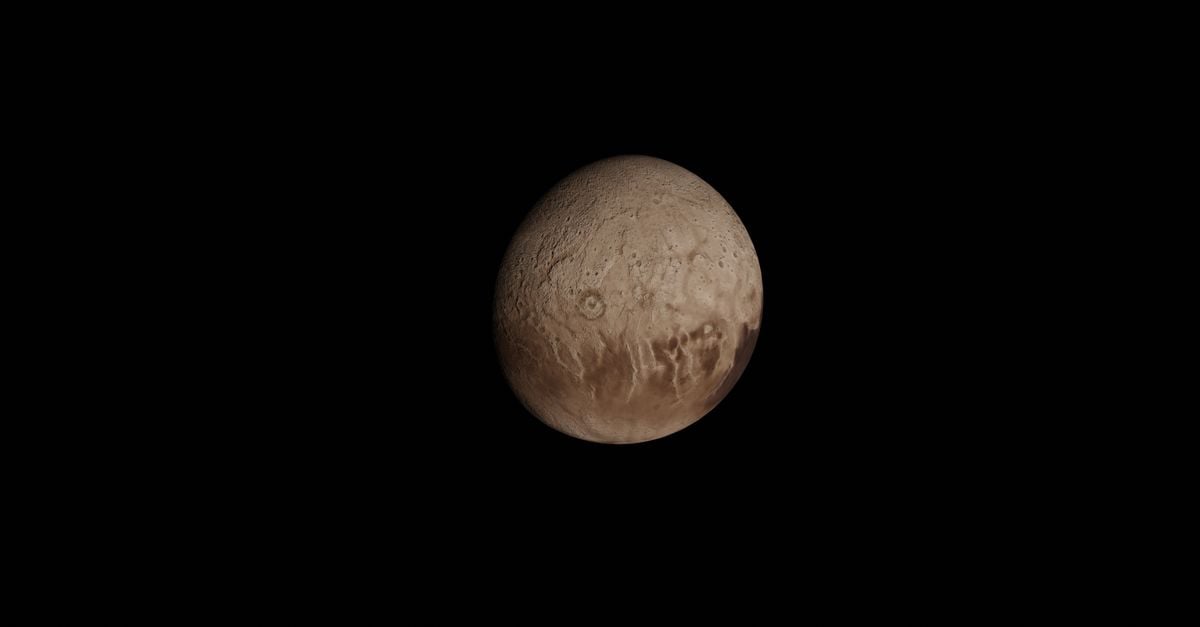
For most of the time we have known about Pluto, it was a smudge. Even the Hubble Space Telescope could resolve it only into a few blurry pixels. So when a spacecraft finally reached it in 2015, almost everyone expected the same thing: a frozen, cratered ball of ice, geologically dead for billions of years.
What turned up instead was one of the bigger surprises in modern planetary science.
I am a writer with a long interest in this beat, not a planetary scientist, so treat this as a careful reading of the findings rather than expert testimony.
The flyby
NASA’s New Horizons spacecraft launched in early 2006 and spent more than nine years crossing roughly five billion kilometres to reach Pluto, sweeping past it on 14 July 2015. It was a flyby, not an orbit, so the close encounter lasted only hours, but the spacecraft gathered so much data that it took well over a year to send all of it back across that distance.
Operating that far from the Sun, where solar panels are useless, New Horizons runs on a nuclear battery, the same kind of plutonium-powered generator that I have written about as the only thing keeping our most distant probes alive. It is the sole spacecraft ever to have visited Pluto up close.
A world that should have been dead
The expectation of a dead, cratered surface came from simple reasoning. Pluto is small and desperately cold, its surface sitting near minus 230 degrees Celsius, and it has no giant neighbour to flex and heat its insides. Bodies like that were assumed to have frozen solid early and stopped changing.
Pluto did not read the memo. Its most famous feature is the bright, heart-shaped region now called Tombaugh Regio, and the left lobe of that heart, a vast plain named Sputnik Planitia, turned out to be an enormous glacier of nitrogen ice. Its surface is smooth and almost entirely free of craters, which is the tell-tale sign of a surface being renewed. Something is actively resurfacing it. The nitrogen ice appears to churn and flow, and the plain is broken into cells the way a slowly boiling liquid is.
Elsewhere New Horizons found mountains standing kilometres high, built not of rock but of water ice, which at Pluto’s temperatures is hard enough to behave like bedrock. There were signs of what may be ice volcanoes, and a thin nitrogen atmosphere layered with a surprising blue haze. None of it fit the picture of a frozen relic.
Pluto does not travel alone. It has five known moons, and the largest, Charon, is so big relative to Pluto, roughly half its diameter, that the two do not simply orbit each other in the ordinary way. Their shared centre of gravity sits in the empty space between them, so they wheel around that point like a slowly turning dumbbell, each permanently showing the other the same face. Charon has its own geology too, including a canyon system that dwarfs anything on Earth. It is less a planet and a moon than a genuine double world.
The hint of a hidden ocean
The strangest possibility to come out of the flyby is that Pluto may hold a liquid water ocean beneath its icy shell, even now.
The evidence is indirect. It rests largely on the position of Sputnik Planitia and the way Pluto’s crust seems to have responded to the weight of that giant ice sheet, which is easier to explain if a layer of liquid water sits below. This is an inference from geophysics, not something anyone has seen, and it remains a live question rather than a settled result. But that a body this small and this far from the Sun could still hold liquid water at all would have sounded absurd before 2015.
The demotion, briefly
No piece on Pluto can avoid the other thing that happened to it. In 2006, the same year New Horizons launched, the International Astronomical Union redefined what counts as a planet and reclassified Pluto as a dwarf planet, on the grounds that it has not cleared its orbital neighbourhood of other objects.
The decision still has its critics, and it is a genuine argument about definitions rather than a matter of fact. What I find quietly funny is the timing. Just as Pluto was demoted on a technicality, the spacecraft already on its way would reveal it to be one of the most geologically interesting worlds in the solar system. Whatever you call it, it is not boring.
What to watch
New Horizons did not stop at Pluto. In 2019 it flew past a small, distant object called Arrokoth, the most far-flung world any spacecraft has visited up close, and it is still travelling outward through the Kuiper Belt.
There is a long-running case among scientists for sending a dedicated orbiter back to Pluto, to study over years what New Horizons could only glimpse in hours. Whether that mission is ever funded is uncertain. For now, the lesson of the flyby is the one worth keeping. A world we had written off as a dead speck turned out to be active, layered and strange, which is a decent reminder that distance and cold are not the same as lifelessness.