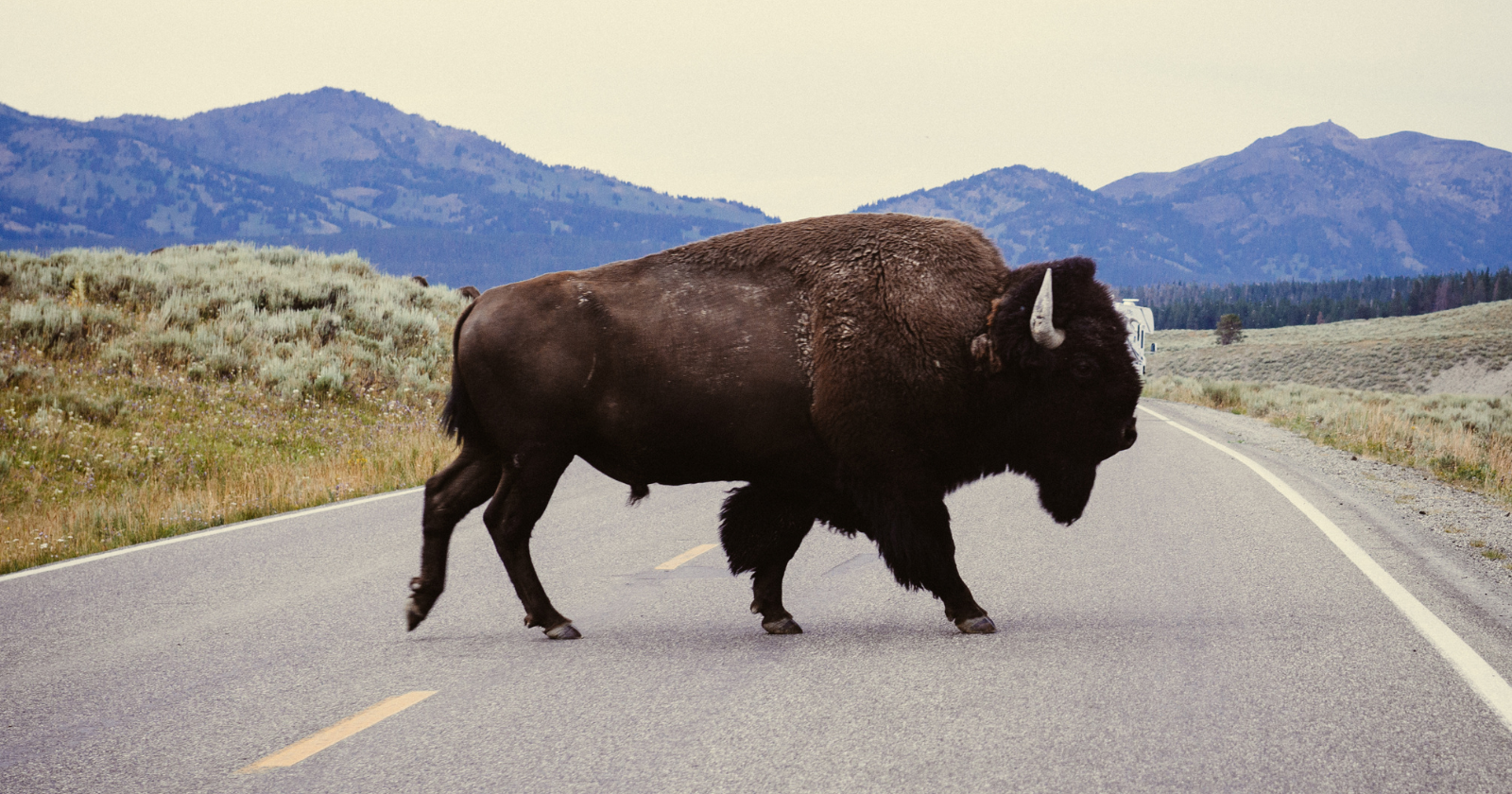
The trouble with a bison is that it does not look like a threat.
A big, shaggy, slow-blinking animal standing in a meadow, working its jaw, apparently indifferent to the line of cars and phones twenty feet away. Everything about the picture says you could wander over and it would not much care.
That impression is almost exactly wrong, and it is the reason people keep getting hurt.
Start with the speed, because it is the part nobody believes. A bison can run at around 35 miles an hour. Usain Bolt, in the middle of the 100-meter world record that still stands, topped out at about 27.8. So the placid brown animal in the field is quicker over open ground than the fastest human who has ever been timed, and you, in hiking boots, holding a phone, are not him. There is no version of the sprint where you win.
Now add the mass. A bull can weigh up to a ton, and it can pivot far more quickly than you would guess from something that size. It does not need much time to close the gap. It needs a reason, and standing too close can be reason enough.
The National Park Service is blunt about the result: “bison have injured more people in Yellowstone than any other animal”, bears and wolves included. The park asks visitors to stay at least 25 yards back, which sounds like a lot until you have seen how fast that gap closes. A review of one year’s injuries found the same story behind all five cases: people failed to maintain the required distance, with three injured while taking photographs only a few feet from the animal.
What I find genuinely interesting is the misjudgment underneath it, because it is such a human one. Our sense of danger is tuned for teeth. We give a wide berth to the animals that look like predators, the ones with the eyes on the front of the head and the obvious weaponry, and we relax around the big herbivores that read as livestock. A bison triggers the same part of the brain that files “cow”: large, calm, harmless. The nickname people use, “fluffy cow,” captures the error precisely. It is affectionate, and it is the whole problem in two words.
The bears get the fear and the warning signs and the bear spray, yet bison have the larger Yellowstone injury record. The animal that looks like it belongs in a petting zoo is the one the park most often warns visitors not to underestimate. That is not a fact about bison so much as a fact about us. We are quite bad at reading risk off appearance, and we are especially bad at it when something large is behaving calmly, because calm reads as safe.
None of this makes a bison a villain. It is a wild animal minding its own business in the one place it is supposed to be able to do that. The danger only appears when a person decides the animal is tamer than it is and steps inside the distance it is willing to tolerate. The safe move is dull and it works: keep well back, use the long lens, and remember the calmest-looking thing in the meadow might be the one most able to outrun you. Because it is.