Around the world, economic output averages about $25,000 per person a year. In the United Arab Emirates, that figure is around $79,000 (2024), placing it among the world’s higher-income countries.
What makes that gap strange is how recent it is. Within living memory, the same stretch of coast was poor and lightly developed.
It was not slow accumulaton over centuries. It is the story of a single lifetime.
The world the oil found
Before oil, the seven small territories along the lower Gulf were known as the Trucial States and tied to Britain by treaty. They lived on pearling, fishing, dates and trade. It was a hand-to-mouth economy, seasonal and precarious, and the pearl was its mainstay. Boats went out for months at a time, and divers worked the offshore beds on a single breath. It was hard, dangerous work, and when the industry went, it went fast.
It helps to be concrete about how little there was. When the federation formed in 1971, the new state was still building its national institutions, while modern roads, schools, hospitals and housing were being expanded from a limited base. That is the baseline the wealth started from.
What the pearl collapse did
The pearl trade did not fade gently. It had been weakening for years, and the crisis became acute by the late 1920s and 1930s. Poor harvests, debt and disruption from war had already damaged it; the Great Depression and Japanese cultured pearls deepened the decline. A natural pearl was suddenly competing with a far cheaper alternative.
By the late 1930s, accounts describe people struggling with a lack of food and money, with some leaving for Kuwait and Bahrain to avoid starvation.
Oil, federation, and the speed of change
Oil turned up, with some irony, right under the old economy. It was found offshore at Umm Shaif in 1958, beneath a former pearling bed, and the first cargo of crude left Abu Dhabi in July 1962. Nine years later, six emirates signed the agreement that created the UAE on 2 December 1971, with Ras Al Khaimah joining on 10 February 1972.
What money does when it arrives that fast depends a lot on who directs it. Sheikh Zayed bin Sultan Al Nahyan, ruler of Abu Dhabi from 1966 and the country’s first president, put oil revenue into schools, hospitals, housing and roads. His own framing was blunt. Zayed said, “We use wealth to serve our people, to build schools, universities and hospitals, roads, farms and factories.”
What wealth at this scale actually looks like
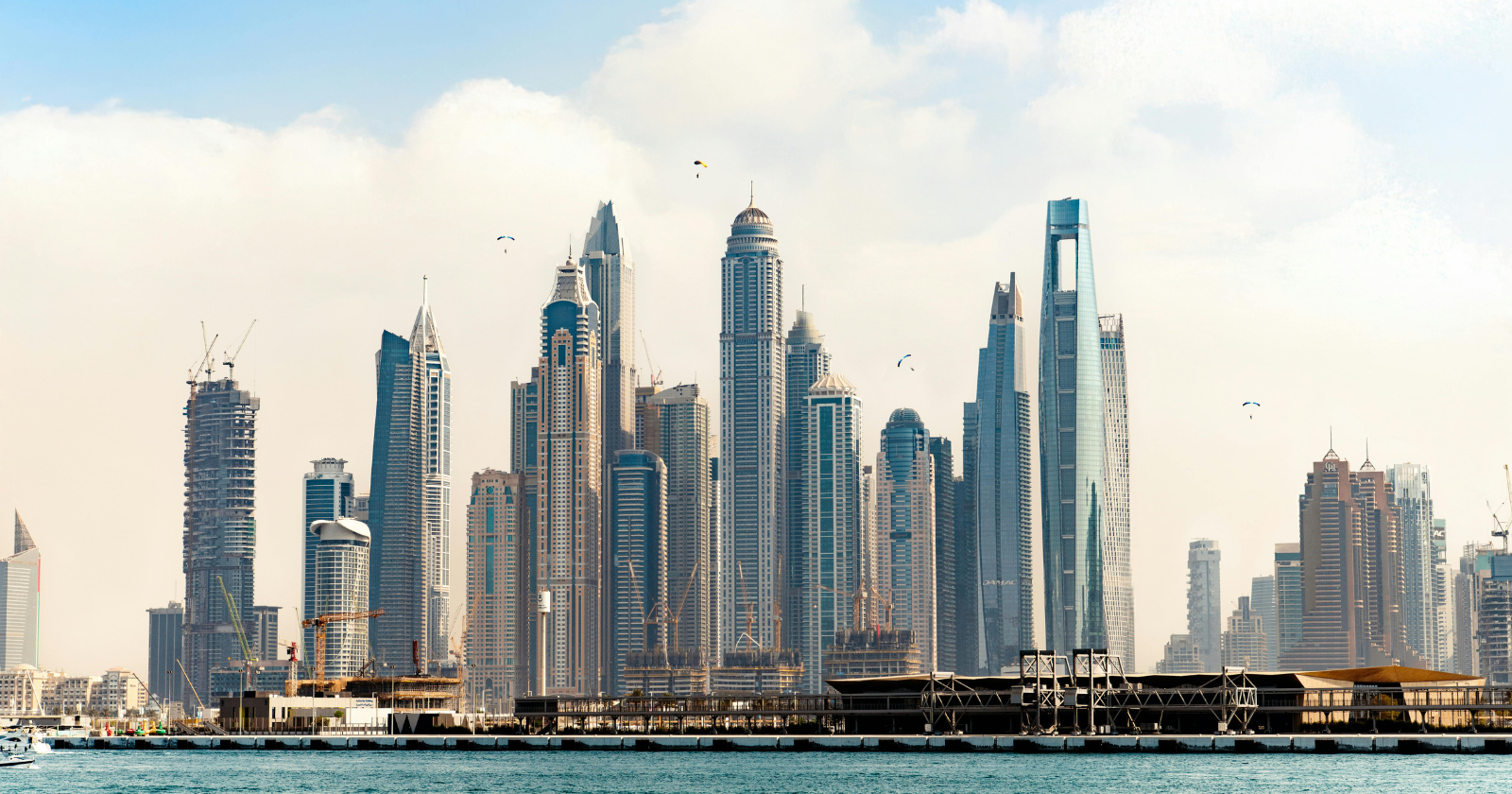
The country today sits near the top of the world tables on output per head. And it is not just high-income, it is intensely urban. About 86 percent of people live in urban areas, against a global average of nearly 60 percent. A place of pearling boats and fishing camps became one of the most city-dwelling nations on Earth inside sixty years.
Cities that were far smaller in the 1960s now hold the vast majority of the people. The desert and the coast are still there, but the center of gravity moved to the tower and the highway in a single generation.
The question the numbers leave open
GDP per head is an average of economic output, and the population it averages includes a large migrant workforce. Averages smooth over who actually holds what. Wealth and wellbeing are not the same thing, and one does not automatically deliver the other.
What it has meant for the people living inside it, spread across citizens, residents and workers who arrived from elsewhere, is a harder question, and the headline numbers are not built to answer it. The move from a poor, lightly developed region to a high-income country happened.
What it added up to, and for whom, is the part still worth arguing about.