

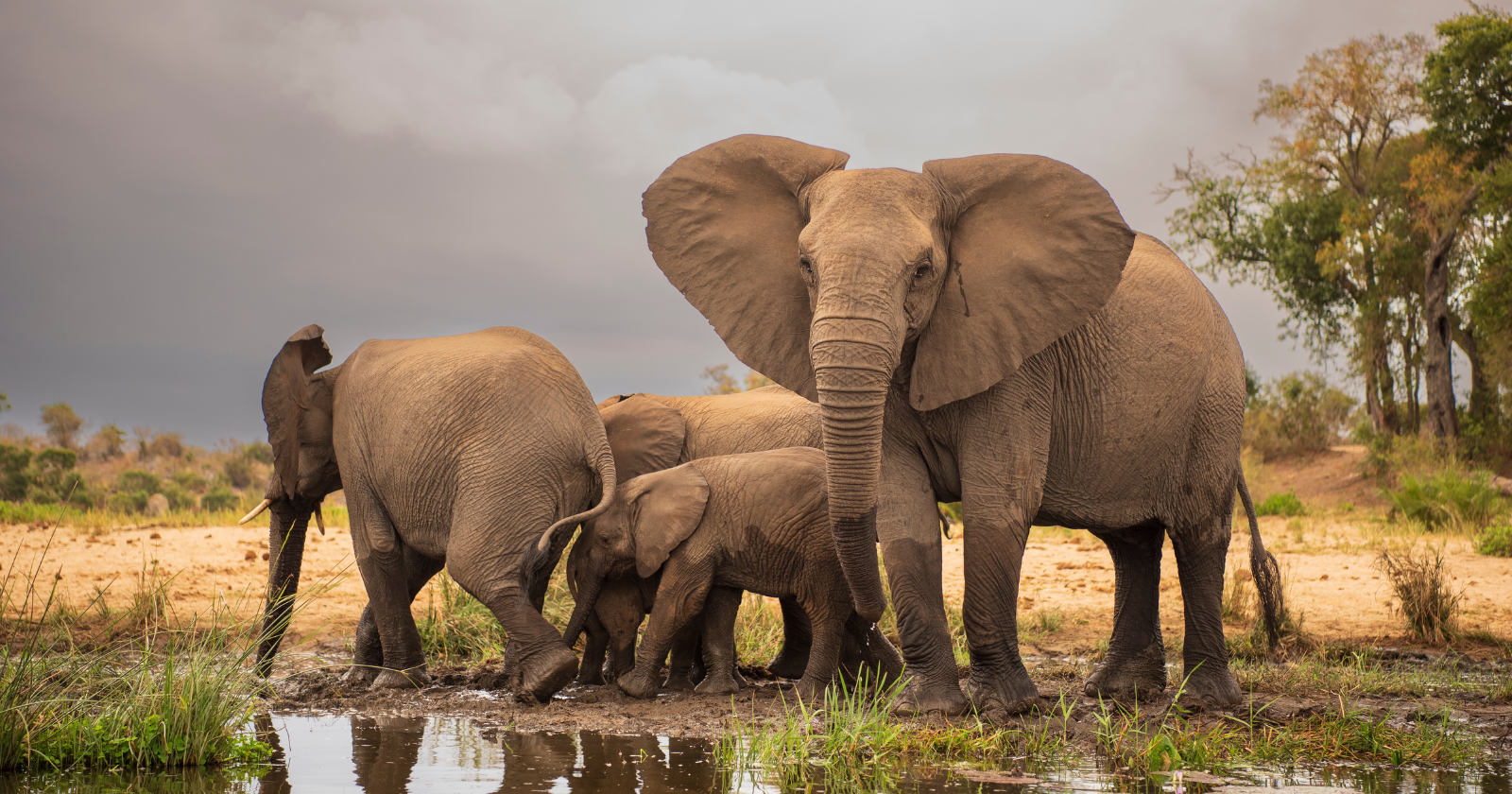
A name is a strange thing to share with an elephant. For a long time, few comparable abilities had been identified elsewhere in the animal world, apart from species that address others by imitating their distinctive calls. A study published in June 2024 suggests African savannah elephants may use something closer to human names.
We are not zoologists, animal behaviourists, or acoustic researchers, and nothing here is a settled verdict on elephant cognition. This is one team’s interpretation of one dataset, cautiously framed by the authors themselves. Treat it as a fascinating clue, not a closed case.
What the researchers actually found
The work came out of Colorado State University and involved researchers from Save the Elephants and other organisations, led by behavioural ecologist Michael Pardo. His team used machine learning to examine a large archive of low, rumbling calls from wild elephants in Kenya.
They reported that these calls contained individually specific, name-like acoustic information associated with the particular animal each call was aimed at. In plain terms, a computer model could analyse a rumble and predict which elephant it was meant for more accurately than expected by chance.
The archive was large and slow to build. The recordings ran between 1986 and 2022. The analysis drew on about 469 calls, involving 101 elephants doing the calling and 117 receiving calls. The fieldwork behind it included 14 months of intensive fieldwork over four years, tracking and recording animals in and around Amboseli National Park and the Samburu and Buffalo Springs reserves.
Why non-imitative labels matter
This is what sets this apart from earlier animal work. A few species already seem to address each other, but the best-known examples involve copying.
Dolphins and parrots can address one another by imitating a signature call associated with the addressee, Pardo has explained. A dolphin, in effect, may call you by reproducing the noise that identifies you.
A human name does not normally work like that. Your name sounds nothing like you. It is an arbitrary label used by the people around you. And that, cautiously, is what the elephants seem to be doing.
As Pardo put it, his data“suggest that elephants do not rely on imitation of the receiver’s calls to address one another”, which is more similar to the way human names work. Note the hedge in his own words. “suggest” is not “our data prove,” and that difference matters.
How the playback experiment worked
A sound pattern a computer can sort is one thing. Whether the elephants themselves recognise that a call is directed at them is another. To test that, the team went back into the field and played recordings to 17 wild elephants, comparing calls originally addressed to each subject with calls from the same caller that had been addressed to another elephant.
The animals reacted differently depending on who a call was for. When an elephant heard a call originally aimed at it, it tended to respond more strongly, vocalising sooner or approaching the speaker more quickly, than when it heard a call meant for someone else. As Pardo described it, this indicates that elephants can determine whether a call was intended for them just by hearing it, even when removed from its original context.
When the call was meant for another animal, the response was generally weaker. Pardo’s account is worth quoting because he does not overclaim. They were probably temporarily confused by the playback but eventually dismissed it as a strange event and went on with their lives, he said. That is an interpretation of their behaviour, and he presents it as one.
What it does and doesn’t tell us
This is a single study, and the authors lean on words such as “suggest” and “probably” rather than declaring the matter closed.
A later published author correction reported errors in playback data points. After the recordings were rescored, the results did not change qualitatively and remained statistically significant.
What the work offers is carefully framed evidence, not a final verdict on how elephants think.
Still, if the finding holds up, it raises an obvious question: why elephants? Co-author George Wittemyer’s answer is convergent evolution, the idea that very different animals can arrive at a similar solution because they face similar pressures. It’s probably a case where we have similar pressures, largely from complex social interactions, he suggested. Female African savannah elephants live in complex, shifting social networks in which groups split apart and reunite, making individual recognition particularly important.