

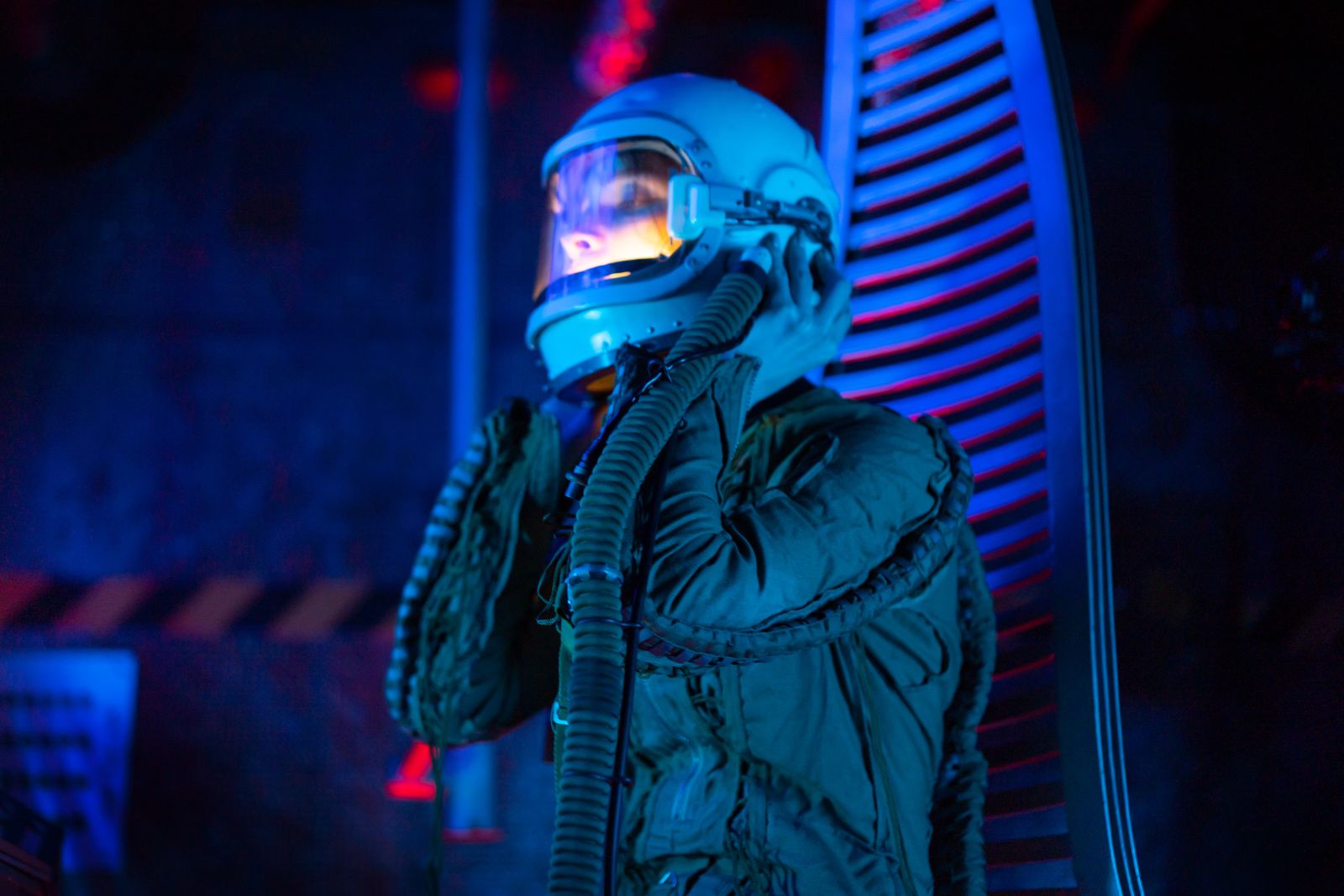
Somewhere above your head, roughly 400 kilometres up, an astronaut is drinking yesterday’s urine. Not metaphorically. The water in the bottle clipped to the wall of the International Space Station’s Tranquility module has been through a centrifuge, boiled under low pressure, filtered through a multi-stage distiller, and chemically scrubbed until it comes out cleaner than most tap water on Earth. The machine that does this — combined with the toilet that feeds it — took NASA roughly four decades to get right, and the newest version of the toilet alone cost $23 million to design and build.
The recycling rate now stands at about 98 percent. Every hundred litres of sweat, breath condensate, and urine that goes into the system comes back out as ninety-eight litres of potable water. The remaining two percent is brine — too salty, too concentrated, too stubborn to crack.
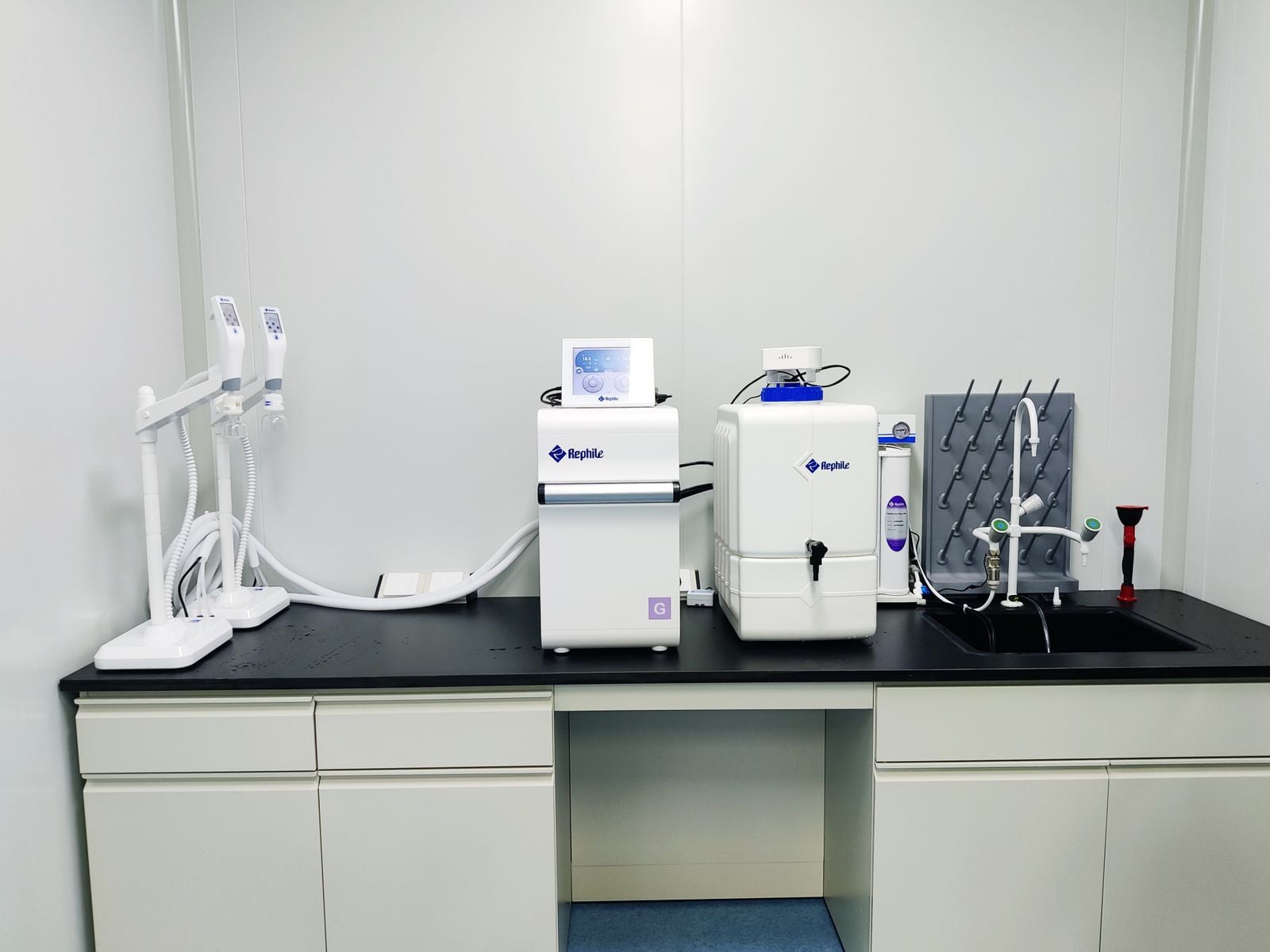
The toilet that took six years and $23 million
The current toilet on the American segment of the station is officially called the Universal Waste Management System, or UWMS. It arrived at the station in 2020 aboard a Northrop Grumman Cygnus cargo vehicle and was installed alongside the older commode already in use on the U.S. segment.
It is smaller and lighter than the previous unit, weighing about 45 kilograms. It is made largely of titanium, because titanium can be shaped into the odd internal geometries the airflow requires without corroding when hit with acidic urine and pretreatment chemicals. The seat is contoured. The funnel that captures urine was redesigned specifically so that female astronauts could use it without the awkward posture the older Russian design forced.
The $23 million figure covers two units — one for the ISS, one destined for the Orion capsule on Artemis II. According to reporting on the Artemis II mission, that makes it the second-most-expensive toilet ever flown. The record still belongs to the Space Shuttle Endeavour’s Waste Collection System, which cost roughly $30 million in the early 1990s.
The redesign was the first space toilet built specifically to work well for female as well as male astronauts.
Why the centrifuge matters
In microgravity, liquid does not fall. It clings, it beads, it drifts. A conventional toilet — which depends on gravity to move waste from the bowl into a pipe — is useless. So the UWMS uses airflow instead. A fan pulls air through the funnel and the seat at high velocity, dragging urine and solid waste along with it.
Urine is diverted immediately. A dedicated hose routes it into the Urine Processor Assembly, which lives one module over in the Tranquility node. The first thing that happens there is the centrifuge.
The Distillation Assembly is a rotating drum. It spins fast enough to create artificial gravity along its inner wall — enough to force liquid to behave the way it does on Earth, pooling and flowing predictably. Inside the spinning drum, urine is heated under a partial vacuum, low enough pressure that water boils off well below its sea-level boiling point. The steam is condensed, captured, and passed downstream. The concentrated brine that remains gets shunted off to a separate tank.
That distillate is not yet drinkable. It goes into the Water Processor Assembly, which runs it through particulate filters, then through multi-filtration beds that strip out organic and inorganic contaminants, then through a catalytic reactor that oxidises anything the filters missed. The final step is an iodine dose to kill microbes. What comes out the far end meets drinking-water standards that NASA describes as stricter than most municipal supplies in the United States.
Forty years of failed prototypes
The lineage of the current system runs back to the 1970s, when NASA first began seriously studying closed-loop life support for long-duration missions. Skylab, the American station that flew in 1973 and 1974, made no attempt to recycle water. Every drop had to be launched from the ground. So did the Space Shuttle’s water supply, which was actually a byproduct of the fuel cells that generated the orbiter’s electricity — hydrogen and oxygen combining to make both power and drinking water.
The problem is that hauling water to orbit is punishingly expensive. Water weighs a kilogram per litre, and every kilogram launched costs thousands of dollars. A crew needs substantial amounts of water daily for drinking, hygiene, and station operations. Over a six-month mission, that adds up to significant mass, before you count what the plants and experiments need. The math simply does not work for anything beyond low Earth orbit.
So NASA and its contractors — Hamilton Standard, then Hamilton Sundstrand, now Collins Aerospace — spent decades iterating. Early prototypes in the 1980s and 1990s used reverse osmosis membranes that fouled too quickly. Later versions tried thermoelectric distillation and failed. The centrifuge approach was selected in the late 1990s, and the first flight-ready Water Recovery System was installed on the ISS in 2008, arriving aboard Space Shuttle Endeavour.
It did not work at first. The Distillation Assembly’s centrifuge motor drew more current than expected and shut down repeatedly. Engineers on the ground spent months troubleshooting via telemetry before the crew swapped out components. Recovery rates improved over the following years. The system eventually crossed the 98 percent threshold after the addition of a brine processor that squeezed additional water out of the concentrate the distiller left behind.
What the astronauts actually taste
Canadian astronaut Chris Hadfield, who commanded Expedition 35 in 2013, filmed a widely watched demonstration of the Water Recovery System from orbit and told viewers that the water it produces ends up purer than most of the water people drink at home. As for flavour, Layne Carter, the water subsystem manager for the ISS at NASA’s Marshall Space Flight Center, has said it tastes like bottled water — once you get past the knowledge of where it came from. Crew members have long summed up the closed loop with a single line: today’s coffee becomes tomorrow’s coffee.
The system captures sweat and exhaled water vapour as well. The station’s atmosphere is dehumidified constantly — humans in a sealed metal tube produce a lot of moisture — and the condensate feeds directly into the same processor loop. On a typical day, roughly half the water reclaimed comes from urine and half from cabin humidity.
Solid waste is handled separately. It gets sealed into containers and either stored for return to Earth on a departing cargo vehicle or, more commonly, packed into a Cygnus or Progress freighter that will be deliberately deorbited over the South Pacific. It burns up on re-entry along with the rest of the trash.
Why the toilet costs what a house costs
Twenty-three million dollars for a toilet reads like satire until you look at what the number covers. It is not just the hardware. It is years of engineering salaries, hundreds of vibration and vacuum tests, redundant fault-tolerance analysis, and the requirement that the device work perfectly for years without a plumber. There is no plumber. If the toilet breaks, the crew fixes it with the parts on hand, or they use the Russian backup, or they use bags.
Every material had to be certified non-flammable, non-toxic, and compatible with the closed atmosphere. Every screw had to be captive so it could not float away and lodge in a vent. The airflow rates had to be tuned to work in microgravity without splashback. The pretreatment chemistry — chemicals added to urine to prevent precipitation of calcium salts that would clog the distiller — had to be metered precisely, because too little means clogs and too much means the downstream processor gets overwhelmed.
The problems are not theoretical. In April 2026, hours after Artemis II lifted off with the second unit — the Orion version — on board, the urine hose malfunctioned. Mission specialist Christina Koch reset it the following day, but the toilet kept giving trouble through the flight: the crew reported a burning smell coming from the unit and at points fell back on contingency urinals while engineers worked the problem. NASA’s leadership later defended the cost against critics, noting that the alternative — bags, as Apollo used — is what you resort to when the machine fails, and no one on a long mission wants that.
WIRED’s reporting on the design process noted that the UWMS was engineered with exploration in mind, with NASA saying it could eventually fly on lunar landers or spacecraft headed to Mars. On a years-long round trip to Mars, there is no cargo resupply. Every kilogram of water the crew consumes has to be either launched from Earth or reclaimed from what they already have. A 98 percent recovery rate is not a luxury for that mission. It is the difference between a viable expedition and one that dies of thirst.
How many toilets are orbiting Earth right now
For a brief window in April 2026, there were ten advanced toilets off the planet at once. With the Artemis II Orion capsule back on Earth since its splashdown on 10 April, nine remain in orbit, spread across three spacecraft and two space stations. Four are on the ISS: the newer American UWMS in the Tranquility node, alongside older commodes including Russian-built hardware on the Zvezda module. Two are on China’s Tiangong station. One each is fitted to the Soyuz, Crew Dragon, and Shenzhou vehicles when they are docked. The tenth, the Orion unit built for Artemis II, flew around the Moon and came home with its crew.
Tiangong, which China finished assembling in late 2022, uses its own regenerative life support system. Chinese state media reported in 2023 that Tiangong’s water recycling operates at roughly 95 percent efficiency — close to the ISS number, though the underlying engineering is different. Tiangong is smaller, newer, and designed from scratch with recycling in mind, rather than retrofitted the way the ISS was.
The station itself is the most expensive object humanity has ever built, at roughly $150 billion across all partner nations. The water recycling system is a small line item on that ledger, but it is arguably the piece of equipment that made everything else possible. Without it, resupply demands would have crushed the operating budget years ago.
What happens when the station comes down
The ISS is scheduled for a controlled deorbit around 2031, with a SpaceX-built US Deorbit Vehicle contracted at $843 million to drag it into the Pacific. The Water Recovery System will burn up with the rest of it. But the technology will not disappear. Collins Aerospace, which built the current hardware, is already supplying variants to the commercial stations that NASA plans to lease from Axiom, Blue Origin’s Orbital Reef, and Voyager’s Starlab. Lockheed Martin’s Orion capsule carries a scaled-down version. Any Mars-bound vehicle will carry a descendant.
The engineering lesson buried inside the $23 million price tag is that closing a loop is much harder than opening one. It took forty years of iteration, three station generations, and repeated in-flight failures to get from Skylab’s disposable tanks to a machine that turns yesterday’s coffee back into today’s. Museums have catalogued the strange lineage of objects humans have carried into orbit, from personal keepsakes to symbolic tokens. The toilet does not carry the same romance. But it is doing something none of those artifacts ever did, which is keeping people alive.
Right now, if you looked up at the right moment, you would see a bright point of light crossing the sky in about four minutes — the station, moving at 27,600 kilometres per hour. Inside, someone is refilling a drink bottle from a spigot in the galley. The water in that bottle was, three weeks ago, on its way out of a human body. The centrifuge caught it. The distiller boiled it. The filters cleaned it. The iodine sterilised it. And now it is going back in.
Correction, 16 September 2026: The headline and excerpt were revised to make clear that the 98 percent figure applies to the station’s combined water-recovery system, not to the toilet or urine centrifuge alone.