Picture this.
It’s the late 1980s, and satellite images show that a small Central American country has lost more than half of its trees.
Cattle ranches spread across land that used to be dense rainforest.
Loggers work through the last remaining old-growth.
Wildlife populations collapse. Rivers dry up.
By some measures, this country has one of the fastest deforestation rates on the planet.
Fast-forward less than 40 years.
That same country has doubled its forest cover.
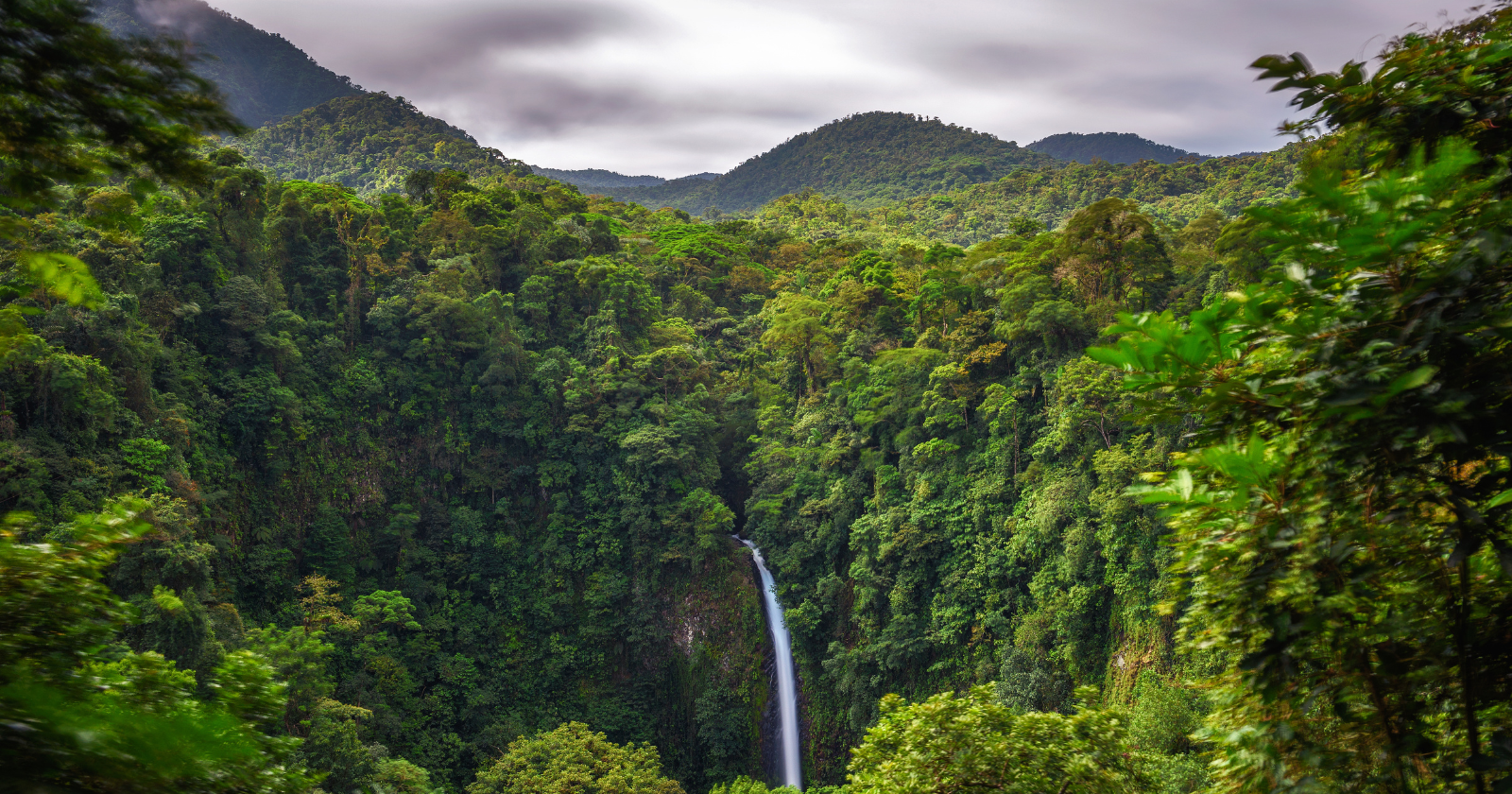
Jaguars and quetzals are back. Rivers run again.
And the government now pays its farmers to protect the trees on their land, funded largely by a tax on fossil fuels.
The country is Costa Rica.
And how it pulled this off is one of the most quietly extraordinary environmental stories of our time.
The scale of what almost happened
Costa Rica covers just over 51,000 square kilometres.
That’s smaller than West Virginia and about the size of Denmark.
In the 1940s, roughly three-quarters of it was forest.
Then came a few decades of cheap credit for cattle, land-titling laws that rewarded people for clearing trees, and a rapidly expanding road network cutting into previously untouched jungle.
The result was brutal.
By the late 1980s, forest cover in Costa Rica had dropped to around 21 percent. Roughly 55,000 hectares of forest, an area larger than the city of Los Angeles, were being lost every single year.
For a country that markets itself today as a paradise of biodiversity, that number is startling.
Here’s the strange part. Costa Rica isn’t a huge country. It holds just 0.25 percent of the world’s landmass. But that same tiny sliver of the world contains almost 6 percent of the planet’s biodiversity.
Losing its forests wasn’t just a domestic problem.
It was a global one.
If you want a visual idea of how this incredible story played out, we came across a video that breaks it down from start to finish.
The moment things changed
Something shifted in the 1990s.
Ecotourism was starting to grow. Costa Rica had abolished its army back in 1948, which freed up money that most governments spend on defence. That money could be redirected.
And people in government started to look at trees not as an obstacle to development, but as an asset.
In 1996, the country passed the Forestry Law, known as Law 7575.
It did something unusual.
It made forests legally recognised as providers of ecosystem services. Carbon storage. Water regulation. Biodiversity protection. Scenic beauty.
All of these were reframed as things a landowner could actually be paid to maintain, rather than tear down.
A year later, Costa Rica launched the Payments for Environmental Services program, or PES for short.
Landowners would sign contracts with the government promising to protect, reforest, or sustainably manage their land. In return, they would receive regular payments per hectare.
The money to pay them came primarily from a tax on fossil fuels, along with water charges and international carbon deals.
The logic was simple. If the polluters are the ones destabilising the climate, they should be the ones paying to fix it.
How the payments actually work
The Costa Rican government doesn’t reward landowners for planting a single row of trees and calling it a day.
The PES program, managed by a state agency called FONAFIFO, offers payments for four different activities. Forest protection, reforestation, sustainable forest management, and agroforestry.
Contracts run for years. Landowners are paid regularly, but they have to keep meeting the terms.
If they clear the land, the payments stop.
Since it launched, the program has invested more than $500 million into landowner payments, brought over 1.3 million hectares under contract, and benefited more than 18,000 families across the country.
More than 7 million trees have been planted.
Over one million hectares of forest, roughly a fifth of Costa Rica’s total area, have been directly protected under the scheme.
By 1998, just two years after the Forestry Law passed, the country announced it had halted deforestation completely. It was one of the first tropical countries in the world to do so.
Then the forest began to regrow.
Why this actually worked
Plenty of countries have tried reforestation programs. Not many have worked at this scale.
So what did Costa Rica do differently?
A few things stand out.
The first is that the payments went directly to landowners. Not to contractors or middlemen. If you owned land with forest on it, you got paid. If you didn’t own the land but were an Indigenous community with recognised traditional rights, the program eventually included you too.
The second is that the payments were linked to something the country was already going to spend money on. Fuel tax revenues existed anyway. Redirecting a slice of them to conservation didn’t require inventing new sources of income.
The third is timing. Costa Rica caught its ecotourism boom just as reforestation began paying off.
Tourists came for the wildlife. Wildlife needed forests. Forests attracted more tourists. Each part of the system reinforced the other.
Stewart Maginnis, global director of the nature-based solutions group at the International Union for Conservation of Nature, told CNN that “In the 1970s and 1980s Costa Rica had one of the highest deforestation rates in Latin America, but it managed to turn that around in a relatively short period of time.”
There’s also a cultural piece that policy documents don’t always capture.
Costa Ricans grew up around the recovery. Children born in the late 1990s watched forest cover climb steadily throughout their childhood.
Protecting nature stopped being a niche political stance and became something closer to a national identity.
What the numbers look like now
Today, forest cover in Costa Rica sits at around 57 percent, according to figures from the country’s Ministry of Environment and Energy.
That’s more than double the low point of the 1980s.
Twenty-five percent of the country’s land is under some form of legal protection. National parks, biological reserves, wildlife refuges. Costa Rica has some of the strongest protected-area coverage of any nation on Earth.
And here’s a number that’s easy to miss.
Costa Rica’s agricultural sector, the same sector that once drove deforestation, is now the top per-capita agricultural exporter in Latin America. Somehow, the country has doubled its forest cover while continuing to produce and export food.
For a country that once seemed destined to become a case study in ecological collapse, that’s a full reversal.
What the rest of the world could learn
Costa Rica isn’t a template that plugs into every country automatically.
It’s small. It’s politically stable. It doesn’t have to fund a military. Its forest history and geography are its own.
But some of the underlying principles do travel.
Paying people directly to keep forests standing works better than telling them not to cut them down.
Funding conservation from fossil fuel revenue creates a natural accounting between the industries damaging ecosystems and the landscapes absorbing that damage.
Long-term commitment matters more than one-off campaigns. Costa Rica has been running its PES program for more than 25 years. That kind of continuity is what allowed the forest to actually recover, not just briefly rebound.
And the biggest lesson might be the simplest.
Reversal is possible.
We often talk about environmental damage as if it’s a one-way trip. Once the forests are gone, they’re gone. Once the biodiversity crashes, that’s it.
Costa Rica is a live example of a country that lost more than half of its forests, then rebuilt them, in a single human lifetime.
A quiet kind of hope
There’s something quietly hopeful about this story.
Not in a saccharine way. Costa Rica still has problems. Deforestation hasn’t been eliminated globally. And the climate crisis is bigger than any one country’s forestry policy.
But when you look at what Costa Rica has actually done, in a country smaller than West Virginia, with a fraction of the resources of most industrialised nations, it becomes harder to argue that reversing environmental damage is impossible.
It just requires the right incentives, the right timeframe, and the willingness to treat forests as something worth paying for.
Which raises an interesting question.
If a country of five million people can double its forest in a generation, what could the rest of us do if we tried?