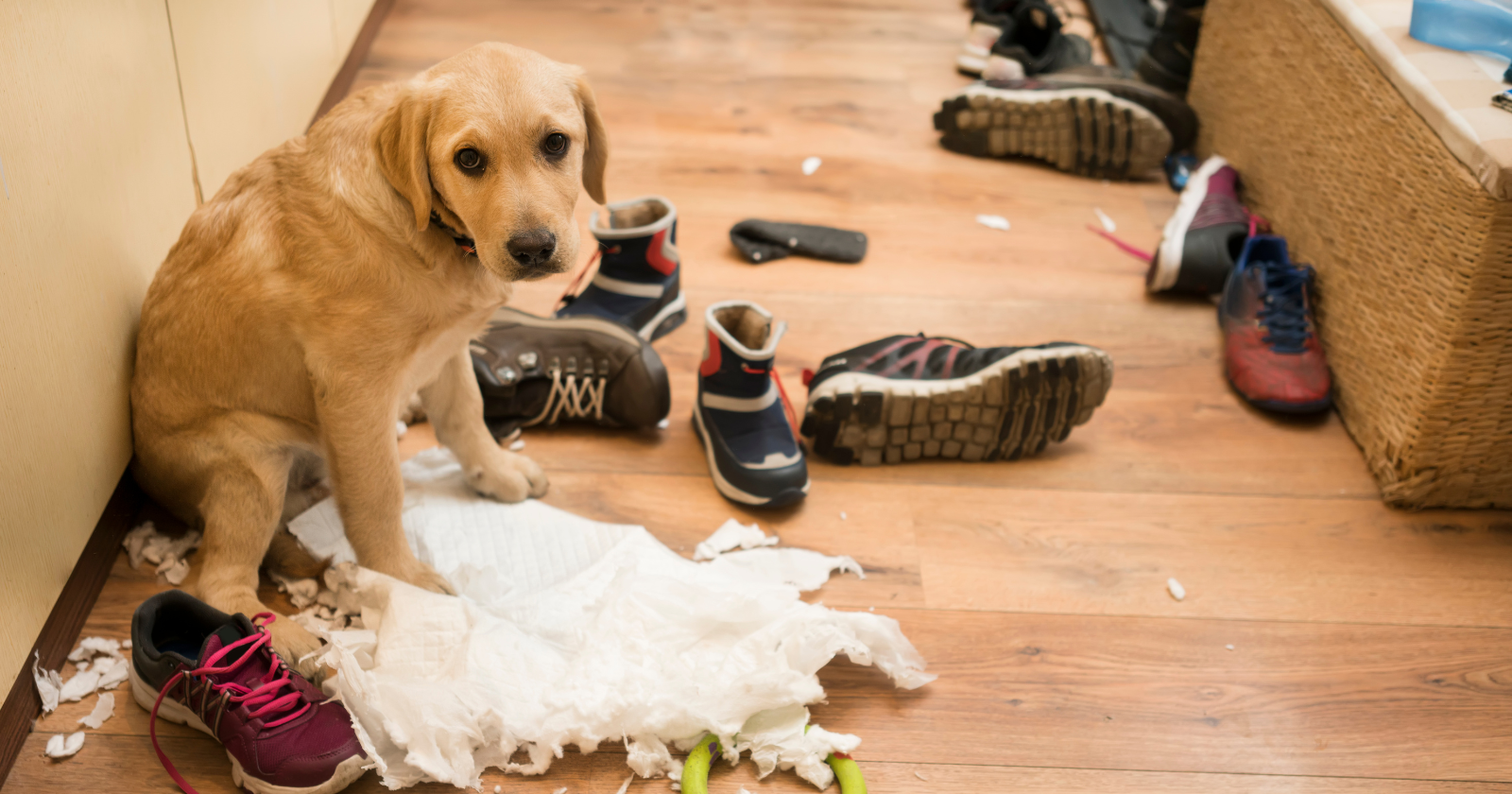
Here’s a number that should give any dog owner pause. In one survey, 74% of owners said they believed their dog feels guilt. That’s most of us, looking at the same lowered ears and averted eyes and reading the same story into it: the dog knows what it did, and it feels bad.
The trouble is that when someone actually tested that story, it fell apart.
The someone was Alexandra Horowitz, a dog-cognition researcher at Barnard College. In 2009 she published a study with the dry title “Disambiguating the ‘guilty look'”. I want to be upfront before we go further: this is one small study of 14 dogs, not a final verdict on the inner life of the species. A strong clue, not the last word.
The experiment that changed how we read dog faces
Horowitz videotaped 14 dogs in their own homes. Each dog was told not to eat a treat, then the owner left the room. While the owner was gone, the dog either ate the forbidden treat or left it alone. Then the owner came back and either scolded the dog or greeted it warmly.
The clever part: the owners were sometimes told the wrong thing about what the dog had done. So you could get an obedient dog being scolded, a disobedient dog being greeted, and every mix in between. For a ten-second window after the owner returned, someone counted each dog’s “guilty-look” behaviors.
If the guilty look really tracked guilt, the dogs who’d actually eaten the treat should have looked guiltiest. They didn’t. What the dog had done made almost no difference. The average number of guilty-look behaviors was 1.4 when the dog had disobeyed and 1.6 when it had obeyed, basically the same.
What made the difference was the owner. When owners scolded, the guilty look shot up. When they greeted, it stayed low. The most exaggerated guilty look of all came from obedient dogs who got scolded anyway, dogs that had done nothing wrong.
What the guilty look actually is
The things owners lump into “the guilty look” are behaviors like avoiding eye contact, dropping the tail, flattening the ears, lying down and rolling over, and moving away. Read them without the guilt story attached, and they look less like a confession and more like a dog trying to calm down a tense human.
Horowitz’s own conclusion was careful. She wrote that “these results indicate that a better description of the so-called guilty look is that it is a response to owner cues, rather than that it shows an appreciation of a misdeed.” As for what the look might be instead, she offered a guess, not a certainty: “What the guilty look may be is a look of fearful anticipation of punishment by the owner.”
What strikes me most is how little it takes to set the look off. The dog doesn’t need to have done anything, and you don’t need to do much either. As Horowitz put it, “merely uttering a dog’s name with a rising, accusatory tone is often enough to elicit preemptive submissive behaviour.” The tone is the trigger. The crime is optional.
Why we’re so convinced anyway
If the evidence is this clear, why do so many of us keep seeing guilt? Part of the answer is that we’re built to. Horowitz has been honest about this, including about herself. Speaking to ScienceAlert, she said: “I look at a dog showing the guilty look and it feels guilty to me. It does! We’re kind of wired to see it this way, so it’s nobody’s fault.”
An older observation points the same way. Horowitz’s paper cites earlier work by P.J. Vollmer noting that dogs look “guilty” near the evidence of a mess whether or not they made it. The look attaches to the situation, and to us, not to any memory of wrongdoing.
What this means, and what it doesn’t
This study did not prove that dogs never feel guilt. Horowitz builds that guardrail into the paper itself, writing that “the present results do not indicate that domestic dogs do not experience guilt.” What she showed is that the look isn’t reliable evidence of guilt, not that the feeling is impossible.
The bigger question, whether a dog can look back on something it did and feel bad about it, stays open. Horowitz is candid that we may not have the tools to answer it. She has said “it’s really hard to design experiments around it.” For now, we don’t know.
So next time your dog gives you the hangdog face by the chewed shoe, you’re probably looking at a reaction to your tone, your posture, your rising voice, not a signed confession.
The look is real. But your dog is likely reacting to something different than many of us assume.