

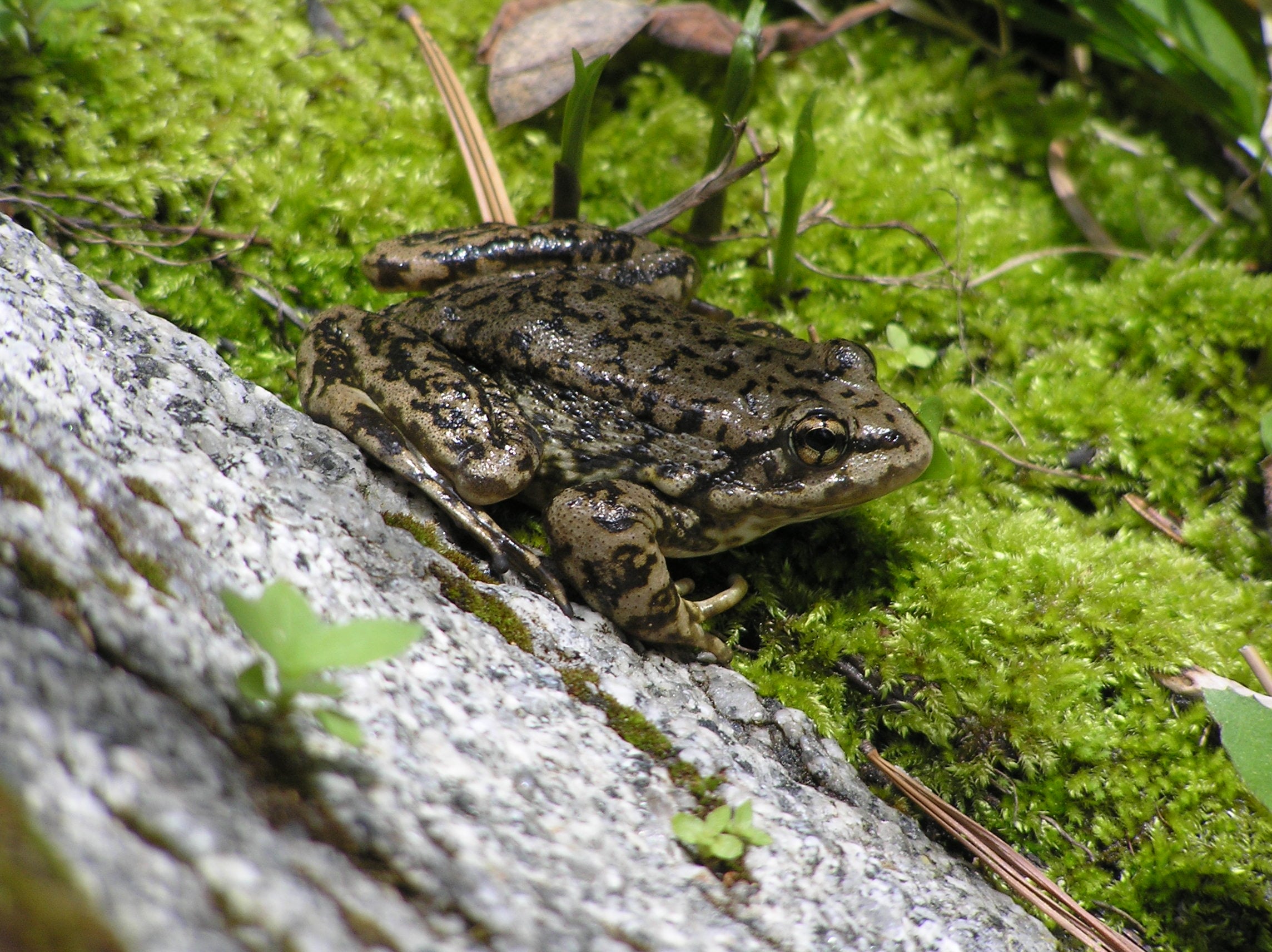
The Los Angeles Zoo said on Sept. 10 that 653 endangered southern mountain yellow-legged frogs, all bred at the Zoo, were returned to streams in their native habitat in the San Gabriel Mountains across two August release days, and that 227 of those animals were raised inside a bio-secure amphibian headstarting facility that had not existed for previous seasons. The announcement frames the year less as a single field operation than as a change in how many frogs the Zoo can carry from hatch to release, and at what size they arrive.
That distinction matters for a species the International Union for Conservation of Nature classifies as Endangered, and whose remaining range sits in perennial streams in select areas of the San Gabriel, San Bernardino, and San Jacinto Mountains. Rana muscosa is a medium-sized amphibian, roughly 1.5 to 3.25 inches on average by the Zoo’s description, with adults running brown and yellow and sometimes grey, red, or greenish-brown, usually marked with dark spots and splotches that read against wet rock the way lichen and moss do. The yellow or light-orange wash on the belly and the undersides of the back legs, and sometimes the front legs, supplies the common name.
Two days in August, and the crews who worked them
The Zoo reported the releases in two tranches: 338 frogs went out on Aug. 19, followed by 315 frogs on Aug. 27. Staff from the Los Angeles Zoo, the Aquarium of the Pacific, and the U.S. Geological Survey carried out the work, which is the standing shape of field days in this program, with animal care staff from the institutions that reared the frogs moving them alongside the federal science agency that leads the recovery effort.
Splitting the cohort across two dates is consistent with how headstarted amphibians are typically moved, though the Zoo did not detail site selection beyond the San Gabriel Mountains, and did not identify individual streams. What the announcement does specify is the composition of the 653: every animal was bred at the L.A. Zoo, and 227 came from the new facility rather than from the Zoo’s existing amphibian holding.
What a dedicated headstarting space changes
The facility was built into a renovated space at the Zoo’s Children’s Discovery Center, a repurposing that gave the amphibian program something it had been working without, which is a single environment devoted to this species from breeding and hatch through to the moment the animals leave for the mountains. The Zoo describes specialized tanks and life support systems tuned for optimal water quality, and a temperature-controlled setting that lets animal care staff oversee the full sequence in one place.
The operational payoff is size at release. Tadpoles given a headstart morph and reach what the Zoo calls a robust size before they are returned, and frogs released at a larger and more developed life stage are less susceptible to predation and to the other pressures of a wild stream than smaller, earlier-stage animals would be.
“Seeing our new headstarting facility transition from a concept to a fully operational reality is a monumental milestone for the recovery of the southern mountain yellow-legged frog,” said Byron Wusstig, Curator of Ectotherms at the Los Angeles Zoo. “By raising these sensitive amphibians in a specialized, temperature-controlled environment, we are significantly increasing their chances of survival. Returning 227 robust frogs to the San Gabriel Mountains is a direct result of this expanded capacity and the tireless dedication of our collaborative team.”
Bio-secure is the operative word. Amphibian rearing programs run under strict separation protocols because the animals are sensitive to water chemistry and to pathogens that move easily between holdings, and a dedicated room with its own life support is easier to keep clean than shared space. The Zoo did not publish survival figures for the released cohort, and none should be inferred from the release count alone; what the 227 documents is throughput, not outcome.
A federal-led partnership, still adding members
The Southern Mountain Yellow-legged Frog Recovery Program was formed under USGS leadership as a collaborative endeavor among the Los Angeles Zoo, San Diego Zoo Wildlife Alliance, Omaha’s Henry Doorly Zoo and Aquarium, the U.S. Forest Service, the U.S. Fish and Wildlife Service, and the California Department of Fish and Wildlife. The Zoo says the partnership has since grown to include the Aquarium of the Pacific, the Santa Ana Zoo, the Big Bear Alpine Zoo, and Birch Aquarium, with additional partners expected to join in the near future.
That expansion is the reason capacity is the story rather than a footnote. Distributing animals across multiple institutions spreads risk, adds rearing space, and gives the program more places to hold tadpoles through the months when they are most fragile. According to the Zoo, this year’s releases add to nearly 7,000 L.A. Zoo-bred frogs returned to the wild since the recovery program began, a cumulative programme figure the Zoo states in round terms rather than as a precise tally.
The next transfer is already scheduled. Later in September, the Zoo said, approximately 112 tadpoles bred in Los Angeles will move to the Santa Ana Zoo for ongoing care, another instance of the network absorbing animals that a single facility would otherwise have to hold alone. Visitors who want to see the species can find southern mountain yellow-legged frogs on view at the Living Amphibian, Invertebrate, and Reptile exhibit, known as the LAIR, during the Zoo’s normal operating hours, where the animals on display sit a few hundred feet from the renovated room that produced a third of this year’s release.