
A claim circulating in marine biology circles deserves careful handling: that the ocean’s dominant carbon-fixing organisms were either undescribed or misclassified for decades, and that the carbon budgets attributed to them are still being rewritten. The framing is provocative. The underlying science about ocean carbon flow is real, and it is being revised in ways that should make anyone tracking climate models pay attention.
What researchers are increasingly certain about is this: the ocean’s biological carbon pump, driven largely by microscopic plankton, moves staggering quantities of carbon from the atmosphere into the deep sea. Some of the organisms doing that work have been misclassified, lumped into broad categories, or simply ignored because they are hard to see and harder to culture in a lab.
The number behind the headline
The world’s oceans absorb roughly a quarter to a third of human carbon dioxide emissions, which makes them the planet’s largest active carbon sink. That figure comes from Geographical’s analysis of ocean carbon dynamics, which estimates humans emit about 35 billion tonnes of carbon dioxide each year, with a quarter to a third pulled into seawater.
Plankton do most of the heavy lifting. Phytoplankton photosynthesize at the surface, fixing carbon into their cells. When they die, sink, or get eaten and excreted, a fraction of that carbon falls to the deep ocean and stays there for centuries. Scientists call this the biological carbon pump, and it is among the most important biogeochemical processes keeping atmospheric CO2 from being far higher than it already is.
The species that rewrote the textbooks
Consider Prochlorococcus. It is now recognized as the most abundant photosynthetic organism on Earth, with an estimated three octillion individuals at any given moment. By some estimates it is responsible for around five percent of global photosynthesis, full stop — every plant, every tree, every algal bloom included. It was not formally described until 1988, after Sallie Chisholm and Robert Olson identified it in the Sargasso Sea using flow cytometry in the mid-1980s. Before that, it was either invisible to standard cell-counting methods or lumped in with other cyanobacteria. The textbooks of the 1970s and early 1980s, when marine microbiology was still being taught from a framework built on what could be seen under conventional microscopes, simply did not contain it.
The same pattern repeats with Emiliania huxleyi, the coccolithophore behind the chalky white blooms across the North Atlantic. Genomic work over the past two decades has shown that what was catalogued as a single species is in fact a complex of cryptic lineages with different physiologies and different carbon-export properties. The species has since been formally moved into the genus Gephyrocapsa, with three distinct clades within the supercomplex now treated as likely separate species. An organism counted as one species in 1985 is now understood as several, each pulling its own weight in the biological pump.
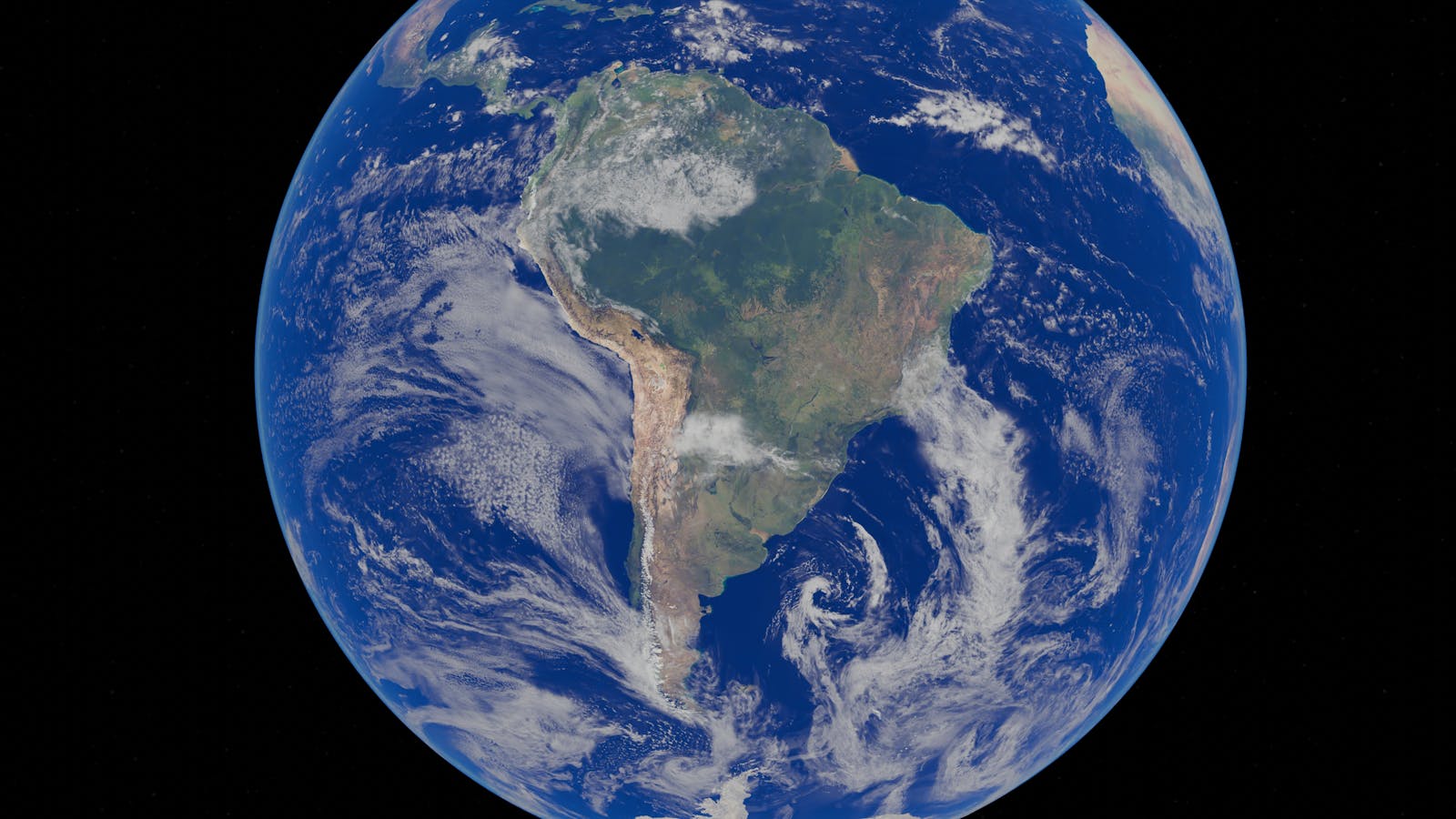
That is the mislabeling story, and it is concrete. The dominant marine carbon-fixers were either undescribed or misclassified for roughly forty years, and the carbon budgets attributed to specific lineages keep moving as genomic tools improve. The reason the cumulative carbon flux is so large is not that any one cell does much — it is that the cells number in the octillions, the ocean is vast, and the sinking flux compounds across an area covering 71 percent of the planet’s surface.
Kelp, eelgrass, and the dissolved carbon surprise
Plankton are not the only marine carbon story being rewritten. A 2025 study published in Communications Earth and Environment found that blue carbon sequestration in Nova Scotia kelp forests and eelgrass meadows is dominated by dissolved organic carbon pathways rather than the particulate burial routes researchers traditionally measured. The authors estimated that DOC release and export accounted for roughly 98 percent of the carbon sequestered by kelp forests in the region.
That distinction matters. For years, blue carbon accounting focused on what could be physically dug up and weighed: peat, sediment, buried biomass. The Nova Scotia work suggests a substantial fraction of carbon leaves coastal ecosystems as dissolved compounds, drifts offshore, and ends up sequestered in deep water in ways that conventional inventories miss entirely.
If a similar accounting gap exists for open-ocean plankton — and there is no obvious reason it would not — then the global ocean carbon sink may be doing more work than current models credit, with specific lineages disproportionately responsible.
The system is under strain
The catch is that the ocean’s ability to keep absorbing carbon is not guaranteed. Warming surface waters hold less dissolved gas. Microplastic pollution appears to interfere with the biological pump in ways researchers are still characterizing. A study covered by The Times of India reported that microplastics may be reducing phytoplankton photosynthesis and impairing zooplankton metabolism, weakening the very pump the climate has been leaning on.
Marine heat waves compound the problem. Prolonged warm anomalies tend to strengthen ocean stratification, which slows the mixing that brings nutrients up to surface plankton and carries their carbon-rich remains downward. The mechanism is not exotic; it is the same physics that makes a warm summer pond go anoxic at depth, scaled up to entire ocean basins.
What happens if the pump weakens
The thought experiment is grim. If oceans stopped absorbing carbon, an extra 25 to 30 percent of annual emissions would stay airborne. Atmospheric CO2 would climb faster, temperature thresholds would arrive sooner, and the probability of crossing tipping points — Greenland ice sheet collapse, Amazon dieback, permafrost thaw — would rise sharply. Abrupt, irreversible climate changes tend to scale with mean warming, so any factor that accelerates warming accelerates everything downstream.
This is not a hypothetical at the species level. If a dominant carbon-exporting plankton lineage is more vulnerable to warming than its taxonomic neighbors, losing it could cut deep-ocean carbon export disproportionately. The system does not need to fail uniformly to fail catastrophically.
The deeper pattern
Carbon flow in the ocean is not a steady-state machine. Seafloor carbon pathways appear to have shifted dramatically during ancient climate swings, suggesting the biological pump has reorganized itself many times in Earth’s history. What sits in textbooks as a stable, well-understood system is actually a moving target whose dominant players have changed across geological time.
The implication for present-day modelling is uncomfortable. Climate projections rely on assumptions about how much carbon the ocean will keep absorbing through 2100 and beyond. If the dominant absorbers are misidentified, or if their roles are more concentrated in a few species than diversity-based models assume, the uncertainty bars on those projections should be wider than they are.
The forests below the water
Three things follow from all of this. Ocean carbon accounting is not settled science, and the figures plugged into climate models carry assumptions that are being actively revised. The biological pump is vulnerable in ways that cascade — heat, plastic, and nutrient disruption all hit it from different angles. And the dominant organisms doing the work were unknown to science within living memory, which means the next revision is probably already underway in someone’s sequencing run.
The forests above water get the attention. The forests below water do most of the work, and they are running on a handful of microscopic species that 1980s textbooks either misnamed or missed entirely. Prochlorococcus alone — an organism nobody had described when most current climate policymakers finished school — is now credited with a measurable share of global photosynthesis.
The ocean is doing more than the textbooks said, with fewer organisms than the diversity arguments suggested, in pathways that classical accounting missed. Whether the system holds depends on choices being made now, on land, by people who have never seen a coccolithophore bloom from a research vessel — and who are betting the climate on cells they cannot name.
Photo by Zelch Csaba on Pexels
