

On January 13, 1920, the New York Times decided to put a physics professor in his place.
Robert Goddard — the Massachusetts scientist now remembered as the father of American rocketry — had just published a modest treatise suggesting that a rocket could reach extreme altitudes, and even, one day, the moon. The Times’ anonymous editorial writer found the idea laughable, and said so in print.
The mockery would take 49 years, a world war, and a crewed flight to the moon to walk back.
The sneer in “Topics of the Times”
The editorial’s core claim was a confident piece of wrong physics. A rocket, it argued, needs something to push against — air — and in the vacuum of space there would be nothing there, so a rocket could never work beyond the atmosphere.
That is exactly backwards, and it had been known to be backwards since the 1600s. A rocket works by Newton’s third law: it throws mass (its exhaust) one way and is pushed the other way in reaction. It doesn’t push against the air; if anything, air gets in the way. A rocket works better in vacuum. The editorial had confused the everyday intuition of pushing off a wall with the actual mechanics of thrust.
Worse than the error was the tone. The piece sneered that Goddard, despite his Clark College post and the backing of the Smithsonian, seemed to “lack the knowledge ladled out daily in high schools” — a public insult to a serious scientist, dressed up as science.
The scientist who took it personally
Goddard was right, and being publicly ridiculed for it changed him.
He had already proven the vacuum point in his own lab, firing a rocket motor inside a bell jar emptied of air and showing it produced thrust just fine. The physics was never in doubt to anyone who did the experiment. But the wave of press mockery — the Times was not alone — wounded him, and he responded by retreating. He grew secretive and press-shy, published less, and worked in relative isolation for the rest of his career.
Historians generally count that as a real loss. Goddard’s patents and designs were decades ahead — liquid fuel, gyroscopic stabilization, steering vanes, fuel pumps — and his retreat arguably slowed American rocketry. German engineers, meanwhile, studied his published work closely; when Goddard inspected captured V-2 missiles in 1945, he recognized his own ideas staring back at him. He died later that year, never having seen a rocket reach space.
The correction, 49 years late
Goddard was 24 years in his grave when the Times finally admitted its mistake — and the timing was no accident.
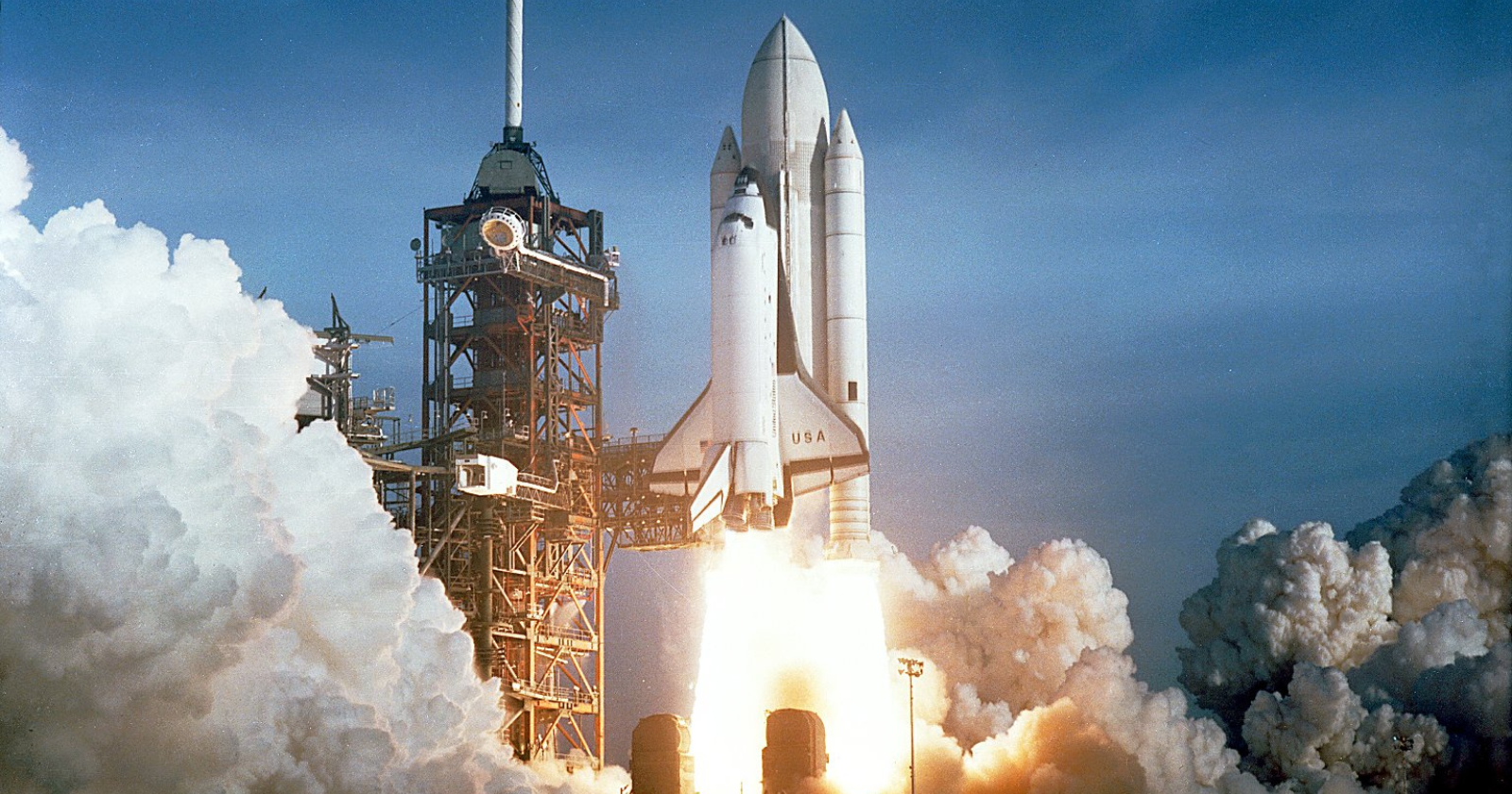
On July 16, 1969, Apollo 11 lifted off for the moon on a Saturn V rocket, the whole world watching a machine do the precise thing the paper had called absurd. The next morning, July 17, buried in a special section on spaceflight, the Times ran a short item headed simply “A Correction.”
It quoted its own 1920 editorial back at itself, then delivered the walk-back: further investigation and experimentation had confirmed Newton’s 17th-century findings, and it was “now definitely established that a rocket can function in a vacuum as well as in an atmosphere.” Then the famous last line, dry as chalk: “The Times regrets the error.”
The comedy in the correction
What makes the correction legendary isn’t the apology — it’s the comic understatement of it.
The paper describes a rocket working in vacuum as something now “definitely established,” as though the matter had been in genuine scientific suspense right up until recently, rather than settled since Newton and demonstrated by Goddard himself half a century earlier. And in a masterpiece of newsroom awkwardness, the correction never once mentions the reason it was suddenly printed — that a crew of Americans was, at that very moment, riding a rocket toward the moon. It reads as if the Times just happened to reconsider some old physics one summer morning, entirely on its own schedule.
Underneath the comedy sits a genuinely useful lesson, which is why the story has outlived nearly everything else the paper printed in 1920. The editorial’s certainty was total, its tone was cruel, and its physics was schoolboy-level wrong — a reminder that confident ridicule is not the same thing as being right, and that the loudest voice in the room mocking an idea as impossible is, often enough, simply the person who hasn’t done the experiment. Goddard had done it. He just didn’t have a Saturn V to prove it with. Forty-nine years later, someone else did — and the paper that had laughed printed three sentences, and regretted the error.
