
For decades, the rule has been simple: massive, quiescent galaxies — the bloated ellipticals whose stars swarm in random directions instead of circling a common axis — are products of deep time. They are what you get after billions of years of mergers grind orderly rotation into chaos. So when astronomers using the James Webb Space Telescope confirmed a galaxy several times the mass of the Milky Way, already done forming stars, and showing no rotation at all, only 1.8 billion years after the Big Bang, they had found something the standard playbook says should not yet exist.
The galaxy, catalogued as XMM-VID1-2075, sits roughly 12 billion light-years away. The finding, made by a team led by UC Davis research scientist Ben Forrest, was published in Nature Astronomy.
Why a still galaxy is a problem
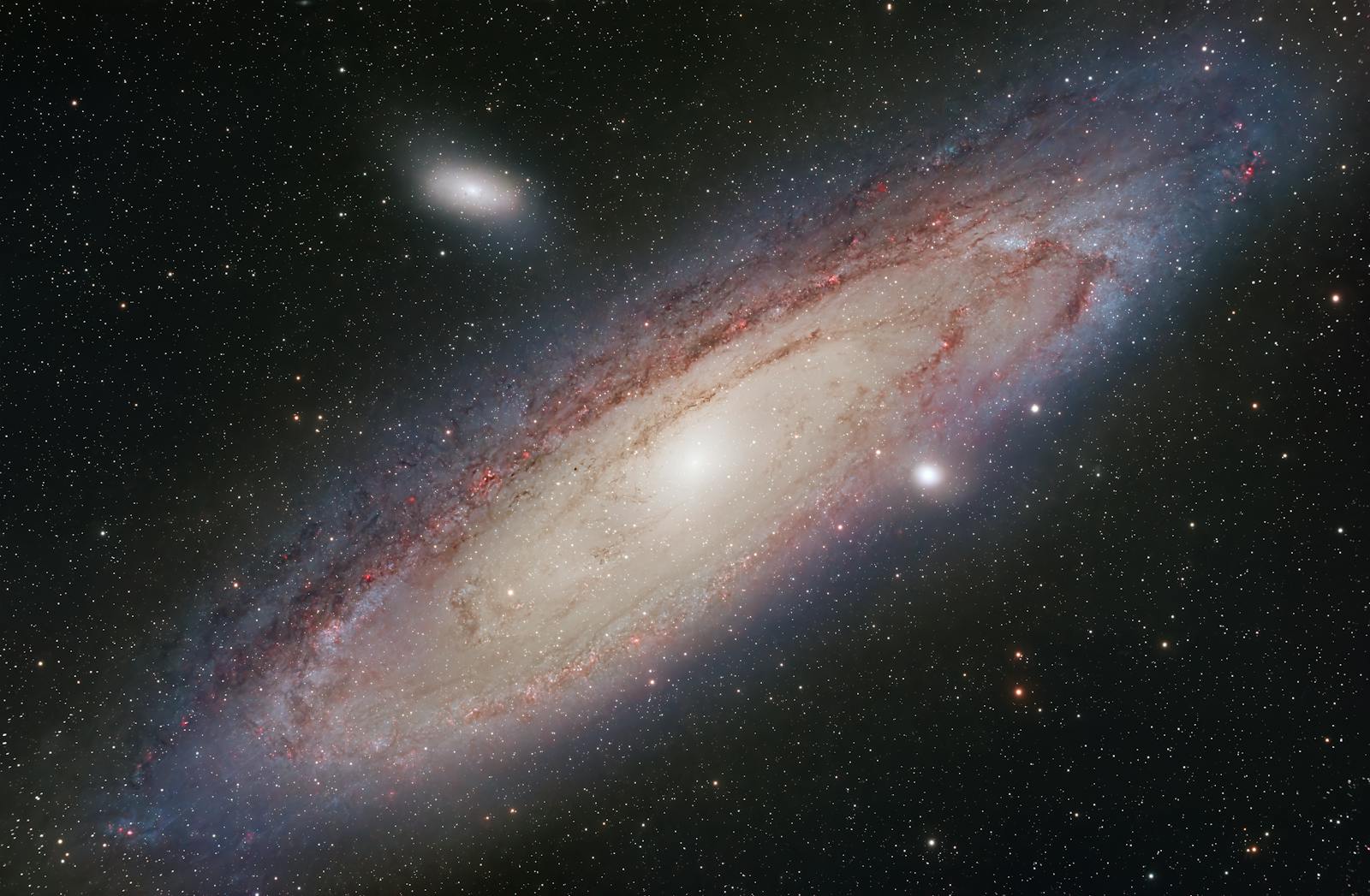
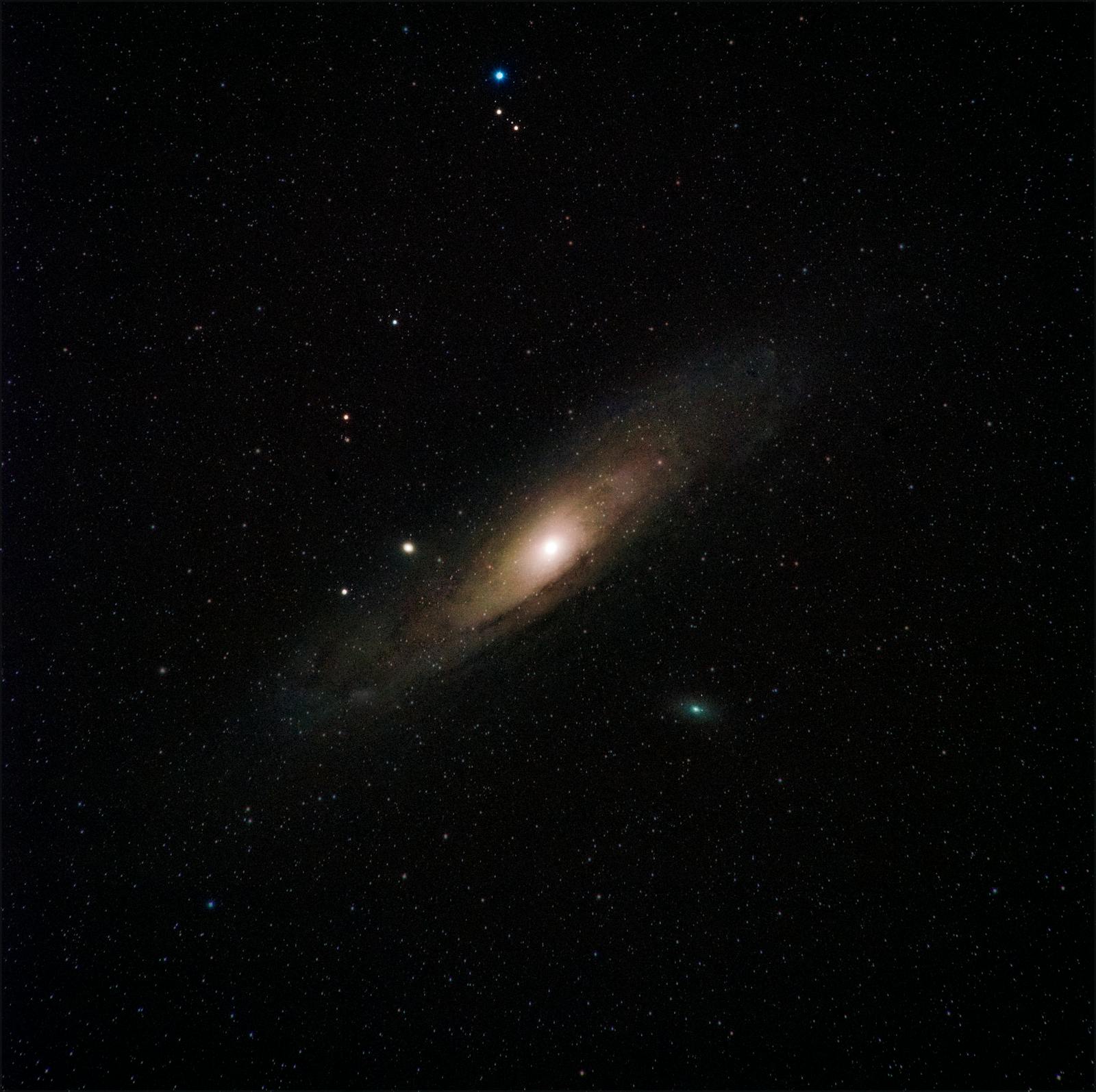
Galaxies spin. The Milky Way spins. Andromeda spins. Nearly every galaxy in the local cosmos rotates on a central axis with stars and gas tracing roughly orderly paths.
The exceptions tend to be old. So-called slow rotators are typically the giants of the present-day universe — vast elliptical galaxies whose stars move in random directions because billions of years of mergers have scrambled any coherent spin they once had. That kind of biography requires time, and lots of it.
XMM-VID1-2075 did not have that time. The light astronomers captured began its journey when the cosmos was less than a third of its current age. Theory says a galaxy this size, this quiet, and this disorganized should not yet exist.
What Webb actually measured
Forrest’s team used JWST to study three massive galaxies of comparable age, measuring how stellar material moved inside each one. One of the three was clearly rotating. Another galaxy showed irregular or disordered motion, according to Forrest. The third — XMM-VID1-2075 — showed no rotation at all. Its stars moved in random directions.
Doing this kind of kinematic measurement on a galaxy this distant has been close to impossible until recently. Nearby galaxies are big and bright enough to study from the ground. High-redshift galaxies are tiny smudges. Webb’s resolution is what made the difference.
The galaxy was originally flagged by the MAGAZ3NE survey at the W.M. Keck Observatory in Hawaii, which had already confirmed it as one of the most massive galaxies in the early universe and one that had stopped making new stars.
Two paths to a slow rotator
There are essentially two ways a galaxy ends up with no net spin.
The first is gradual. Repeated mergers over billions of years add and cancel angular momentum until the orderly circulation of stars breaks down into random motion. This is the standard story for the giant ellipticals at the centers of galaxy clusters today.
The second is fast and violent. A single head-on collision between two galaxies rotating in opposite directions can cancel both spins almost instantly on cosmic timescales. The Webb data points toward the second scenario — the team observed an excess of light to one side of the galaxy, suggesting another object recently interacted with it and disrupted its rotational dynamics.
What the simulations got wrong — or didn’t
Some computer models of early galaxy evolution do allow for a small population of non-rotating galaxies in the first couple of billion years. They just predict these objects should be rare.
The question now is how rare. One confirmed example tells astronomers the phenomenon is possible. A handful more would tell them whether the simulations are roughly right or off by a wide margin. If slow rotators turn out to be common at high redshift, the textbook account of how massive galaxies assemble themselves needs revision.
The Nature Astronomy paper frames XMM-VID1-2075 as a kinematically unique case — the first confirmed slow rotator this far back in cosmic time. Every other massive galaxy spotted at comparable distances has turned out to be a fast rotator.
A pattern of surprises from JWST
This is now a familiar shape of news from the Webb era. The telescope keeps finding objects in the early universe that look more evolved, more massive, or more structurally peculiar than current models predict — quiescent galaxies that quenched too fast, supermassive black holes that grew too large too quickly, and now galaxies that lost their spin before they should have had time to acquire one.
Some of these surprises are connected. Massive quiescent galaxies in the early universe are the same population in which black-hole feedback appears to have shut down star formation prematurely. Slow rotation may be another symptom of that same accelerated, violent assembly history. Whatever was driving early galaxies to grow fast may also have been driving them to collide hard.
What comes next
Forrest’s team plans to keep looking. The point is no longer whether non-rotating early galaxies exist — XMM-VID1-2075 settles that. The point is the population statistics. How many are out there? Do they cluster around specific masses or environments? Do they all show the telltale extra light suggesting a recent major merger?
Those answers will determine which specific predictions have to give. If slow rotators are common at z > 3, then simulations have been overestimating how much angular momentum cold gas delivers to early halos, and they have been underestimating the frequency of major dry mergers in the first two billion years. The implied merger rate would also force a higher predicted abundance of gravitational-wave signals from coalescing supermassive black holes — the kind of signal pulsar timing arrays are now hunting. And the timeline for when galaxies first sort themselves into the rotating-disk versus pressure-supported-spheroid families would have to move substantially earlier.
The early universe, viewed through Webb, is starting to look less like a quiet nursery and more like a place where the largest galaxies were already finished growing — and already breaking the rules — before the cosmos had reached its second billion-year birthday.
Photo by Luis Felipe Alburquerque Briganti on Pexels
