

Engineers wrapped the heat shield in white ceramic paint, bolted it to the front of a car-sized spacecraft, and aimed the whole assembly at a star. The Parker Solar Probe lifted off from Cape Canaveral on August 12, 2018, atop a Delta IV Heavy, beginning a journey no machine had ever attempted: repeated dives into the outer atmosphere of the Sun. Nearly eight years on, the probe has flown through the Sun’s corona for the first time in history, mapped the elusive boundary where the solar wind is born, and directly sampled the magnetic switchbacks that may finally explain why the Sun’s atmosphere is hundreds of times hotter than its surface.
The story of how a spacecraft survives temperatures that would melt steel, while instruments tucked behind it operate at near room temperature, is one of the most remarkable engineering achievements in the history of planetary science.
The mission that took 60 years to launch
The idea predates almost every active space mission flying today. In 1958, the same year NASA was founded, physicist Eugene Parker published a paper predicting the solar wind, the constant outflow of charged particles streaming from the Sun. The scientific community largely dismissed his work at first. It took decades of indirect measurements before the field accepted that Parker had been right, and it took another half century before engineers could build a craft capable of flying into the source of that wind to study it directly.
The Parker Solar Probe became the first NASA mission named after a living person. Parker himself watched the launch in 2018. He died in 2022, but lived long enough to see his theoretical predictions confirmed by a machine bearing his name.
The mission’s design problem was brutal in its simplicity. Get close enough to the Sun to sample the corona directly. Survive the heat. Bring back data.
How the heat shield actually works
The piece of hardware that makes everything else possible is the Thermal Protection System, a shield made of carbon-carbon composite sandwiching a core of carbon foam. The Sun-facing surface is coated with a specially formulated white ceramic paint that reflects as much sunlight as possible.
At closest approach, the front face of the shield reaches extreme temperatures while the instruments behind it remain at relatively cool operating temperatures. That gradient, across just a few inches of material, is the engineering miracle of the mission. Engineers at the Johns Hopkins Applied Physics Laboratory installed the shield in 2018 after years of testing the materials in arc-jet facilities and vacuum chambers.
There is a counterintuitive piece of physics underlying the survival strategy. Space near the Sun is hot but not dense. Temperature measures the kinetic energy of individual particles, not how much heat they can transfer. The corona’s particles are moving extremely fast, but there are very few of them. The actual heat load on the spacecraft comes from solar radiation, not particle bombardment, which is why a reflective shield works at all. NASA’s explanation of why the probe doesn’t melt hinges on this distinction between temperature and heat.
Seven years of Venus flybys
Reaching the Sun is harder than reaching almost anywhere else. Earth orbits at about 67,000 miles per hour, and any spacecraft launched from here inherits that sideways motion. To fall toward the Sun, you have to shed most of that velocity. No rocket exists that can do it directly.
The mission planners solved the problem with Venus gravity assists spread across the mission timeline. Each pass through Venus’s gravity well bleeds energy from the spacecraft’s orbit, dropping its perihelion closer to the Sun. The trajectory was designed to bring the probe within roughly 4 million miles of the solar surface, closer than any previous mission by a factor of seven. Along the way, the WISPR imager unexpectedly captured the Venusian surface through the cloud deck during a 2020 flyby, picking up thermal emission from the hot ground below. NASA later confirmed the imager had mapped distinctive features across multiple flybys, a useful bonus dataset on the way to the main event.
The speed records keep falling
Each perihelion brings the probe closer and faster. As the spacecraft falls deeper into the Sun’s gravity well, conservation of energy translates into staggering velocities. In November 2021 the probe broke its own speed record, hitting roughly 364,621 miles per hour relative to the Sun. By the time the mission reached its planned closest approaches, the spacecraft was the fastest human-made object ever built.
Speed numbers at this scale stop feeling intuitive. At peak velocity, the probe could cross the continental United States in under thirty seconds. It is moving fast enough that relativistic time dilation, while still tiny, becomes measurable.
The closest approaches happened in late 2024 and continued through 2025, when the spacecraft skimmed within approximately 3.8 million miles of the solar surface, deep inside the corona.
Inside the corona: what the data has revealed
The science has been worth the engineering. The probe has answered, or at least clarified, several questions that had haunted solar physics for decades.
The coronal heating problem
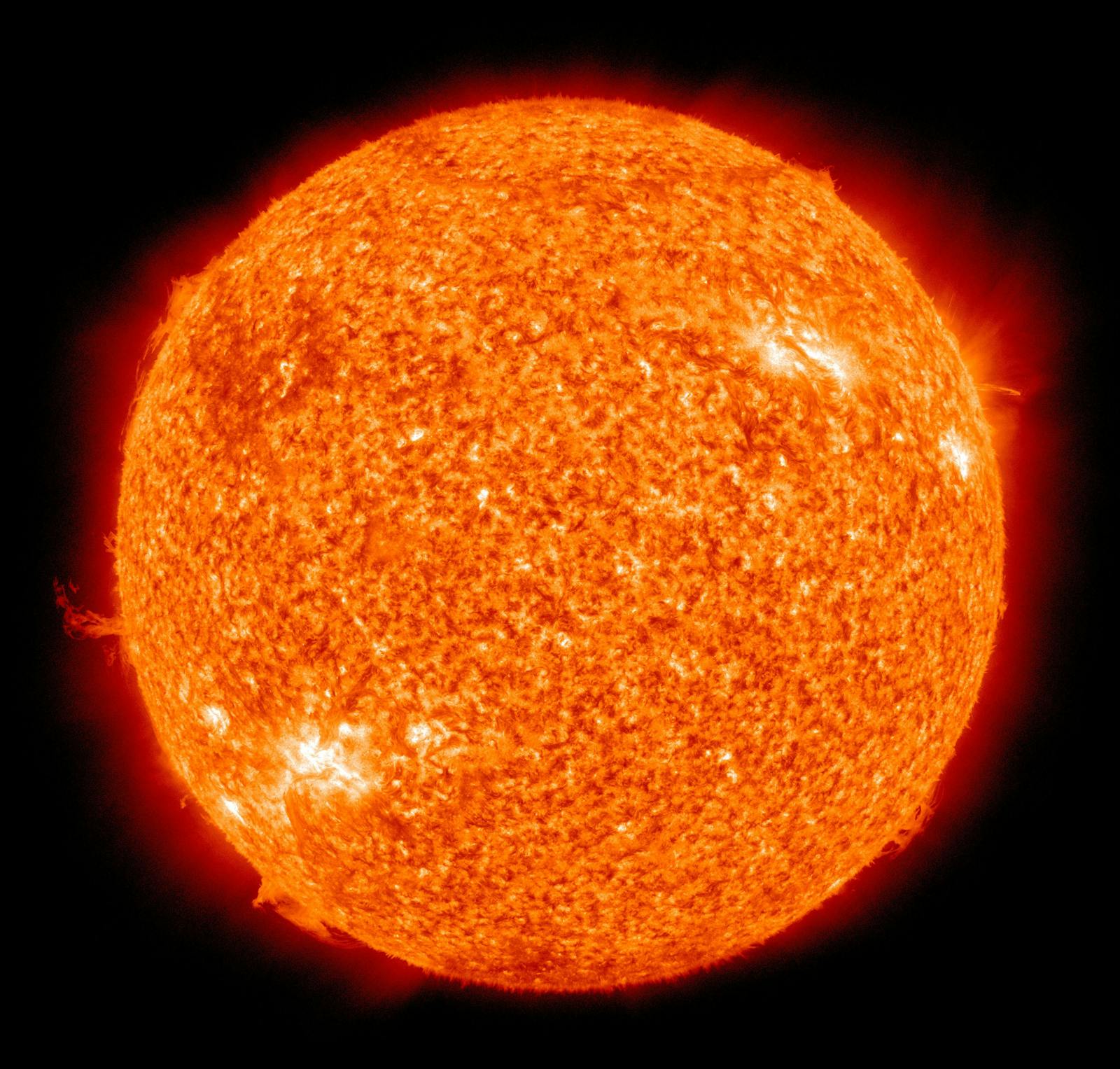
The Sun’s visible surface, the photosphere, sits at about 10,000 degrees Fahrenheit. The corona above it reaches over 2 million degrees. Heat should not flow from cool to hot, yet the corona is hundreds of times hotter than the surface beneath it. Something is depositing energy in the upper atmosphere, but for sixty years no one could pin down what.
Parker’s data has built a strong case for two contributing mechanisms: small-scale magnetic reconnection events and Alfvén wave dissipation. The probe directly sampled the so-called switchbacks, sudden S-shaped reversals in the magnetic field carried by the solar wind. These switchbacks appear to originate near the solar surface and may be the fingerprints of the energy injection process that heats the corona.
Where the solar wind starts
Before the mission, the boundary between bound coronal plasma and the escaping solar wind was a theoretical concept. Parker has now flown across the Alfvén critical surface multiple times, mapping where solar material transitions from being held by the Sun’s magnetic field to streaming outward at supersonic speed. The boundary turned out to be wrinkled and irregular, not a smooth sphere as some models had assumed.
The dust-free zone
For decades, theorists predicted a region near the Sun where solar radiation would vaporize incoming dust grains, leaving a clean inner zone. Parker found evidence of exactly this, along with unexpected structures in the dust distribution further out. The probe has provided new insights into the structure and behavior of inner solar system dust across multiple orbits.
Energetic particle acceleration
The corona turns out to be a much more violent environment, particle by particle, than ground-based observations suggested. Close-up data has revealed the atmosphere filled with highly energetic particles, including bursts of energetic ions that may be linked to the same mechanisms that drive space weather events at Earth.
The instrument suite
Behind the heat shield sit four instrument packages. FIELDS measures electric and magnetic fields. SWEAP samples the bulk plasma, counting electrons, protons, and alpha particles flowing past the spacecraft. ISʘIS, with the Sun symbol embedded in its acronym, detects high-energy particles. WISPR is the imaging system that mapped Venus by accident.
Each instrument had to survive the same thermal environment as the spacecraft itself. Some sensors poke out beyond the edge of the heat shield to sample the plasma directly. These exposed elements are made of refractory materials like tungsten, molybdenum, niobium, and sapphire, chosen for their ability to function while glowing red-hot. The Faraday cup that samples solar wind ions is essentially a small piece of the spacecraft that runs hot on purpose.
What this means for stellar physics generally
The Sun is the only star humans can study at this resolution. Everything learned about coronal heating, particle acceleration, and stellar wind formation here gets exported, with appropriate caveats, to other stars. Astronomers who study exoplanet habitability rely on solar physics to estimate how stellar winds erode planetary atmospheres over billions of years.
The question of whether a small rocky world around an M dwarf can hold onto its atmosphere depends, in part, on how energetic that star’s wind is. Parker’s data on the structure of the solar wind close to its source feeds into models of those harsher stellar environments.
The cost question
The mission’s total cost runs to about $1.5 billion across development, launch, and operations. That is a real number, but it tracks with other flagship planetary science missions. For comparison, the Bennu sample from OSIRIS-REx works out to roughly $9.6 million per gram of returned material, making it one of the most expensive substances on Earth by that calculation. Parker doesn’t return physical samples. It returns data, terabytes of it, downlinked through the Deep Space Network during the long stretches between perihelia when the spacecraft is far enough from the Sun to point its high-gain antenna at Earth.
Whether data is more or less valuable than asteroid dust is a question that depends on what you want to do with it. Both contain information about the early solar system that exists nowhere else.
Comparing engineering risk profiles
Parker’s success looks even more impressive against the backdrop of how often complex spacecraft fail in less hostile environments. Boeing’s Starliner, which has had a difficult flight history including the 2019 orbital insertion anomaly, operates entirely in low Earth orbit, where temperatures are mild and rescue is at least theoretically possible. NASA’s review of that early Starliner test flight noted how a software timing error caused the capsule to burn through fuel that would have been needed for the space station rendezvous.
Parker has no such margin. A timing error on a Sun pass would not produce a failed rendezvous. It would produce a vaporized spacecraft. The autonomous attitude control system has to keep the heat shield pointed at the Sun within a fraction of a degree continuously, with no possibility of ground intervention during closest approach because radio signals take eight minutes one way and the geometry blocks communication entirely during the critical pass.
The spacecraft does this on its own. Solar limb sensors detect any drift, and reaction wheels correct the attitude before any instrument behind the shield gets exposed.
What’s next
The probe will continue making perihelion passes as long as its propellant and instruments hold out. Mission engineers expect operations to continue at least into 2026 and possibly longer. Each orbit returns more data on the solar wind during a different phase of the solar cycle, which matters because the Sun is currently near solar maximum and producing more flares and coronal mass ejections than during the early years of the mission.
Some of the more dramatic possibilities involve flying through coronal mass ejections directly, sampling the plasma of an event that, if directed at Earth, would knock out satellites and power grids. The probe has already encountered a few CMEs during its passes, including one in 2022 that the spacecraft simply flew through.
Eventually the mission will end the way most close-in solar missions end. Either the heat shield will degrade past tolerance, or the propellant for attitude control will run dry, or some critical component will fail in a way that cannot be recovered. When that happens, the spacecraft will not return. It will continue orbiting the Sun, slowly being eroded by its environment, a small carbon disk in a tight elliptical orbit closer to our star than anything else humans have built.
The legacy of touching a star
The Parker Solar Probe shifted what is possible. Before this mission, the inner heliosphere was a region inferred from remote observation and theoretical modeling. Now it is a place that has been visited, sampled, and photographed at close range. The data archive will be mined for decades after the spacecraft itself goes silent.
The most quietly profound thing about the mission may be the precedent. A vehicle was built that operates inside the atmosphere of a star and sends information home. The same engineering principles, scaled and adapted, could in principle be applied to other stars if humans ever build interstellar probes. The heat shield technology has already informed designs for other high-thermal-load missions, and the autonomous attitude control architecture has set a benchmark for any future spacecraft that has to survive without real-time guidance from Earth.
Eugene Parker’s solar wind theory took decades to be accepted. The spacecraft named after him took decades more to be built. Together they have closed a loop that opened in 1958, turning a contested prediction into a body of measured, repeatable physics. The corona is no longer a frontier observed from a distance. It is a place a human-built machine has been, repeatedly, and survived. For a species that has only been spaceflight-capable for a single human lifetime, sending a probe into the atmosphere of its own star and getting the data back is the kind of milestone that resets expectations for what comes next. The Sun has been touched. The instruments worked. The arc keeps bending.
Photo by Jay Brand on Pexels
