
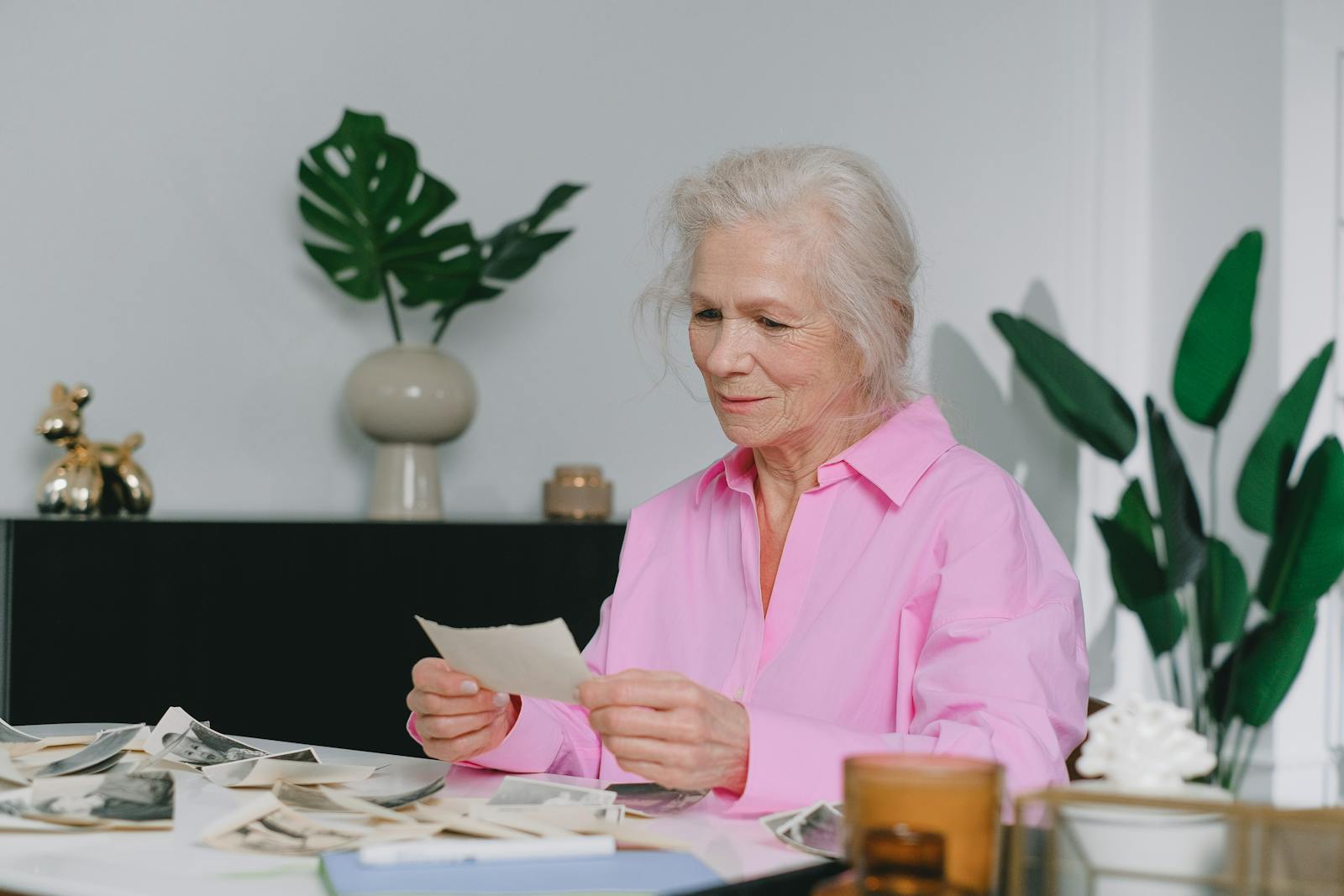
The people who keep a stack of birthday cards in a drawer, who refuse to delete a voicemail from someone who has died, who hold onto a movie ticket from a Tuesday night that meant nothing at the time are not always people clinging to clutter. Often, they are people who have learned that the texture of an ordinary evening can become valuable only after it is gone.
From the outside, the behavior can look soft, nostalgic, or excessive. From the inside, it can be more practical than that. A card, a stub, a photograph, or a saved voice message can become a small external prompt for a moment the person does not want to lose entirely.
What memory-keeping actually is
The cultural shorthand for someone who keeps every card and stub is sentimental, as if the impulse were a personality flaw or a soft spot. But keepsakes often do something more specific. They give memory a handle.
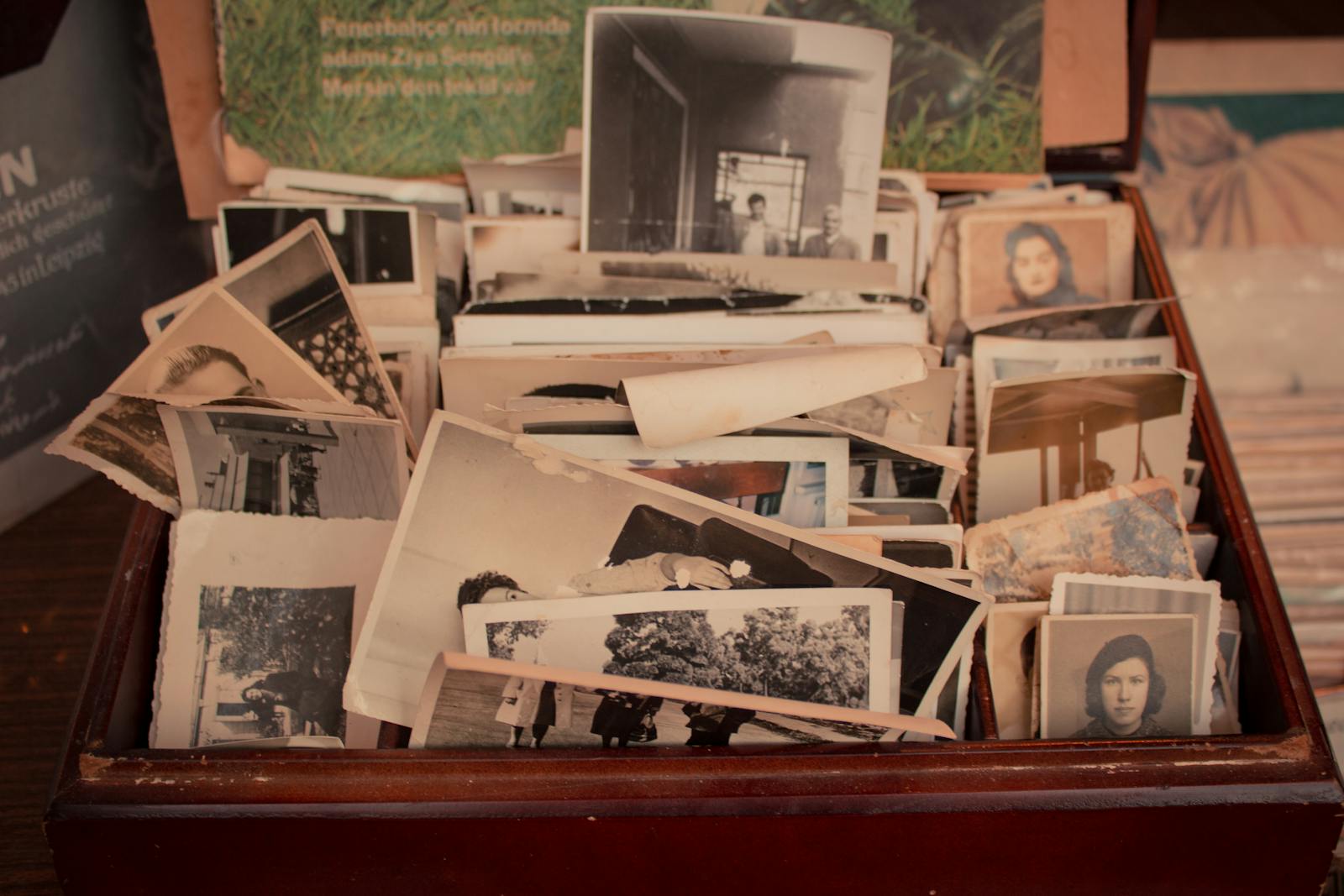
Research discussed by Psychology Today on mementos and psychological ownership describes how even a small symbolic object, such as a photo or retained part of an item, can carry enough of the original experience to make letting go feel less painful. The memento is not the memory. The memento is the door to the memory.
People who have learned how easily a door can close often become careful about leaving a few open.
The loss that changes what feels worth saving
For many adults, memory-keeping becomes more intense after a loss. Before the loss, deleting an old voicemail may feel like housekeeping. Afterward, deleting one can feel like erasing a trace that cannot be replaced.
That shift is not hard to understand. The person has learned something ordinary life lets most people postpone: ordinary moments are not endlessly replenishable. A ticket stub may not be saved because the night was spectacular. It may be saved because the person now understands that specialness is often something the future assigns to the past.
Nostalgia research does not treat looking back as automatically unhealthy. Psychology Today’s review of a 2026 meta-analysis on nostalgia describes nostalgia as a common human tendency that can be triggered by threat and can support social connection, identity, meaning, and wellbeing for some people.
Why nostalgia is not only a weakness
For much of its history, nostalgia carried a negative reputation. The term is often traced back to the seventeenth century, when it was used in a medical context to describe homesickness. Even now, calling someone nostalgic can imply that they are stuck, indulgent, or unwilling to face the present.
Modern psychology has complicated that picture. A 2024 review in Frontiers in Psychology on the cognitive processing model of nostalgia describes nostalgia as an adaptive mechanism that can help people maintain symbolic social bonds and a sense of self-continuity, especially when belonging feels disrupted.
That does not mean every act of looking back is helpful. Some forms of rumination can trap a person in what cannot be changed. But the quiet act of keeping a card or replaying a voice message is not the same thing as refusing to live. Sometimes it is a way of carrying the past lightly enough to remain connected to it.
Gratitude often begins in the rearview mirror
One of the useful findings in this field is that nostalgia and gratitude are not opposites. Looking back can sometimes make people more aware of what they were given.
Research covered by Earth.com, based on studies of nostalgia and gratitude, found that nostalgic recall can increase feelings of gratitude, with social connectedness helping explain the effect. The memories that produce gratitude are often not about achievement. They are about people: family at a holiday, a friend at a kitchen table, a teacher who said one useful sentence at the right age.
The keeper of birthday cards may be running a version of that loop without naming it. Open the drawer, read the handwriting, feel the small flood of recognition. The card is the trigger. The gratitude is the destination.
The body responds to remembered warmth
There may also be a physical layer to nostalgia. Studies on nostalgia and pain suggest that remembered warmth can affect how people experience discomfort, though this should not be treated as medical advice or as a substitute for care.
Research published in Nature’s Translational Psychiatry examined neural mechanisms involved in positive autobiographical memory and stress resilience, while related studies on nostalgia-induced analgesia have found that nostalgic reflection can reduce perceived pain in some experimental settings. The safer point is not that keepsakes heal the body. It is that memory, emotion, and bodily response are more intertwined than everyday language usually admits.
Which means the person sitting on the floor with a shoebox of old cards is not necessarily wasting an evening. They may be giving themselves a structured way to revisit warmth, connection, and continuity.
The keeper’s history
People who keep memory objects often have a history behind the habit. Sometimes it is direct: someone they loved died, moved away, or disappeared from daily life before either person understood that the ordinary record would matter later.
Sometimes the pattern is environmental. A person who grew up around sudden moves, lost possessions, family disruption, or rooms that changed without warning may become more protective of physical traces as an adult. The drawer of cards can become the opposite of coming home to find something gone.
Other keepers are simply attentive earlier than most. They notice that the texture of life thins out in retrospect, and they begin saving the texture before it can thin too much. The object is less important than the noticing.
Why the voicemail is the hardest one
Of all the mementos, voicemails from the dead occupy a category of their own. A card is a fixed artifact. A ticket stub is an inert piece of paper. A voicemail is a person’s actual voice, captured in a moment when they did not know they were leaving a permanent recording.
The casualness of the message is what makes it so hard to delete. Hey, just calling to see if you’re around. Call me back when you get a chance. Nobody who saves that message is saving it for the information.
What the keeper is preserving is the proof that the person existed in ordinary time, that they once had nothing in particular to say and called anyway. Grief can turn the dead into highlight reels. A voicemail resists that flattening.
The misunderstanding from the outside
People who do not keep things often misread people who do. The common assumption is that the keeper is living in the past, unable to move forward, drowning in old feelings.
That may be true for some people, especially if the objects become impossible to sort, share, or live around. But it is not the only explanation. Greater Good Science Center’s discussion of purpose and memory points to a broader idea found across nostalgia research: reflecting on meaningful memories can support identity, connection, and a sense of direction.
For many keepers, the drawer is not a refuge from current life. It is a reminder of what current life may look like from a distance, which can make the present feel more worth noticing while it is still happening.
The places that hold memory best
Not every memento is paper. Many people have a relationship to specific places that functions in a similar way. A childhood beach, an old apartment, a train station, a lake house, a street corner, or a boardwalk can hold memory with surprising force.
Research on the geography of nostalgia found that nostalgic places are often connected to blue landscapes such as seas, rivers, lakes, and coastlines. The exact reason water appears so often is still being studied, but the broader point is clear enough: physical environments can become powerful memory prompts.
The person who returns to the same beach every summer, or who slows down when driving past an old house, may be using place the way another person uses a box of cards. The geography is the file cabinet.
What the keepers know that the discarders don’t
There is a reason the impulse to keep often sharpens after a loss. Before a major loss, many adults operate under a useful illusion: that ordinary days are abundant, that there will be more of them, that the current evening with people in the kitchen is one of thousands of similar evenings.
Loss breaks that illusion. The keeper finds out that the supply was finite all along.
After that, behavior changes. They take more photos. They save the card. They write down the thing a grandmother said before it slips. They keep the voicemail. None of this has to be mere sentimentality. It can be a person acting on a new understanding of what disappears.
The discarder is not wrong. There are real costs to keeping too much: clutter, weight, confusion, and the difficulty of moving on from what should be released. But the keeper and the discarder are often answering different questions. The discarder is asking what needs to be carried forward. The keeper is asking what they may one day wish they had carried forward, when the people and places attached to it are gone.
The drawer as practice
What research on nostalgia, mementos, and place memory points toward is something simple. People who keep things may be practicing a skill: the ability to hold an ordinary moment in mind long after the moment itself has dissolved.
The card is a prompt. The stub is a prompt. The voicemail is a prompt. Each one is a small machine for re-entering a moment that will not come back on its own.
The keepers understand something the rest of life eventually teaches. An ordinary life is not a backdrop to the important parts. The ordinary life is often the important part. The Tuesday with nothing on the calendar can become, decades later, the thing a person would give anything to revisit.
That is why, when someone keeps a folder of birthday cards from people who are still alive, or replays a voicemail from someone who is not, the right response is not automatically concern. It may be recognition. They are not necessarily stuck. They may simply be paying attention to something the rest of us are still allowed to ignore.
Photo by SHVETS production on Pexels
