
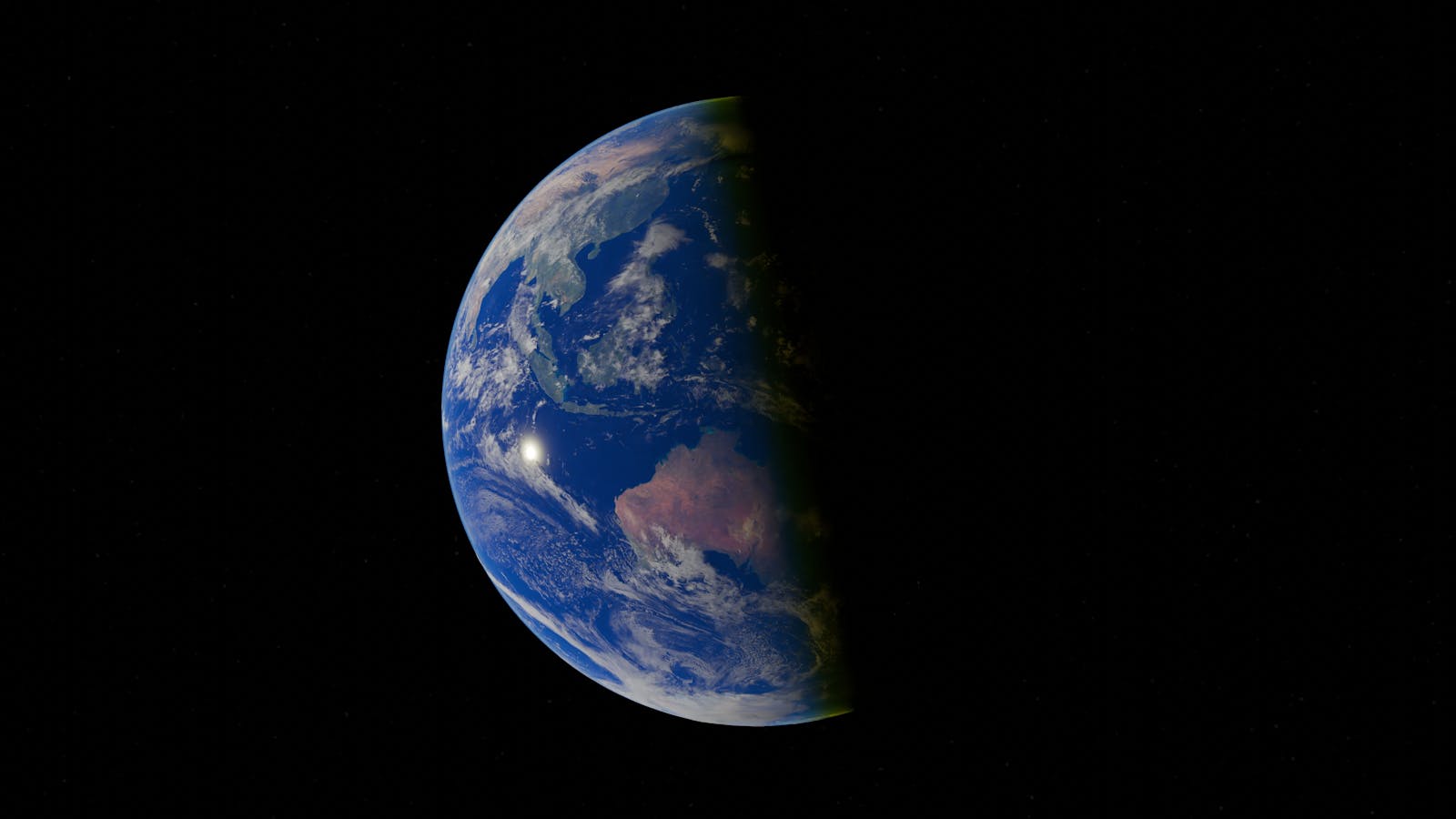
When the next severe solar storm slams into Earth’s magnetosphere, satellite operators, grid managers, and military planners will face a question they currently cannot answer: are the charged particles wreaking havoc on their systems coming from the Sun, or from Earth’s own atmosphere? The distinction sounds academic. It isn’t. The two scenarios produce different magnetic disturbances, different satellite drag profiles, and different timelines for grid-damaging induced currents, and billions of dollars in orbital and terrestrial infrastructure hang on telling them apart.
A small NASA and U.S. Space Force instrument called STORIE, short for Storm Time O+ Ring current Imaging Evolution, is heading to the International Space Station to settle that question. It will ride to orbit on a SpaceX Commercial Resupply Services flight as part of a Space Force Space Test Program payload, according to reporting from Space.com.
Two different storms, two different threats
Earth’s ring current is a torus of energetic ions and electrons trapped by the planet’s magnetic field, looping tens of thousands of kilometers above the equator. When solar storms slam into the magnetosphere, that current intensifies. Satellites get hit. Power grids feel the strain. The upper atmosphere heats up and swells, dragging on spacecraft in low Earth orbit and shortening their lifespans.
What forecasters cannot yet say with confidence is whether the ions populating that ring come from the solar wind streaming off the Sun or from Earth’s own upper atmosphere being stripped upward along magnetic field lines. Both contribute. The ratio is what shapes the threat.
Consider the contrast. A ring current dominated by solar protons behaves one way: lighter ions, faster decay, a magnetic disturbance signature that grid operators and satellite controllers have one set of playbooks for. A ring current loaded with terrestrial oxygen behaves differently: heavier ions carry more energy at the same velocity, the magnetic disturbance is deeper, and the decay rate, which governs how long induced currents keep stressing transformers on the ground, stretches out. A GPS constellation operator deciding whether to safe-mode satellites, a grid manager deciding whether to shed load, and an Air Force planner watching reconnaissance assets all need to know which storm they are in.
An oxygen fingerprint
STORIE’s strategy hinges on chemistry. The solar wind is mostly hydrogen and helium. Earth’s atmosphere is rich in oxygen. So if a detector can tell which species dominates the ring current at any given moment, it can tell where the energy is coming from. Oxygen in the ring current indicates atmospheric origin, since the solar wind contributes very little oxygen.
The instrument does not catch the ions directly. It catches energetic neutral atoms, particles that were once charged and trapped, then collided with something, picked up an electron, and went neutral. The moment that happens, they are no longer bound by Earth’s magnetic field. They fly off in straight lines, carrying information about where they came from.
The principle is closely related to the way astronomers identify what stars and nebulae are made of. Each element imprints a unique signature on the radiation it emits or absorbs, a fingerprint NASA explains in its primer on absorption and emission spectra. STORIE applies the same logic to particles instead of photons.
Filling a geometric blind spot
Earlier missions imaged the ring current from the outside in. NASA’s IMAGE spacecraft and the twin TWINS satellites looked down on the doughnut from high inclinations, giving a top-down view that struggled with ultraviolet glare reflected off Earth and with viewing angles that made trapped particles near the magnetic equator hard to see, exactly where the action concentrates during a geomagnetic storm.
STORIE flips the geometry. Mounted on the exterior of the ISS, which orbits at roughly 51.6 degrees inclination and circles the planet every 90 minutes, the instrument looks outward at the ring current with Earth behind it. NASA’s principal investigator on the mission, Alex Glocer, has described this as an inside-out perspective, one that finally puts the equatorial trapped population in clear view. Sounding rockets have caught fleeting glimpses from inside before, but only for minutes at a time. STORIE will image one slice per orbit and build a complete picture roughly every ninety minutes over a six-month mission.
Timing helps too. Solar Cycle 25 is currently near its peak, which means storms are frequent. More storms mean more ring current activity, more energetic neutral atoms, and more data on which to test the solar-versus-terrestrial question. The unusually deep minimum that preceded Cycle 24 was traced by researchers to variations in the Sun’s internal meridional plasma flow, a finding that reshaped how heliophysicists think about cycle-to-cycle variability, and a reminder that catching the Sun at the right moment is part of the experiment.
What changes if STORIE delivers an answer
Knowing the dominant source of ring current ions is not an academic detail. Operators of communications satellites, GPS constellations, and reconnaissance assets all care about which scenario they are in during a storm. So do grid operators. The induced currents that knock out transformers during severe geomagnetic events depend on how the ring current evolves and decays, and that decay rate is itself a function of which ions are doing the work.
There is also a feedback loop running the other direction. When the ring current intensifies, energy bleeds into the upper atmosphere, heating it and pushing it outward. The expanded atmosphere then drags harder on satellites in low Earth orbit, accelerating their decay. A storm fed by terrestrial oxygen could plausibly drive a stronger atmospheric response than one fed by solar protons of equal intensity, meaning operators cannot reliably forecast drag, collision risk, or reentry timing without knowing the ion mix.
What to watch for
If launch holds, STORIE should begin returning data within weeks of installation on the ISS. The early observations will not resolve the source question on their own. The mission is designed to watch a series of geomagnetic storms unfold during the solar maximum, building a statistical picture of how the oxygen-to-hydrogen ratio shifts as storms grow, peak, and decay. That ratio, captured storm after storm, is what space weather forecasters need to turn a binary uncertainty into a usable model, and what could finally tell the people protecting orbital and terrestrial infrastructure which kind of storm is bearing down on them.
Photo by Zelch Csaba on Pexels
