
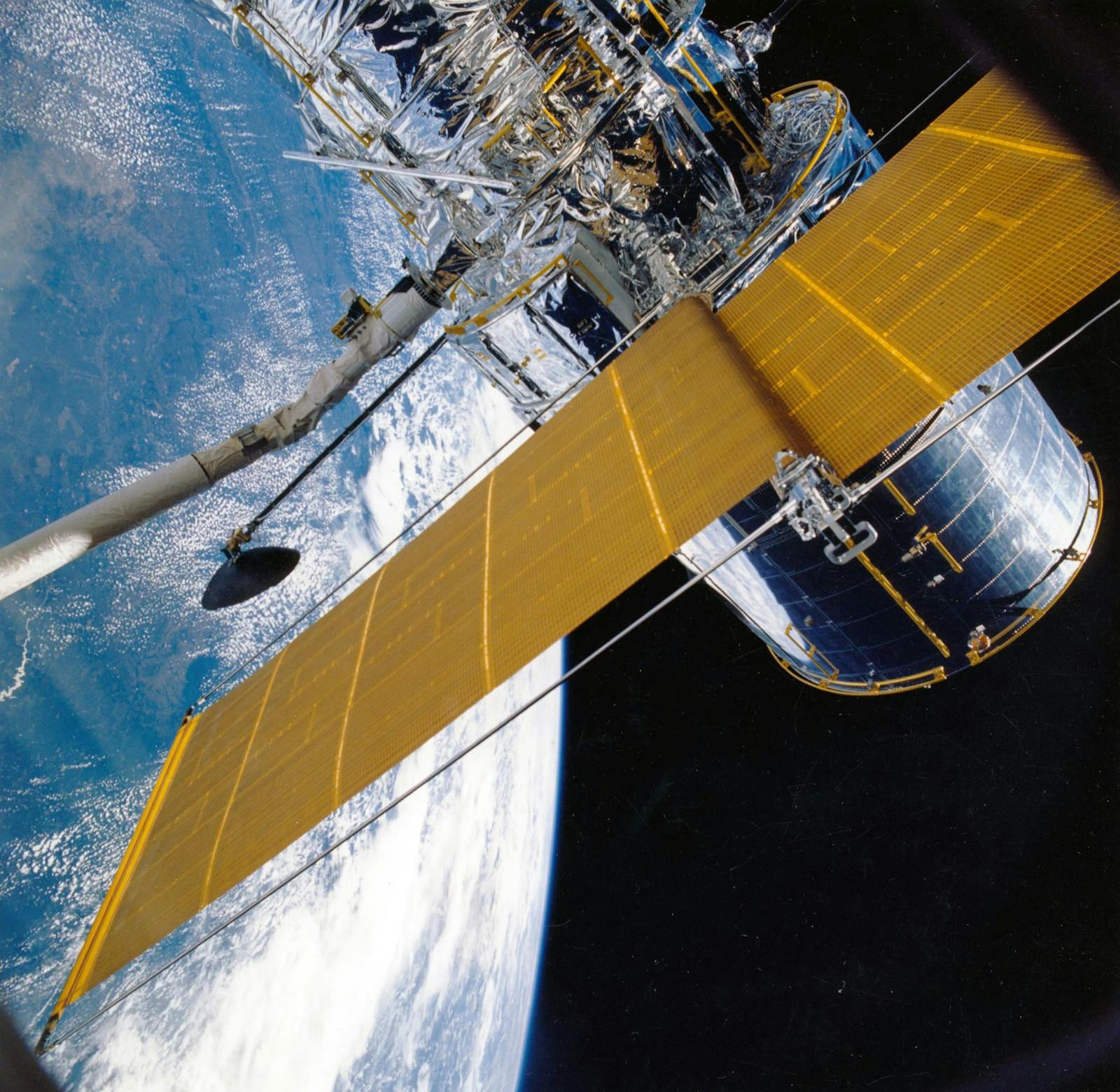
The orbital data center market is no longer a single-vendor proposition. A growing roster of startups is splitting the problem into pieces — power generation, on-orbit servicing, application layers — and betting that each layer is large enough to support its own business. SpaceNews reports that companies including Star Catcher, Lux Aeterna and Loft Orbital are staking out distinct positions in what each sees as a coming infrastructure buildout.
The pitch is straightforward. AI demand is climbing faster than terrestrial grids can absorb. Permitting fights are slowing new ground-based facilities. And in orbit, the sun never sets.
The power problem nobody can avoid
Every credible plan for orbital computing runs into the same wall: satellites are starved for electricity compared with what hyperscale racks need. An average terrestrial data center rack occupies roughly a cubic meter, weighs a couple hundred kilograms, and pulls about 60 kilowatts. A satellite of equivalent size and mass typically delivers about a tenth of that — roughly 6 kilowatts.
The math is brutal. Matching a single Earth-based rack with conventional satellite buses would mean launching about ten of them, or running one at a 10% duty cycle. Neither path closes the business case.
Star Catcher’s wager is optical power-beaming: collect sunlight at dedicated generation spacecraft, then transmit concentrated optical energy to customer satellites. If it works, computing platforms could approach 100% uptime without each one carrying its own enormous solar array.
A market signal from Meta
The idea of beaming energy through space has moved from speculative to contracted. Meta has signed a capacity reservation agreement with Overview Energy for up to 1 gigawatt of power delivered from orbit, according to TechCrunch. Overview plans to fly roughly 1,000 spacecraft in geosynchronous orbit, converting collected solar energy into near-infrared light beamed down to terrestrial solar farms after sunset.
That deal targets ground-based data centers, not orbital ones. But it validates the underlying physics that Star Catcher and others are betting on: that energy can be efficiently collected in space and pushed to a receiver where it is needed. The directional logic reverses cleanly — what works downward can work between two spacecraft.
Meta’s hunger for power explains the urgency. The company has been openly searching for new generation sources, including contracting electricity beamed from orbit to keep its AI training runs fed.
Why disposable satellites don’t fit
The second structural problem is hardware turnover. GPUs and AI accelerators get refreshed on cycles measured in months, not years. A satellite designed to operate untouched for a decade is the wrong vehicle for that economics.
Lux Aeterna is building reusable, returnable spacecraft on the premise that orbital computing is a servicing problem before it is a computing problem. The central argument: orbital data centers are dynamic systems requiring high-cadence servicing, regular hardware upgrades and physical asset recovery on a continuous basis.
The economics collapse if every maintenance event requires launching a new satellite. Reusable satellites could solve this: a returnable spacecraft can carry replacement modules up, bring degraded hardware back to Earth for refurbishment or forensic analysis and rotate components on a schedule.
That argument inverts the conventional satellite business model. Instead of treating the platform as an asset to be amortized over a decade in orbit, it treats the platform as a freighter — designed to fly up, swap parts, and come home.
The application layer is still missing
None of this matters if customers don’t show up. The point is blunt: none of it is going to matter unless there is a vibrant ecosystem of applications actually providing value.
That is the open question. Latency-sensitive workloads — the obvious candidates being Earth observation processing, on-orbit AI inference for satellite imagery, and federated learning between constellations — have plausible cases. General-purpose cloud compute does not. The economics of moving data up and down the gravity well punish anything that doesn’t either originate in space or save a launch by being processed there.
The terrestrial pressure is real
The push to orbit is partly a response to constraints on the ground. Power and permitting fights are intensifying as governments grapple with AI’s electricity appetite. In the UK, two government departments have produced wildly divergent forecasts for how much electricity AI data centers will consume by 2030, The Guardian reported, with one department projecting roughly ten times the demand of the other. The disagreement points to a broader problem: terrestrial planning systems are not keeping up with the load.
That gap is what makes orbital pitches sound less absurd than they would have five years ago. If permitting a 500-megawatt data center on the ground takes years and triggers political backlash, a constellation that sidesteps the local grid begins to look like a competitive option rather than a science fiction novelty.
Photonics, the quiet enabler
The optical infrastructure underlying both power-beaming and on-orbit data movement is advancing faster than most observers track. Recent work collected by Nature documents chip-scale optical wireless systems delivering 320 Gbps and silicon modulators with 110-GHz bandwidth in a 10-square-micron footprint. These are laboratory results, not flight hardware. But they describe the rate of progress in the components that any optical-link orbital architecture will eventually depend on.
The connection matters. Power-beaming, inter-satellite data fabric and ground links to space-based compute all converge on the same set of photonic technologies. Progress in one area lowers the cost of progress in the others.
What the layered approach implies
The most striking feature of the current orbital data center field is not any single technology. It is the division of labor. Star Catcher wants to be the utility. Lux Aeterna wants to be the moving company. Loft Orbital wants to host the workloads. Overview Energy wants to sell photons to customers on the ground.
That structure looks more like a real industry than a moonshot. Whether the demand materializes at the scale these companies need is a different question. Building a complete supply chain for a market that may or may not exist is a familiar story in space — sometimes it works, sometimes it leaves a trail of bankruptcies.
What has changed is that hyperscalers are now signing contracts. The question is no longer whether the largest AI buyers will look up. They already have.
Photo by Pixabay on Pexels
