
The Pentagon wants to more than double its satellite communications spending. Astranis just raised $450 million to be ready when the checks clear.
The San Francisco satellite manufacturer closed a combined equity and debt round valuing it at $2.8 billion, capital aimed squarely at scaling production of small geostationary spacecraft for the U.S. Space Force and allied government customers. The round, announced May 6 by SpaceNews, includes a $300 million Series E led by Snowpoint Ventures and Franklin Templeton, plus $155 million in loan commitments from Trinity Capital structured as a delayed-draw credit facility.
The timing is not coincidence. The Department of Defense requested $8.6 billion for satellite communications research, development, and procurement in fiscal year 2027 — $4.5 billion more than Congress appropriated the prior year, according to Pentagon budget documents reviewed by Janes. Astranis is building the kind of spacecraft that doubling is meant to buy.

A bet on smaller, faster, sovereign
The capital raise positions Astranis to industrialize a category of spacecraft that barely existed five years ago: micro-GEO satellites weighing a few hundred kilograms, built for dedicated coverage of a single country or customer rather than the broad regional footprints traditionally served by multi-ton geostationary platforms.
Astranis CEO and co-founder John Gedmark framed the financing as a transition from commercial scaling to dual-track production serving both private operators and the Pentagon. Gedmark said the new financing would help the company meet growing commercial demand while expanding its work with U.S. government defense programs.
The pitch to customers is straightforward. A traditional GEO communications satellite costs hundreds of millions of dollars, takes years to build, and serves a wide region. An Astranis spacecraft costs a fraction of that, gets to orbit faster, and can be tasked to a single sovereign customer who wants control over its own bandwidth. That is exactly the profile a Space Force program manager wanting dedicated bandwidth over a specific theater is looking for.
The Space Force tailwind
That doubling of satcom spending is the macro signal Astranis investors are reading. Snowpoint Ventures General Partner Alexander Creasey argued that GEO orbit remains critical for national security and represents the area where Space Force has the greatest need for new capabilities.
The argument runs counter to much of the post-Starlink narrative around space. Low Earth orbit constellations have grabbed the attention of investors and warfighters alike for their resilience and low latency. But geostationary orbit, sitting roughly 22,000 miles above Earth, still offers something LEO cannot: a single satellite that stares at one piece of the planet continuously, with predictable coverage and no handoff complexity.
For the Pentagon, that matters in places where adversaries are actively trying to interfere with communications and where having a dedicated, hardened pipe to a region is operationally valuable. Astranis has already moved into that lane with prior contracts, including a deal to add military Ka-band capability to its Omega-class satellites.
Gedmark suggested government acquisition reform is part of why this moment looks different than past cycles. Asked about Space Force procurement, he said Space Force has accelerated its procurement processes in recent years and has attempted to work more collaboratively with industry on streamlined acquisition methods.
A different scaling philosophy than the giants
Astranis is making its bet at a moment when established GEO operators are openly questioning the economics of large, complex spacecraft. Viasat just launched the third and final ViaSat-3 satellite on a Falcon Heavy, completing a constellation that took more than a decade to deploy and suffered a deployment failure on its first satellite that wiped out more than 90% of its planned terabit capacity.
Viasat CEO Mark Dankberg reportedly told SpaceNews the company was interested in smaller, more affordable spacecraft that could be deployed more quickly, potentially offering better returns on investment. That is essentially the Astranis product description. The incumbent GEO operators are coming around to the model the startups built their thesis on — and the Pentagon’s budget request suggests military customers have already arrived.
What the round signals about the sector
Snowpoint Ventures and Franklin Templeton co-leading a $300 million Series E into a satellite manufacturer is itself a data point. Late-stage venture capital has been cautious about hardware-heavy space companies after a wave of SPAC failures from 2021 onward. Astranis is now in a small group of private space companies that have raised meaningful late-stage rounds at unicorn-or-better valuations, alongside firms like True Anomaly and other defense-adjacent space players.
The composition of the round, with $155 million coming as debt rather than equity, also matters. Trinity Capital’s delayed-draw facility lets Astranis pull capital as it needs it for working capital and equipment without further diluting shareholders. That structure tends to show up when companies have visible revenue and contracted backlog they can borrow against.
The micro-GEO approach has real limits. The satellites have a lifespan of around eight years, roughly half that of a traditional geostationary platform. They carry less total bandwidth. They cannot replace a flagship satellite for an operator that needs to serve multiple regions from a single orbital slot. But none of those constraints matter to a customer that wants sovereignty over capacity more than maximum throughput — and that describes the fiscal 2027 Pentagon buyer almost exactly.
The next two years will test whether Astranis can convert capital into satellites at the cadence it has promised, and whether Space Force contract awards in fiscal 2027 actually land where the budget request suggests they will. The $2.8 billion valuation embeds both of those bets, but the larger one is that the Pentagon means what its budget says.
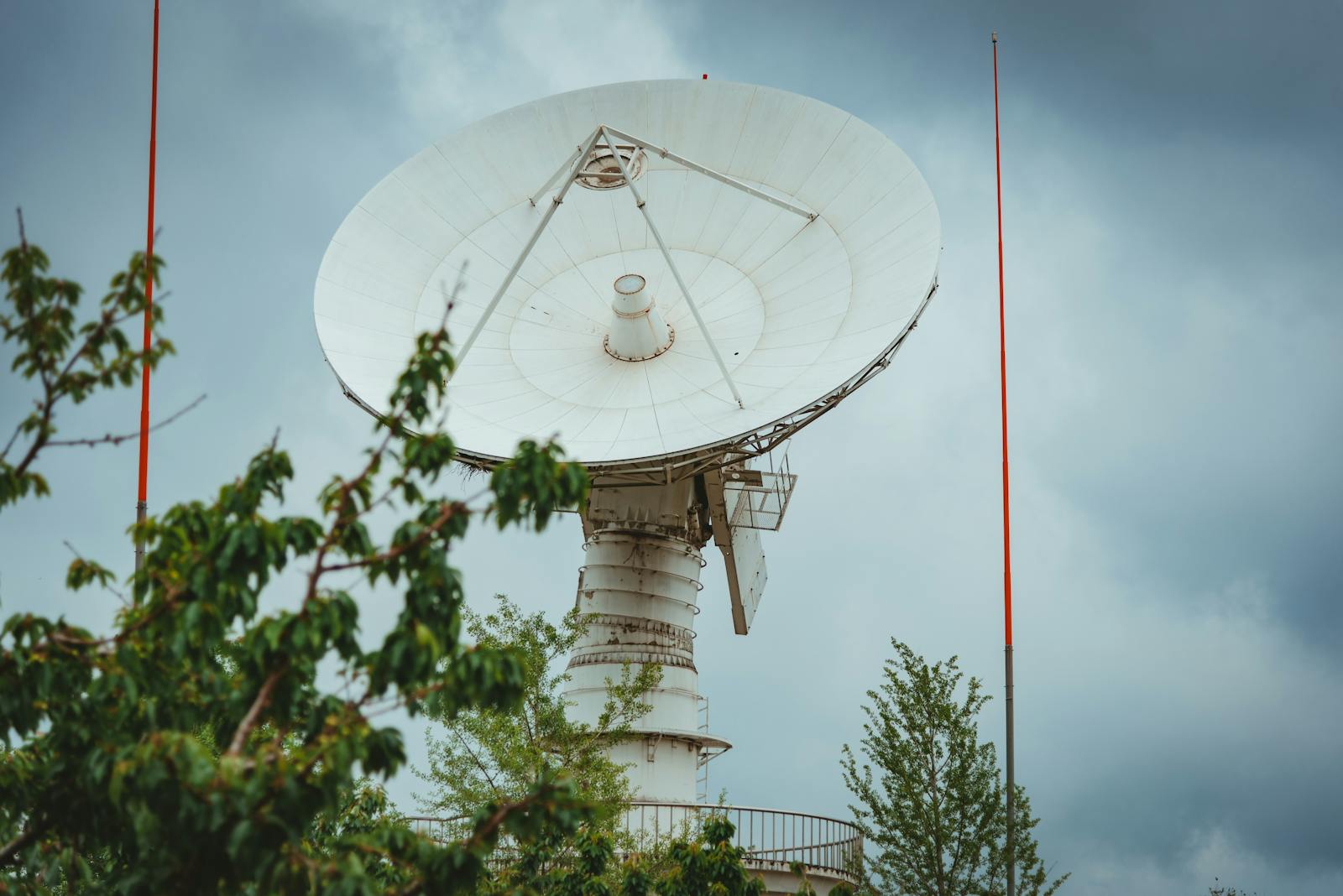
Photo by SONIC on Pexels
