
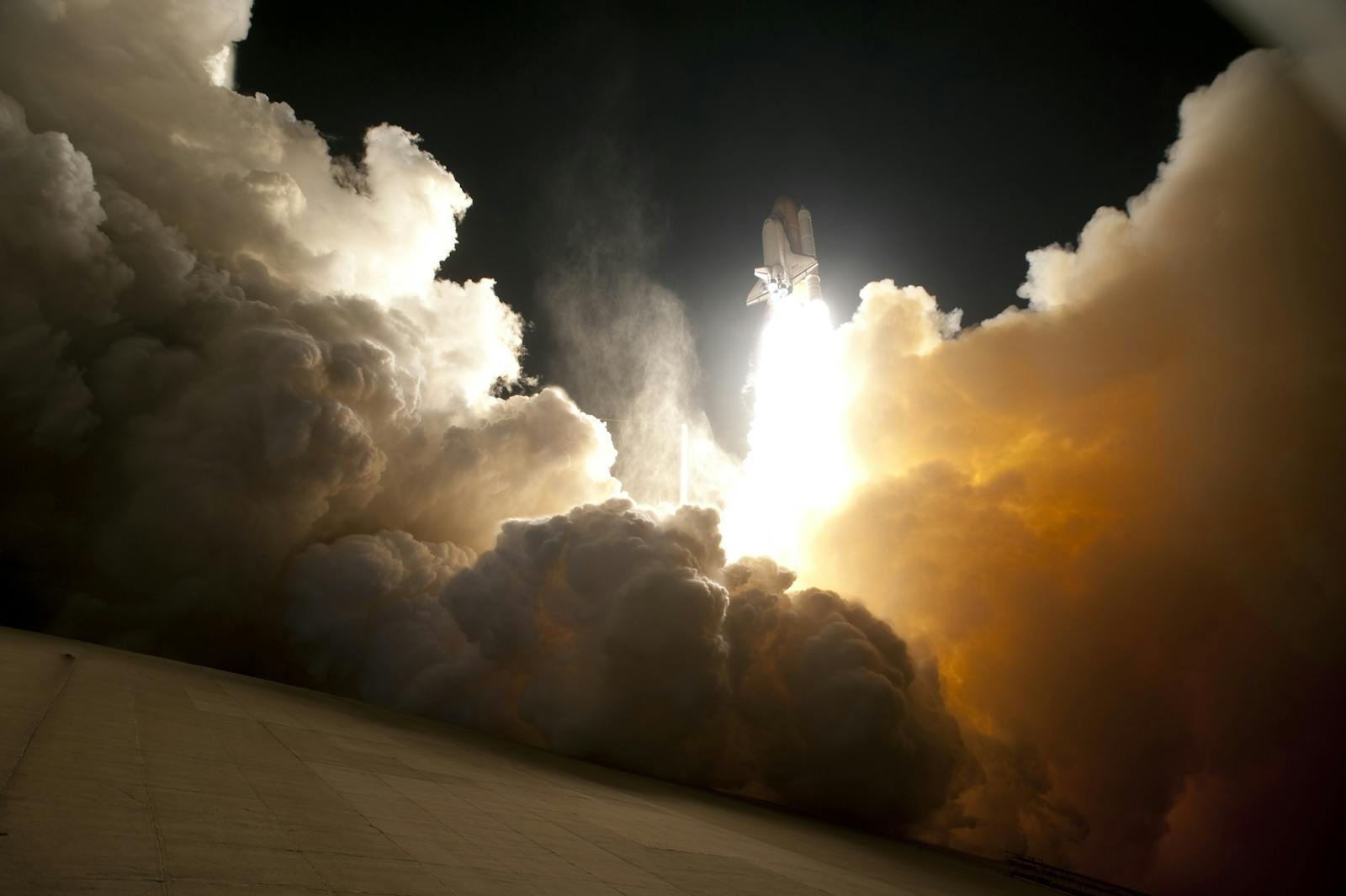
Firefly Aerospace plans to fly the upgraded Block II version of its Alpha rocket on Flight 8, marking the company’s next attempt to put a troubled early launch record behind it as national security, civil and commercial customers look for more responsive launch capacity.
The Texas-based launch and lunar-services company is also folding the new vehicle into a broader strategy that now stretches from small launch to lunar landers, medium-lift rockets and cislunar services.
What Block II changes
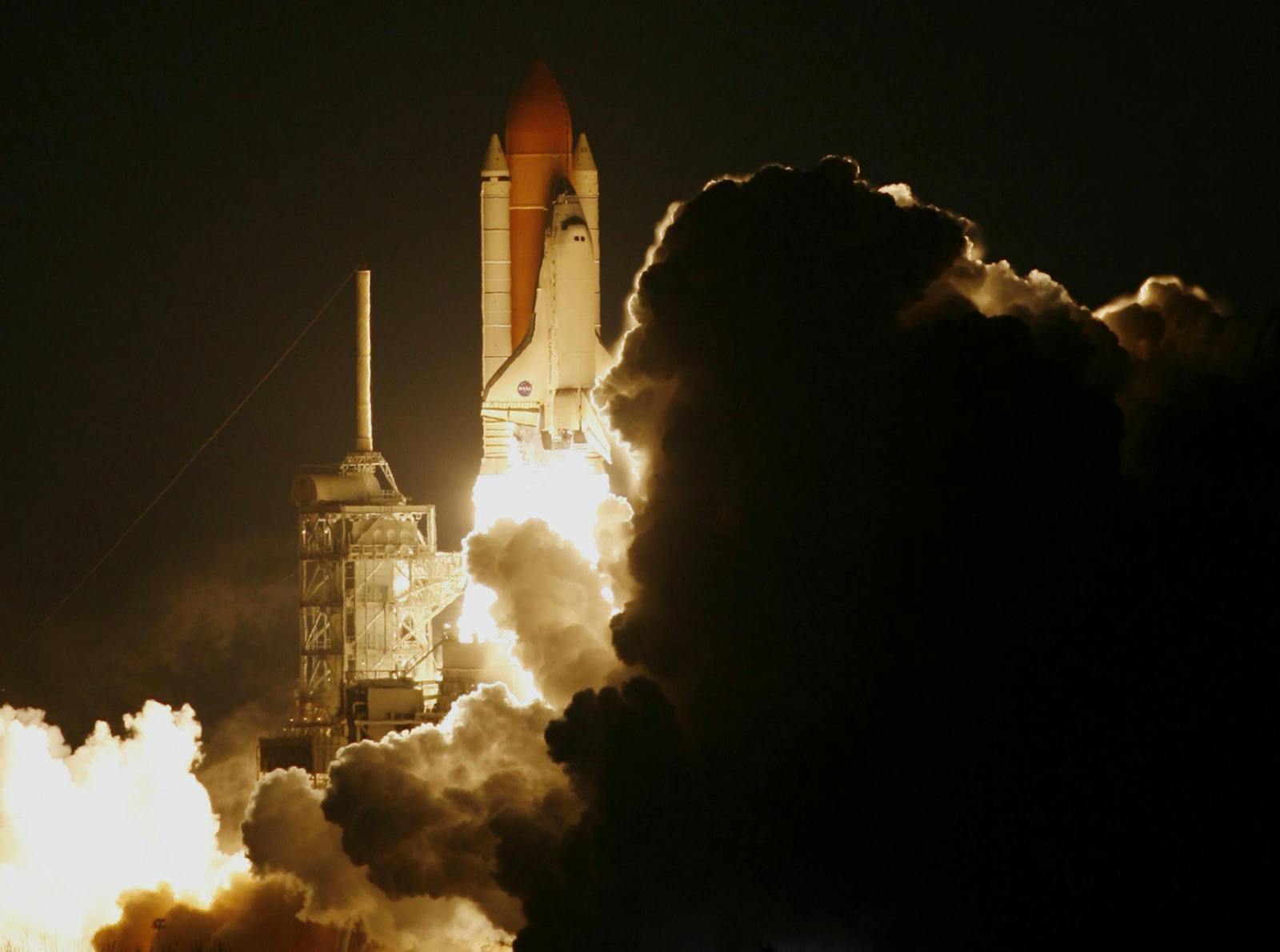
Alpha Block II carries a package of upgrades aimed at reliability, manufacturability and launch cadence. Firefly says the configuration includes an enhanced vehicle length, stronger composite structures, better thermal-protection systems, and new in-house batteries and avionics.
The upgrade package is not just about performance. It is also a reliability play.
That question is not abstract. Alpha’s early flight history has included both successes and serious anomalies. Firefly’s April 2025 Alpha mission reached first-stage separation but then suffered a problem between stage separation and second-stage ignition that led to the loss of the Lightning engine nozzle extension and substantially reduced thrust, according to the company. Firefly later returned Alpha to flight on March 11, 2026, when the Stairway to Seven mission achieved orbital insertion, deployed a Lockheed Martin demonstrator payload and performed a second-stage engine relight.
Firefly says that Flight 7 was the final mission in Alpha’s earlier configuration and that it tested key Block II upgrades, including a new in-house avionics suite and enhanced thermal protection, ahead of the full Block II configuration planned for Flight 8.
That history matters because Alpha competes in a small-launch segment where customers may pay a premium for dedicated access only if the vehicle can reliably deliver payloads to the required orbit on schedule. Block II is the engineering answer to that demand.
The demand signal
Firefly has framed Alpha as a responsive launch vehicle for commercial, civil and defense missions, and the company says the rocket is the only operational U.S. launcher in the 1,000-kilogram class. It has also emphasized Alpha’s role in tactically responsive space missions, including the ability to launch on short notice.
Small-launch operators have struggled for years to convert interest into sustainable launch manifests. Rideshare missions on larger rockets can be cheaper, but they do not always offer the orbit, timing or operational control that some customers want. The shift in U.S. national security space toward proliferated constellations and responsive launch gives dedicated small-lift vehicles a clearer role alongside rideshare options.
Firefly is also extending where Alpha can fly from. The company has announced work to add Alpha launch capability at Wallops Island in Virginia, supplementing its existing Alpha launch operations at Vandenberg Space Force Base. That distributed posture is especially relevant to government customers who want more flexible launch geography and less dependence on a small number of predictable sites.
Lunar operations scale up
The Alpha story now sits inside a larger one. Firefly’s Blue Ghost 1 lander touched down on the Moon’s Mare Crisium on March 2, 2025, carrying NASA science and technology payloads under the Commercial Lunar Payload Services program. Firefly describes the mission as the first fully successful commercial Moon landing, and NASA says the lander completed a successful delivery near Mons Latreille in Mare Crisium.
Blue Ghost then operated through a full lunar day, completing more than 14 days of surface operations and continuing for several hours into lunar night before falling silent. That performance distinguished it from earlier commercial lunar attempts that either failed before reaching the surface or landed in compromised orientations.
The success has reshaped Firefly’s lunar roadmap. Blue Ghost Mission 2 is listed by Firefly as an upcoming far-side lunar mission carrying NASA, government and commercial payloads, with an Elytra Dark orbital vehicle also intended to support lunar communications and imaging services.
Blue Ghost in its current form can deliver meaningful payloads to the lunar surface, sufficient for instrument packages and small technology demonstrations. It is not, by itself, the logistics system required for a sustained lunar settlement. But it gives Firefly a credible base from which to bid for larger and more frequent lunar delivery work.
Building bigger lunar systems
NASA’s Artemis and CLPS programs are pushing commercial providers toward a more regular cadence of lunar delivery, communications, mobility and surface-support missions. The goal is no longer simply to land a payload once. It is to build the operational experience needed for repeated work on and around the Moon.
Firefly is responding by trying to move from one-off lunar deliveries toward a production model. The company has said it is building out lunar capabilities beyond Blue Ghost, including Elytra spacecraft for lunar orbit services and future Blue Ghost missions that support communications, surface mobility, power-network demonstrations and resource-related investigations.
That is the strategic shift: from landing as an event to landing as a service.
Eclipse and the medium-lift question
The third leg of the strategy is Eclipse, a medium-class launch vehicle Firefly is developing with Northrop Grumman. Firefly says Eclipse is being designed as a scaled-up, reusable version of Alpha capable of delivering roughly 16,000 kilograms to orbit. Northrop Grumman describes the vehicle as a medium-lift launcher intended to fill an underserved market segment.
The partnership also builds on Firefly and Northrop Grumman’s work on the Antares 330 program. In May 2025, Northrop Grumman announced a $50 million investment in Firefly to help accelerate production of Antares 330 and Eclipse.
That progression — small launcher, lunar lander, medium launcher, orbital services and larger lunar ambitions — describes a company trying to become a vertically integrated space infrastructure provider rather than a single-product launch firm.
Whether the engineering and capital base can sustain those parallel development tracks is the central question facing Firefly’s investors.
The institutional context
NASA’s Commercial Lunar Payload Services model is built around fixed-price contracts, private providers and faster iteration. The agency buys delivery services rather than building every spacecraft itself, accepting that some commercial missions will fail while the ecosystem matures.
That model has produced mixed results. Astrobotic’s Peregrine mission failed to reach the lunar surface after a propulsion problem in early 2024. Intuitive Machines’ Odysseus reached the Moon later that year but landed at an angle after one of its landing legs broke. Firefly’s Blue Ghost, by contrast, landed upright and completed a full surface campaign.
The lesson institutional buyers appear to be drawing is not that commercial lunar delivery is easy. It is that the CLPS model can produce results, but only with companies that can survive development cycles, recover from anomalies and keep manufacturing hardware after the first major success.
That is the bar Firefly is now trying to clear at scale.
What to watch
Three milestones will define Firefly’s next phase. The Alpha Flight 8 Block II debut is the most immediate test, and the one most directly tied to the company’s near-term launch credibility.
Blue Ghost Mission 2 will test whether the March 2025 success was repeatable rather than a one-off. A second clean lunar landing would give Firefly one of the strongest operational records among commercial lunar-delivery providers.
Beyond that, Eclipse and Firefly’s expanding lunar systems will reveal whether the company can graduate from a CLPS contractor and small-launch operator into a structural piece of the emerging U.S. lunar and cislunar architecture.
The demand signal from government customers suggests there is room for that kind of partner. Execution decides whether Firefly becomes one.
For more on the Block II development path, see Space Daily’s earlier coverage of Firefly’s Alpha Block II upgrade for Flight 8, the first-stage anomaly on an earlier Alpha mission, and the Stairway to Seven preparations that preceded the March return-to-flight.
Photo by Pixabay on Pexels
