
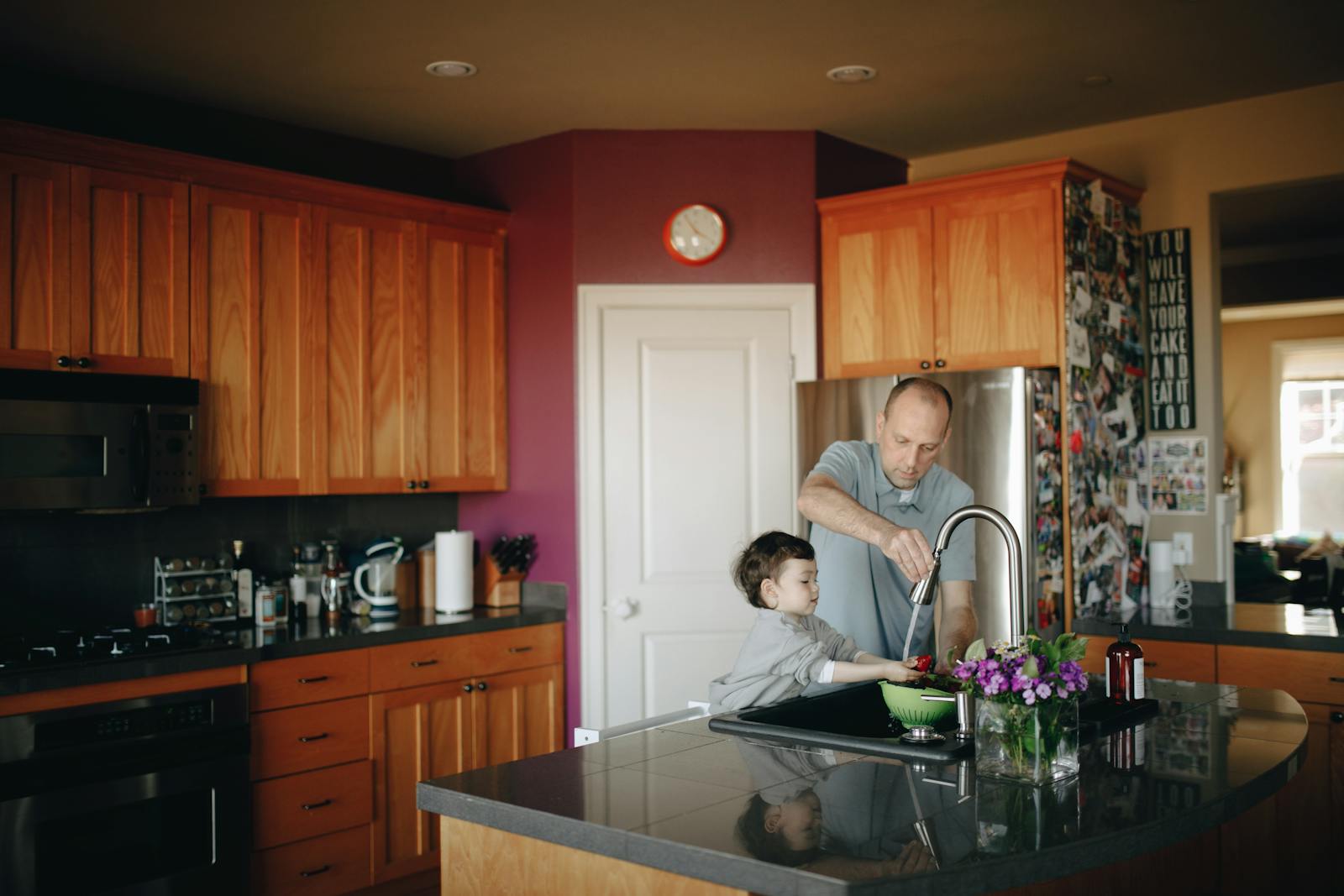
The offers don’t stop when the kids leave home. They often change shape.
The mother who keeps texting recipes her daughter never asked for. The father who shows up to fix a fence that wasn’t broken. The parent who calls every Sunday with a list of things they noticed needed doing around the house, the car, the relationship, the career. From the outside it can look like helpfulness that lost its sense of timing. From the inside, it may be something quieter and more painful.
It can be a person trying to find their place in a story that already moved on without them.
The job description quietly expired
For roughly two decades, parenting comes with a job description anyone can recognize. Feed them. Drive them. Sign the permission slips. Stay up worrying when they’re late. The role is exhausting and clear, and clarity is its own kind of reward.
Then the kids learn to drive. Then they leave. Then they figure out how to file their own taxes, fix their own sink, choose their own doctors. The job description doesn’t get updated. It just goes silent.
What replaces it, for many parents, is a slow ache that does not have a name in everyday language. A 2024 Communications Psychology review of the empty nest period describes this transition as a postparental phase shaped by role loss, role strain relief, loneliness, wellbeing, cultural expectations and changing parent-child contact. Across cultures, the central question often becomes the same: who am I, now that the people who needed me don’t need me in the same way?
Why the offers keep coming after “no thanks”
The parent who keeps offering help long after being told to stop is not always doing it to control. Often, they are doing it because helping was, for a long time, the most legible proof they had of belonging in their child’s life.
When a behavior was reinforced for twenty years by visible need, the absence of that need can feel like rejection even when no rejection was intended. The offer of help becomes a small, repeatable bid for closeness. Saying yes used to signal love and need. Saying no, even kindly, can land in the parent’s chest as something else entirely.
This does not mean the adult child has to accept unwanted help. It means the surface behavior may be carrying an emotional meaning neither person has named yet.
The identity that was built around being needed
The empty nest literature often describes two competing forces. Some parents experience relief from the strain of daily caregiving. Others experience role loss, especially when parenthood has been central to identity, purpose and self-worth. The same review notes that when children become independent adults, some parents may feel unneeded or undervalued, particularly when caregiving has been a major source of meaning.
The offers to help are an attempt to keep the scaffolding standing. If the role still exists, the self that performed it still exists too.
This is part of why the same parent who can’t stop offering to help may also struggle to take up new hobbies, build new friendships or pursue interests they put on hold for years. The offers are not just excess energy looking for somewhere to go. They are the path of least resistance back to a version of themselves that felt clear.
The adult child reads it as something else
From the adult child’s side, the experience is often different and more frustrating. The repeated offers can feel like a refusal to acknowledge that they have grown up. They can feel like an implicit critique: you don’t trust that I can handle this. They can feel suffocating in ways the parent did not intend.
Both readings can be true at once. The parent may not be trying to undermine. The adult child may not be ungrateful. They may simply be standing on opposite sides of a transition neither of them was prepared for.
Family researchers writing for Greater Good at UC Berkeley note that today’s parent-adult child relationships operate by different rules than previous generations, with relationships increasingly judged through emotional understanding, harm, affirmation and repair rather than obligation alone.
The estrangement risk
The cost of getting this transition wrong is not theoretical. Cornell sociologist Karl Pillemer’s family estrangement research found that 27% of American adults reported being estranged from at least one family member, with 10% reporting estrangement from a parent or child.
That does not mean the parent who keeps offering help is automatically on the path to estrangement. Most are not. But unwanted advice, repeated boundary pressure and unresolved role confusion can become part of a larger pattern of distance if neither side learns how to translate what is happening.
Most estrangements are not sudden. They are often the accumulation of small moments where one person keeps pushing for closeness in a form the other person experiences as pressure, until the gap gets wider than either of them meant it to.
What’s actually being asked for
Behind the offers, the recipes, the unsolicited fixes, the running commentary on the car’s tire pressure, there is often a different question the parent does not know how to ask directly.
The question is some version of: do I still matter to you?
This is the part that makes the dynamic so tender. Adult children, hearing the surface request, respond to the surface request. They say no, they do not need help with the fence. They say no, they already have a recipe. They do not realize the question underneath the offer was never really about the fence or the recipe. It was about whether the relationship still has a shape now that the original one ended.
The cultural backdrop nobody notices
Part of what makes this period hard is that Western culture provides almost no script for it. There is a language for new parents. There is a language for grief. There is a language for divorce. There is almost nothing in the cultural vocabulary for what happens to a parent’s identity when active parenting ends and the relationship has to be rebuilt on adult terms.
The BBC has documented how the cultural conversation around adult-child and parent relationships has shifted dramatically in recent decades, with younger generations more willing to set firm limits or step back entirely. What’s often missing from that conversation is what the parent on the other side may be experiencing in those moments: not always defensiveness or denial, but sometimes a quiet panic about disappearing from a life they used to be central to.
The version of help that lands and the version that doesn’t
There is a meaningful difference between help offered to be useful and help offered to maintain visibility. The first responds to a need the other person identified. The second responds to a need the helper has, dressed up in the language of usefulness.
Adult children can usually feel which is which, even if they could not articulate it. Help that lands feels like care. Help that doesn’t feels like an audit. The same offer can feel like either, depending on whether the recipient senses they have the option to decline without hurting the giver.
A study of parental advice and emerging adults found that young adults respond more positively to parental advice, including unsolicited advice, when they perceive the parent as supportive of their autonomy. In other words, the problem is not always the advice itself. It is whether the advice arrives with respect for the adult child’s independence.
This is why the parent who can absorb a “no thanks” gracefully tends to get asked for help more often, not less. The absence of pressure makes the door easier to open.
The fear of being optional
What the persistent offers often defend against, beneath everything, is a fear of becoming optional. Not unloved. Optional. There is a difference. An optional person is someone who is welcomed when they show up but not noticed when they don’t. For a parent whose identity was organized around being indispensable, optional can feel like a kind of disappearance.
Avoiding that feeling becomes a low-grade engine that runs in the background of every interaction. The parent may not experience it as fear. They may experience it as a sincere desire to help, which it also is. Both things can be real at the same time.
This is the same dynamic that shows up across other relationships too. Closeness is built in the rooms where someone is needed, and when the rooms empty out, the people who built their belonging there have to learn an entirely new way of being close.
What the adult child can do without abandoning themselves
None of this means the adult child has to accept every unwanted offer of help to spare a parent’s feelings. Boundaries still matter. The point is not to absorb intrusion in the name of compassion.
The point is that hearing the question underneath the offer changes the response. Declining help without offering alternative connection can feel like rejection. Declining the surface request while offering alternative connection, such as declining help but inviting the parent over anyway, answers the underlying need without surrendering the boundary.
This is the move many adult children eventually figure out, often after years of friction. The parent may not really want to fix the fence. They may want evidence they are still part of the story. Evidence can be offered in ways that do not involve handing over the toolbox.
What the parent can do without disappearing
For the parent, the harder work is internal. It is recognizing that the offers, while sincere, may be substituting for a more direct conversation. It is tolerating the discomfort of asking for connection without disguising the request as utility.
It is also building a self that exists outside the parental role. Research on the empty nest period suggests that social engagement, contact with children, new roles and community participation can buffer against loneliness and help parents adjust to the postparental phase.
The parent who has interests, friendships and curiosities that exist independently of their children does not have to lean on the offer of help to stay present in the relationship. They have other doors.

The repair that’s possible
One of the more hopeful findings in the estrangement literature is that reconciliation is possible, but it usually requires the relationship to be rebuilt rather than restored to its old shape. Cornell’s work on estrangement emphasizes that family rifts often involve poor communication, long-simmering conflict and unrealistic expectations, and that reconciliation can become a process of personal growth.
For a parent, the useful admission is rarely, “I was only trying to help.” That may be true, but it often misses the adult child’s experience. The more repair-oriented version sounds closer to: “I think I kept offering because I missed feeling useful, and I can see how that may have felt like pressure.”
That kind of admission requires a parent to face the underneath thing directly. It costs something. It also tends to be the move that actually rebuilds the closeness the offers were trying to manufacture.
The story that has to be rewritten
The hardest part of this whole arc is that the story really did change. The parent is not imagining it. The role they played for two decades genuinely ended. There is no version of the future where they get to be central in their adult child’s daily life the way they were when the kids were eight.
What is available, instead, is a different kind of relationship. Less daily. Less indispensable. Sometimes deeper, when both people are willing to do the work. Often closer in the long run, even if it does not feel that way during the transition.
The parent who keeps offering help long after being told to stop is often a parent who loved their kids so intensely that the parental role became the clearest part of who they were. That love is not the problem. The problem is that nobody told them the role would change, or what to do with themselves when it did.
The offers are a placeholder. They are standing in for a conversation about belonging that many families do not yet have the language for. The kindest thing an adult child can do is recognize what may actually be being asked. The bravest thing a parent can do is ask it more directly.
Both are hard. Both are possible. Most families that get through this transition intact have done some version of both, often without ever naming it out loud.
Photo by PNW Production on Pexels
