
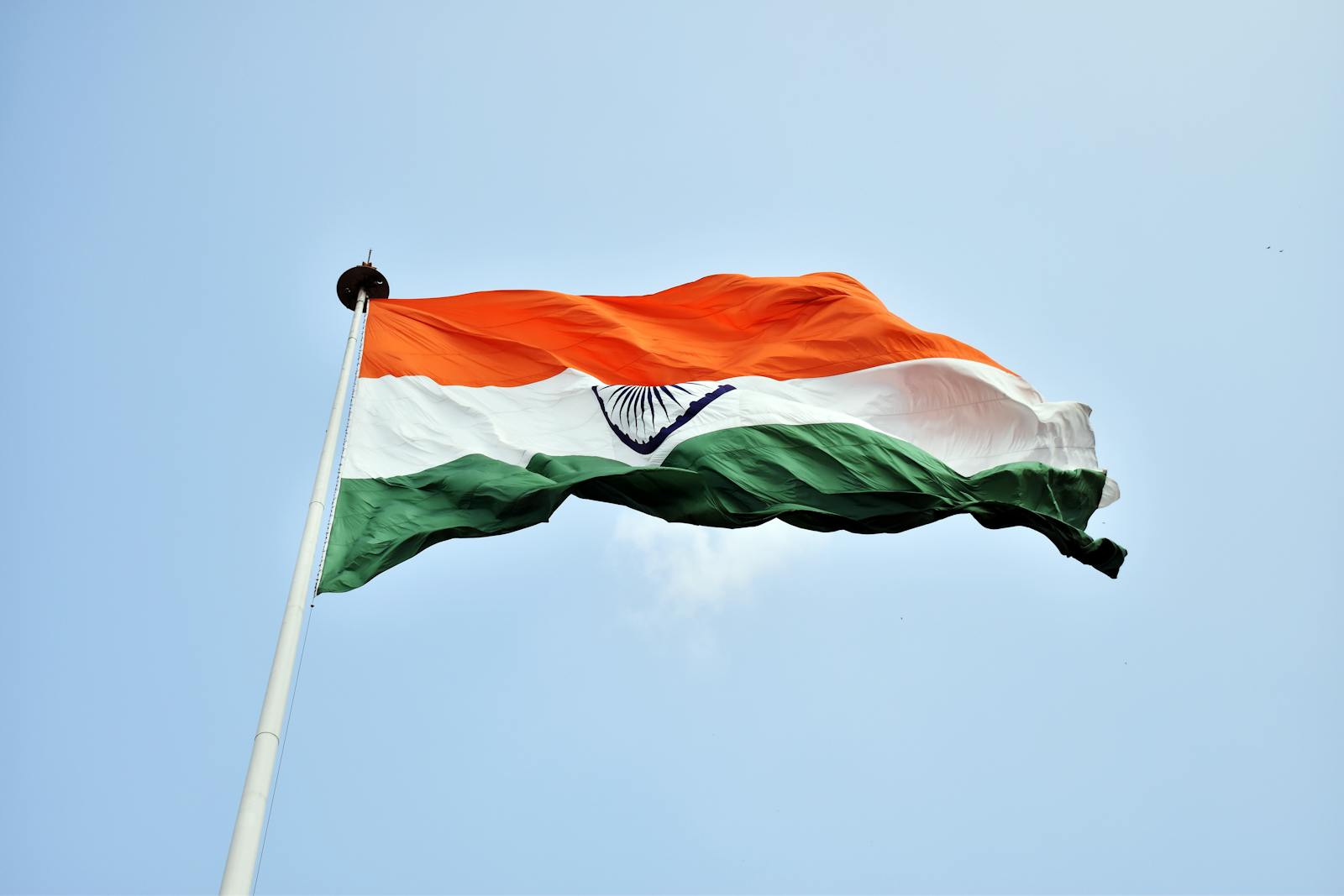
India’s Bharatiya Janata Party has captured West Bengal for the first time in the state’s history, winning more than 205 of 294 assembly seats and ending Mamata Banerjee’s 15-year run in power. The result does more than flip a state. It restores Narendra Modi’s political momentum after his party fell short of a parliamentary majority in 2024, and it weakens one of the opposition’s most visible regional power centers.
Banerjee’s Trinamool Congress, the party she founded in 1998, was reduced to around 80 seats, depending on final constituency reporting. The Communist parties that ruled the state from 1977 until Banerjee’s 2011 breakthrough barely registered. The BJP’s previous high-water mark in Bengal was 77 seats in 2021.
A state long thought beyond reach
West Bengal was supposed to be one of the walls the BJP could not climb. The state has a Muslim population above 25 percent, a strong regional-language identity, and a left-of-center political culture that survived decades of Communist rule before bending to Banerjee’s populism. Hindu nationalist messaging that worked across the Hindi belt rarely translated cleanly into Bengali politics. For years, many analysts treated Bengal as a state that would resist Modi’s party even as the BJP expanded elsewhere.
That assumption collapsed on Monday. Nearly 68.2 million people voted, according to Al Jazeera, with turnout around 92.93 percent, a record high for the state. The Guardian described the result as a resounding victory in a state that had been a rare opposition stronghold, while the Associated Press reported that Modi’s party had wrested control of Bengal for the first time.
The mechanics of the upset
Several forces converged. The first was straightforward anti-incumbency. Banerjee had governed since 2011, and a long tail of corruption allegations, recruitment scandals, law-and-order controversies, and economic frustration had eroded her base.
The second was Hindu consolidation. Bengal’s electorate, historically fragmented along class, caste and regional lines, appears to have voted along religious lines to a greater degree than many analysts had expected. The BJP’s campaign leaned heavily on religious polarization, and several analysts interviewed by Al Jazeera and The Guardian said that consolidation of Hindu voters was central to the outcome.
The pattern was particularly pronounced among urban male voters, according to Al Jazeera’s reporting. In Bengal, the Muslim population is disproportionately rural, and the combination of polarization, anti-incumbency and voter geography created a large opening for the BJP.
The election also took place under extraordinary security conditions. The central government deployed roughly 2,400 companies of paramilitary troops to West Bengal for the polls, a record for such provincial votes, according to Al Jazeera. The government framed the deployment as necessary to prevent political violence. The TMC and other opposition parties argued that the heavy security presence could intimidate or influence voters.
The voter-roll controversy
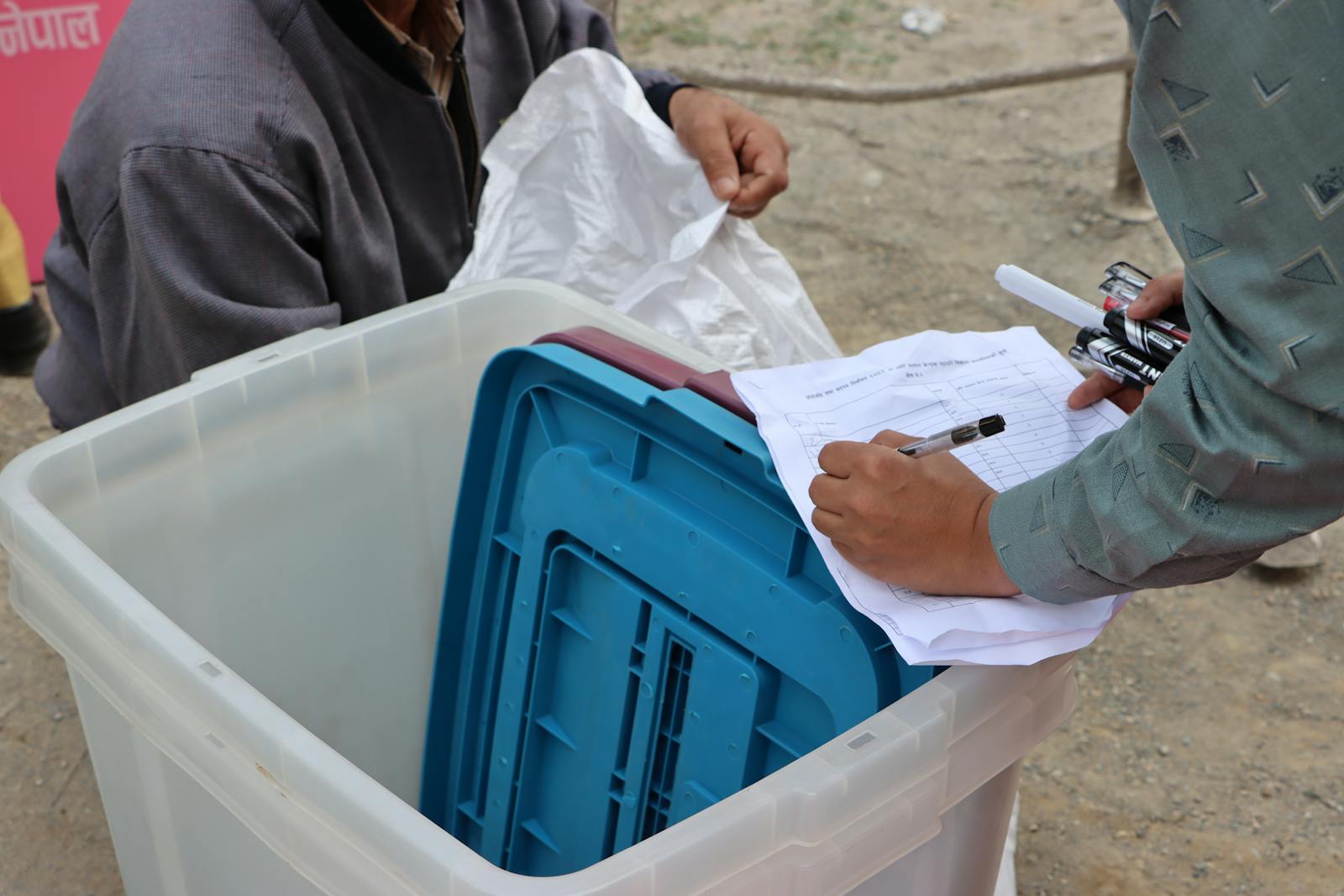
The result also sits inside a major controversy over the electoral roll. Before the vote, the Election Commission carried out a Special Intensive Revision, or SIR, of voter lists in West Bengal. Al Jazeera reported that the exercise removed more than nine million people from the voting list, while The Guardian reported that more than 2.7 million voters were removed from the register and that critics said minorities were disproportionately affected.
The BJP and the government defended voter-roll revision as an effort to clean up the rolls. Banerjee’s TMC and other opposition parties alleged that the process was opaque, rushed and politically tilted. Analysts quoted by Al Jazeera said the revision alone could not explain a victory of this scale, but that it contributed to the atmosphere of polarization and mistrust around the election.
That context matters. The BJP’s win was decisive, but the argument over how the electorate was defined before voting began is likely to remain part of Bengal’s post-election politics.
What it means for Modi nationally
The 2024 general election left Modi diminished. His party lost its outright majority in the Lok Sabha and had to govern through coalition partners, a humbling outcome for a leader who had spent a decade projecting an aura of inevitability. The result was framed as the first real check on Modi’s political capital since 2014, and the opposition began organizing as if the spell had broken.
Bengal changes that conversation. A state the BJP had never won, captured against an entrenched regional leader, recasts Modi as a leader who can still break new ground at precisely the moment his rivals had written him into a corner. The opposition coalition that coalesced around the 2024 result loses one of its most prominent faces in Banerjee, and with her goes part of the argument that Modi’s reach has natural regional limits.
The result does not mean Modi is politically invulnerable. Southern India remains difficult territory for the BJP, and economic pressures, unemployment and social tensions continue to shape national politics. But Bengal gives the BJP a powerful answer to the idea that 2024 marked the beginning of its decline.
The hegemonic question
Indian political scientists have long analyzed how some parties do more than win elections. They reshape the political center, change the vocabulary of opposition, and force rivals to organize around their terms. Congress occupied that position for much of the post-independence era. The BJP, after Bengal, looks closer to that position than it did immediately after the 2024 parliamentary result.
There is also a historical symmetry the BJP will not miss. Shyama Prasad Mukherjee, who founded the Bharatiya Jana Sangh in 1951, the ideological ancestor of today’s BJP, was from Bengal. The party’s capture of his home state, more than seven decades later, gives the result a symbolic force beyond the seat count.
For BJP strategists, the message is simple: a state once treated as structurally resistant to Hindu nationalist politics has now delivered one of the party’s most consequential victories.
What comes next
Banerjee, 70, has not announced her long-term political plans. Her party’s reduction to around 80 seats does not eliminate it from Bengal politics, but it sharply reduces her standing as a credible national alternative to Modi. The opposition INDIA bloc loses one of its largest regional pillars, and with it, some of the geographic logic that held the alliance together.
For the BJP, the harder work begins now. Governing Bengal means delivering on the economic frustrations that helped drive the anti-incumbency vote, while managing communal tensions in a state where roughly one in four residents is Muslim. The polarization that helped win the election will not, on its own, run a government.
But the political map has been redrawn. The opposition’s path back to viability relied heavily on regional strongholds like Bengal, where local parties could combine state-level dominance into a national counterweight. That theory of the case has now taken a major blow.
Modi enters the second half of his third term with a state-level victory no BJP leader before him had secured, against a politician once regarded as one of the most formidable regional opponents in Indian politics. The question is no longer whether Bengal can contain the BJP. It is whether the opposition can rebuild a national alternative after losing one of the states that made such an alternative look plausible.
Photo by Amit Rai on Pexels
