

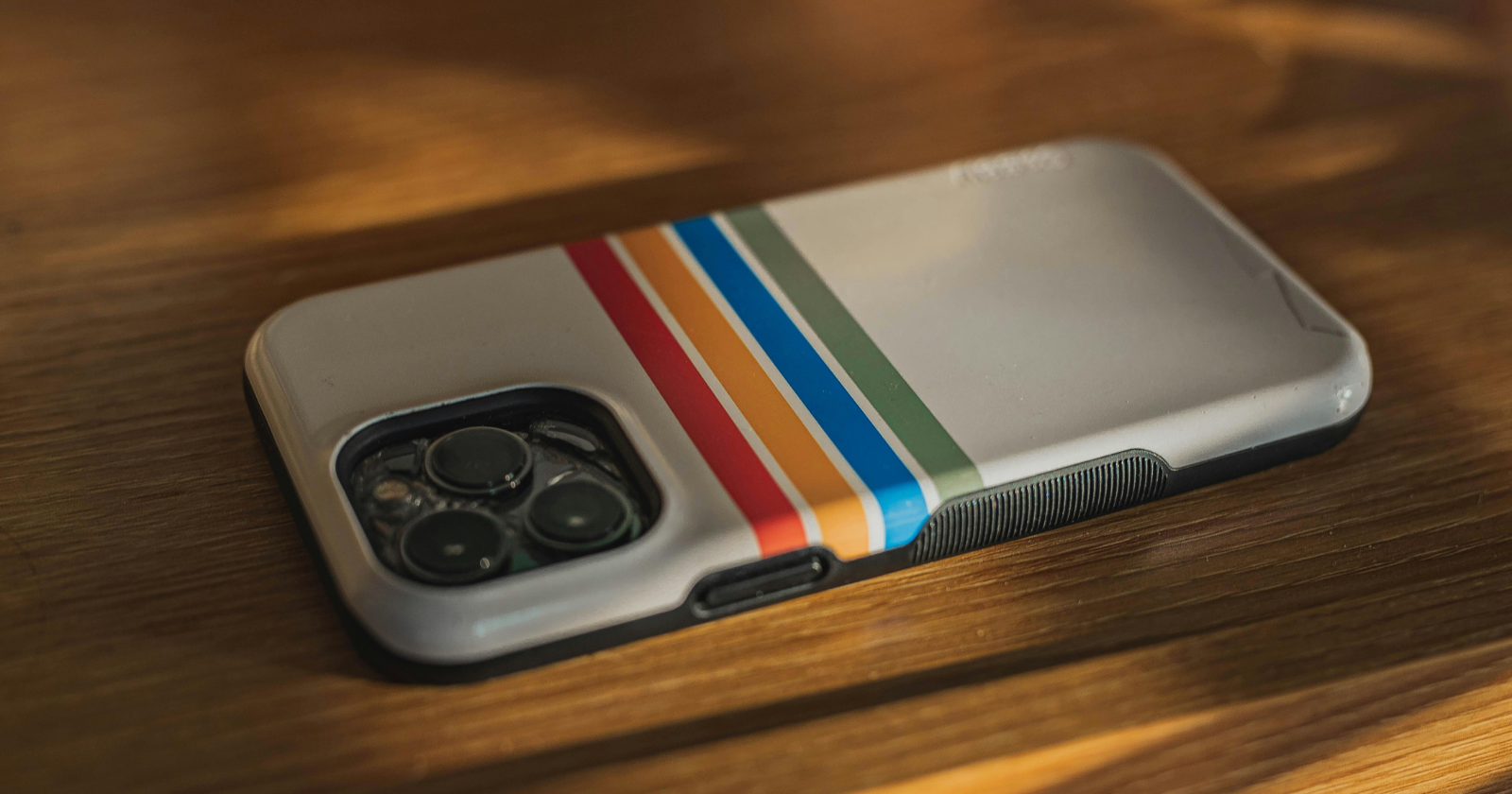
It is a small gesture, almost invisible. The phone goes face-down on the table before the menus arrive. Not on silent in a pocket. Not stowed in a bag. Face-down, on the table, where the person sitting across can see that it has been put away.
We have noticed, paying attention to the people who do this most consistently, that they tend to share something in common. They are not always the most disciplined among us. They are not necessarily the most well-mannered. They are, very often, the ones who grew up sitting across from someone they loved — a parent, a grandparent, an older sibling — and watching that person reach for a ringing phone again and again, mid-sentence, mid-meal, mid-everything.
The face-down phone is not really about etiquette. It is a quiet ceremony performed by adults who remember, very clearly, what it felt like to be on the other side of someone else’s distraction.
It is not politeness. It is memory.
Albert Bandura’s social learning theory established that children acquire behavior largely by observing the adults closest to them. What is sometimes underemphasized in summaries of his work is that children also notice, very early, which behaviors make them feel bad — and begin to form private intentions to do things differently when they are old enough to choose.
A child watching a parent take a call during dinner is not just observing a behavior. The child is observing a small social transaction in which they have just lost. The conversation they were in the middle of has been ranked, silently, below whatever is happening on the phone. The ranking does not need to be announced. Children are exquisitely sensitive to the exact moment a parent’s attention slides away from them.
If the moment happens once, it is forgotten. If it happens regularly — over years of dinners, school pickups, bedtime conversations, drives home — it is absorbed as a pattern. And the child, often without realizing they are doing it, begins to form a private resolution about the kind of attention they will give the people they love when they have a phone of their own.
The face-down phone, two decades later, is the keeping of that resolution.
The small wound of being interrupted
The developmental researcher Edward Tronick demonstrated, through his now-famous “still face” experiments beginning in the 1970s, what happens when a caregiver who has been responsive to an infant suddenly becomes unresponsive. In the experiment, a mother is asked to interact warmly with her baby and then, on a cue, to turn her face into a blank, unreactive expression for a short period.
The footage of these sessions is well-known among developmental psychologists. The infant first tries to re-engage the parent — smiling, pointing, raising arms. When that fails, the infant becomes visibly distressed. Eventually, the infant withdraws.
Tronick’s research, formalized in a 1978 paper in the Journal of the American Academy of Child Psychiatry, established something many parents already intuited: a child reads sudden disengagement from a trusted adult as a small emergency, and responds with the full machinery of distress.
A child sitting at a dinner table while a parent answers a phone call is, in a small way, encountering a version of this same experience. The face that was warm and attentive a moment ago has gone somewhere else. The voice that was speaking to them is now speaking, often more energetically, to someone the child cannot see.
The child is too old by then to cry about it. But the wound is recognizably the same one. They learn to manage the small disappointment quietly. Many of them carry that quietness into adulthood, where it eventually finds its way into a single, deliberate gesture at the start of dinner.
The research has caught up to what those children already knew
For most of the era when ringing phones were pulling people away from dinner tables, there was no peer-reviewed research describing the cost. Children who felt the cost simply absorbed it as a normal feature of family life.
That has begun to change. In a 2013 study published in the Journal of Social and Personal Relationships, researchers Andrew Przybylski and Netta Weinstein found that the mere presence of a mobile phone on a table during a conversation — even when the phone was not being used and never lit up — measurably reduced the feeling of closeness and connection between the people talking. The phone did not need to ring to do damage. Its presence alone was enough to thin the conversation.
Subsequent research has expanded the picture. Brandon McDaniel and Sarah Coyne coined the term “technoference” in a 2016 paper to describe the small, repeated interruptions of human interaction by phones, tablets, and other devices. Later work by McDaniel and pediatrician Jenny Radesky, published in Child Development in 2018, linked frequent technoference between parents and young children to higher rates of behavior problems in those children.
The findings are sometimes presented as a surprise. They are not really a surprise. They are a confirmation, in formal academic language, of something the children of the early mobile-phone era could have told the researchers themselves: being repeatedly demoted to second place by a small ringing object leaves a mark.
The face-down phone is the vow being kept
The adults who place their phones face-down at the start of dinner are, very often, not making a calculated etiquette choice. The gesture is older and more personal than that. It is the keeping of a private promise made many years earlier, sometimes consciously and sometimes not, in response to a specific feeling.
That feeling is hard to name out loud. It is the small dropped sensation of watching a parent’s eyes slide off your face and onto a screen. It is the slight pause before the parent says, “Sorry, what were you saying?” — the pause that signals they have absolutely no idea what you were saying, and that whatever you were saying was not, in the end, important enough to hold their attention against the call.
The child who feels this often enough, and who has any kind of reflective inner life, eventually decides something. The decision sounds something like: I am not going to do this to anyone.
The decision is rarely written down. It is rarely spoken aloud. But years later, when the same person becomes the adult sitting across the table from someone they love, the decision shows up in the form of a small, deliberate movement: the phone going face-down, screen against wood, before the conversation begins.
A small ceremony of presence
We mention all of this because the face-down phone is sometimes mocked, gently, as a kind of performance — a virtue signal, an affectation, a piece of mindfulness theater.
It is not. It is a piece of inherited wisdom, carried specifically by people who learned the hard way what it costs to share a table with someone whose attention is always partially elsewhere.
The gesture says, without needing to be explained: you have my attention. The ringing object will not be allowed to win. Whatever is on the other end of that screen will wait, because you are here, and you are not going to spend this dinner competing for the kind of presence you should not have to compete for.
There is no particular technique to it. There is no app, no productivity hack, no rule about it. There is just a screen turned downward, a small ceremony of presence, and the quiet sound of a promise being kept by an adult who remembers, very clearly, what it felt like when no one made the same promise to them.
