

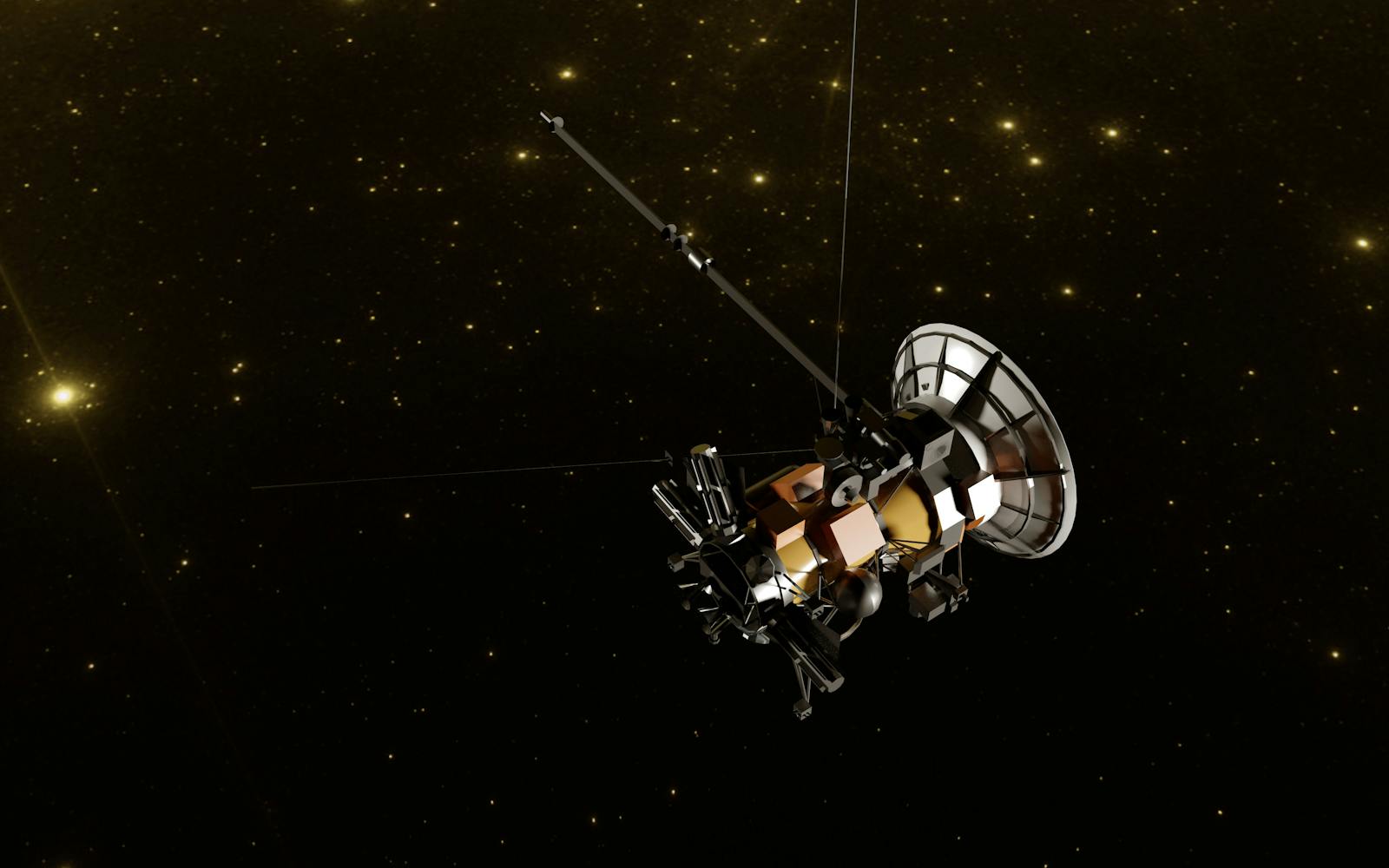
Two spacecraft built with 1970s engineering are still doing useful science in 2026, and that fact alone should reshape how the industry thinks about mission design. Voyager 1 and Voyager 2 launched within sixteen days of each other in the late summer of 1977, intended for a five-year tour of the outer planets. Forty-nine years later, both are operating in interstellar space, returning data from a region no other human-made object has ever touched, and NASA engineers are still finding clever ways to keep them alive one watt at a time.
\n\n
The latest move came on April 17, when engineers at the Jet Propulsion Laboratory sent commands to shut down Voyager 1’s Low-Energy Charged Particles experiment, an instrument that had been running almost continuously since the spacecraft left Cape Canaveral in September 1977. The shutdown wasn’t dramatic. It was a calculated trade, a way to buy roughly another year of operations on a probe whose nuclear power source loses about four watts every year and can no longer afford to run everything at once.
\n\n
That’s the through-line of the entire Interstellar Mission. Every year the Voyagers stay alive, they do so because someone made a deliberate choice about what to sacrifice. The story of how these probes became humanity’s longest-running engineering achievement is really the story of institutional patience, careful triage, and a kind of mission management that almost no modern space program is structured to support.
\n\n
The mission that wasn’t supposed to last this long
\n\n
The original Voyager mission was designed for five years. The grand tour of Jupiter and Saturn was the headline assignment, with Voyager 2 going on to Uranus and Neptune in an extended phase that depended on the spacecraft surviving long enough to get there. By the late 1980s, both probes had completed their planetary work, and what came next was something the original engineers had hoped for but never guaranteed: a long, slow drift outward into the heliosphere and eventually beyond it.
\n\n
The numbers are easy to recite and hard to actually feel. Voyager 1 is currently about 15.78 billion miles from Earth and traveling at more than 51,000 miles per hour. A radio signal moving at the speed of light takes nearly a full day to make the round trip. When JPL sent the LECP shutdown command, the sequence took around 23 hours to reach the spacecraft, and the shutdown itself took about three hours and 15 minutes to complete. There is no real-time troubleshooting at this distance. Every command is a bet placed nearly a day in advance.
\n\n
Voyager 2 is on a slightly slower trajectory, having taken the longer Uranus-Neptune route, but it too is now in interstellar space and operating under similar power constraints. Together, the two spacecraft represent the only direct measurements humans have ever made of the medium between the stars.
\n\n
Why the power problem was always going to be the limiting factor
\n\n
Voyager’s power comes from radioisotope thermoelectric generators, RTGs, which convert heat from decaying plutonium-238 into electricity. The decay rate is the decay rate. There is no recharging it, no upgrading it, no swapping in a new battery. The probes have been losing roughly four watts per year since launch, and that arithmetic has driven every operational decision for nearly four decades.
\n\n
Starting in the late 1980s, NASA began turning off science instruments and heaters one at a time according to a hierarchy the engineering team had worked out years earlier. The cameras went dark first, since there was nothing to photograph in the dark between stars. Various particle detectors and field experiments stayed on as long as they could, because they were the instruments returning genuinely new science from a region that had never been measured directly.
\n\n
The February 2025 shutdown of Voyager 1’s cosmic ray subsystem was part of this same long arc, as was the loss of Voyager 2’s LECP shortly after. The April 2026 LECP shutdown on Voyager 1 was the next item on the list. What made it slightly more urgent than expected was that the spacecraft’s power levels dropped unexpectedly during a roll maneuver in late February, which forced the team to act before an automatic safeguard system started shutting things down on its own without human input.
\n\n
That distinction matters. There is a real difference between a controlled shutdown executed by engineers who understand the priority order and an automatic load-shedding event that picks targets based on simple voltage thresholds. The whole structure of Voyager operations is built around making sure humans keep making the choices.
\n\n
What’s still working and what it’s measuring
\n\n
Voyager 1 now has two operational science instruments: a magnetometer and a plasma wave subsystem. The magnetometer measures the structure of magnetic fields in the interstellar medium. The plasma wave instrument listens to oscillations in the plasma itself, which is how scientists can infer the density of the medium the spacecraft is moving through. Voyager 2 currently has three operational instruments after losing its own LECP last year.
\n\n
This is genuinely useful science. The interstellar medium isn’t empty, it isn’t uniform, and it has structure that nobody could measure directly until Voyager 1 crossed the heliopause in 2012 and Voyager 2 followed in 2018. The LECP data on pressure fronts and particle density variations contributed to a picture of the boundary region that has reshaped a fair amount of heliophysics. That work continues with the remaining instruments, just at lower fidelity.
\n\n
Mission manager Kareem Badaruddin framed the trade-off plainly, saying that shutting down an instrument is nobody’s preference but is the best available option, and noting that the remaining instruments are still sending back data from a region of space no other human-made craft has ever explored. That last point is the one worth sitting with. There is no backup mission. There is no follow-on probe scheduled. If both Voyagers go quiet, this category of measurement stops existing.
\n\n

\n\n
The Big Bang plan
\n\n
The shutdown of LECP buys roughly a year. The team has been developing a more ambitious procedure that would swap powered devices for lower-power alternatives, keeping the probes warm enough to continue gathering data while pulling less from the failing RTGs. The procedure is scheduled to be tested first on Voyager 2, which has slightly more margin.
\n\n
One small detail from the LECP shutdown captures how the team thinks about reversibility. Engineers left a small motor running that spins the LECP sensor in a circle, in case extra power is ever found and the instrument can be turned back on. That isn’t optimism for its own sake. It’s the kind of reversible engineering that keeps options open in a system where every option is rare.
\n\n
The realistic goal is to keep at least one Voyager operating long enough to celebrate its 50th anniversary in September 2027. Beyond that, the math gets harder. The probes will continue to physically exist, drifting through space for millions of years, but the ability to communicate with them and receive useful science depends entirely on the power budget.
\n\n
The computers that shouldn’t still work
\n\n
The other half of the Voyager engineering story is the onboard computers. Each spacecraft carries three pairs of computer systems for command, attitude control, and flight data, all built with mid-1970s technology. The total memory across the relevant systems is roughly 68 kilobytes, which is less than a single low-resolution image on a modern phone.
\n\n
This is the part of the Voyager story that I think modern space companies underrate. The computers have not failed. The memory has not corrupted in any catastrophic way. The flight software, written and patched by engineers many of whom have since retired or passed away, has continued to execute commands correctly across nearly five decades of cosmic ray exposure and thermal cycling. When Voyager 1 had a serious data corruption issue in 2024, the team was able to diagnose and patch it remotely, working from documentation that in some cases existed only on paper.
\n\n
The reason any of this is possible is that the original engineers built systems they could fully understand and fully recover from. There was no abstraction layer they didn’t control. Compare that to a modern small-satellite stack built on commercial off-the-shelf flight computers running layered software, and ask yourself how recoverable any of it would be after one of the original engineers retired, let alone after fifty years.
\n\n
Why no modern mission is built like this
\n\n
The commercial space industry I’ve spent most of my career covering has gotten extraordinarily good at certain things. Reusable boosters. Mass-produced satellites. Rapid iteration on launch vehicles. What it has not gotten good at is multi-decade institutional patience. Voyager works because NASA, JPL, and a small mission team kept showing up year after year, decade after decade, even when the headline science had long since been published.
\n\n
The economic incentives don’t favor that kind of work. Venture-backed space companies need to show progress on quarterly timelines. Government missions get budget reviews and re-prioritizations. Engineers move on, project offices reorganize, and the institutional memory required to operate a 49-year-old spacecraft is an enormous overhead cost with no obvious commercial return.
\n\n
The Voyager mission today operates on a budget that is essentially a rounding error compared to flagship missions, and it depends on a small team that has spent careers learning the quirks of these specific spacecraft. Space Daily has written before about how the Voyager program has become humanity’s longest-running experiment in institutional patience, and the description gets more accurate every year. There is no commercial analog.
\n\n
The Deep Space Network problem
\n\n
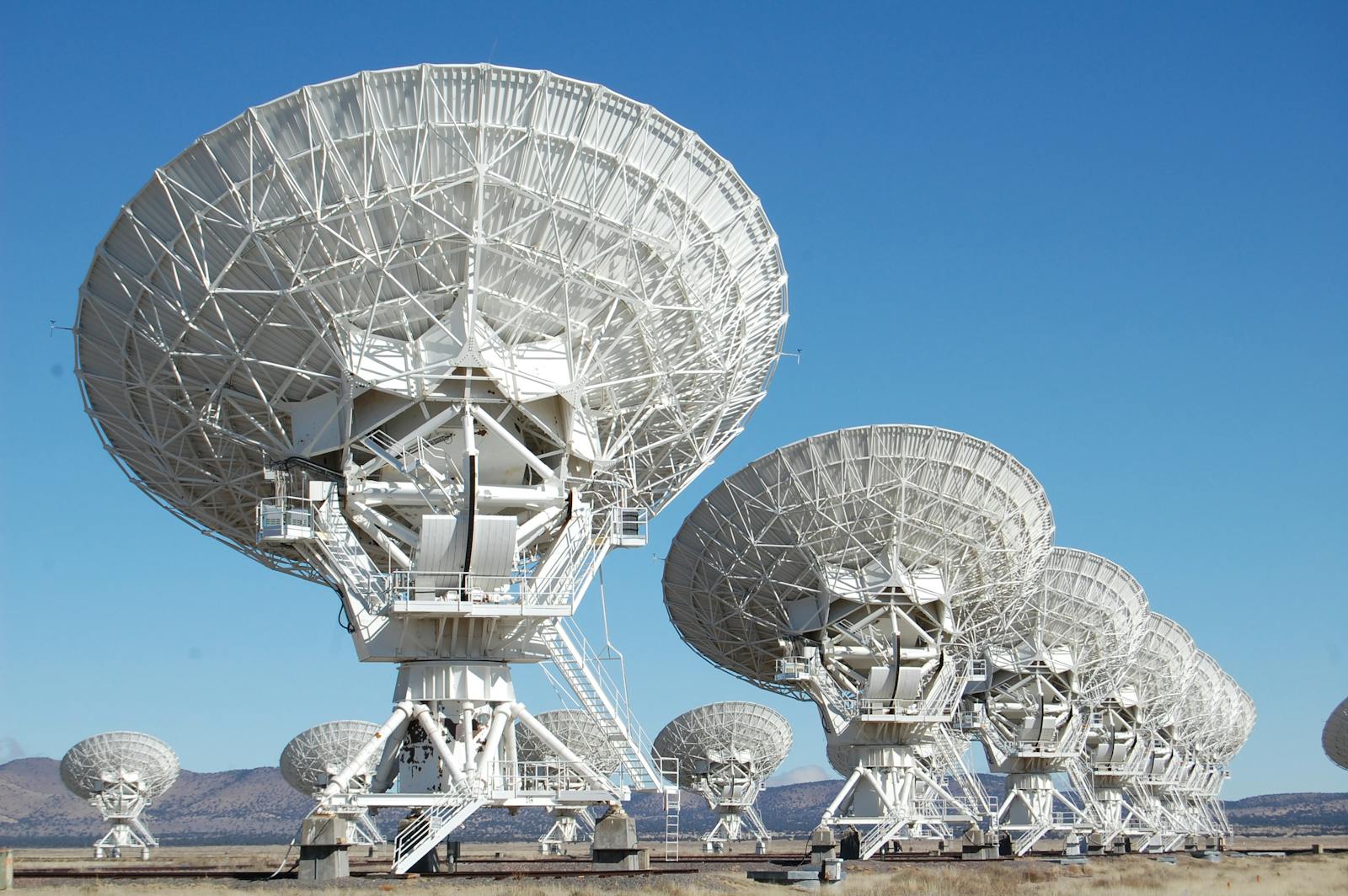
The other piece of infrastructure that keeps the Voyagers alive is the Deep Space Network, NASA’s three-station array of giant radio dishes in California, Spain, and Australia. The Voyagers transmit at extremely low power across enormous distances, and only the largest dishes in the DSN can hear them clearly. As the probes get further out, the signal gets weaker, and the dishes have to be tasked for longer tracking passes.
\n\n
This matters because the DSN is also supporting every other interplanetary mission NASA and its partners operate, from Mars rovers to the James Webb Space Telescope to the Europa Clipper to the growing roster of lunar missions. Space Daily has covered how the network’s three dishes are quietly running out of capacity as mission demand grows. Voyager time competes with everything else, and the case for keeping a 70-meter dish pointed at a probe that returns kilobits per second has to keep being made.
\n\n
If the Voyagers ever go silent, it won’t necessarily be because the spacecraft fail. It might be because the ground network can no longer afford to listen.
\n\n
\n\n
The Golden Record and the longer timeline
\n\n
Even after the last instrument is turned off and the last command goes unanswered, the Voyagers will keep going. Each one carries a Golden Record, a phonograph disc encoded with sounds and images chosen to represent Earth to whatever might eventually find them. Space Daily has covered the history of the Golden Record and the decisions that went into its contents in detail.
\n\n
The records are essentially eternal on human timescales. The probes themselves will pass through interstellar space for hundreds of thousands of years before coming anywhere near another star system. Whether anyone ever finds them is unknowable, and frankly not the point. The records are a statement about how the people who built the mission thought about the future, which is to say they thought about it as something worth bothering with even if no one alive would see the result.
\n\n
That sensibility is, more than the engineering, what’s hardest to replicate today. The willingness to build something whose payoff lies decades or centuries beyond the careers of the people building it is rare, and it’s rarer in a commercial context than in the kind of government science culture that produced Voyager in the first place.
\n\n
What 2027 looks like and what comes after
\n\n
The near-term plan is straightforward. Voyager 1 operates with two instruments through roughly the next year while the team validates the Big Bang procedure on Voyager 2. If it works, both probes get a meaningful extension. If it doesn’t, the shutdown order continues down the list. Either way, the team is targeting the 50th anniversary in September 2027 as a real, achievable milestone.
\n\n
After that, the question becomes how long the basic communication and engineering subsystems can keep working with the science instruments largely off. There’s a version of the mission where one or both Voyagers continue to transmit telemetry for years after the last science instrument is dark, and even that minimal signal carries information about the spacecraft’s environment and condition. There’s another version where a thermal failure or a single-point hardware fault ends things abruptly. Voyager 2 became NASA’s longest-running mission years ago, and every additional day at this point is genuinely uncharted territory for any spacecraft.
\n\n
What I keep coming back to, as someone who watched the reusable-rocket revolution happen in real time and now spends most of his time thinking about commercial space, is how different Voyager looks from almost everything else the industry is doing. SpaceX, Rocket Lab, Blue Origin, the entire small-launch sector — these companies have transformed what’s possible in low Earth orbit and beyond. None of them, including the parts of NASA that work most closely with them, are structured to operate a fifty-year mission with a five-person team and a budget the size of a single Falcon 9 launch.
\n\n
The pattern worth noticing
\n\n
The Voyager Interstellar Mission is the rare engineering achievement where the headline isn’t a single moment of triumph. There was no \”landing on the Moon\” instant, no successful first reflight, no captured booster on a drone ship. The achievement is the accumulation. Year after year of careful triage, of patient operations, of one more instrument shut down to keep the rest alive, of one more clever workaround to get another year out of a spacecraft built when Jimmy Carter was president.
\n\n
That kind of achievement is hard to replicate because it’s hard to celebrate. It doesn’t translate into a launch broadcast or an investor deck. It shows up in the data, in the slow accumulation of measurements from a region of space no one had ever measured before, and in the stubborn fact that the probes are still talking to us.
\n\n
Space Daily reported back in 2017 that the Photo by Paul Seling on Pexels
