

When people imagine where alien life might be, they tend to look outward. Exoplanets. Distant star systems. Some half-mythical planet around a star we’ll never visit.
But here’s the strange truth most people never sit with. Scientists think life might exist right here, in our own solar system.
Not little green men. Not Star Trek. We’re talking microbial life, the kind that quietly runs everything on Earth. And there are a handful of places it could be hiding right now, possibly waiting for us to look hard enough.
Here are five of them.
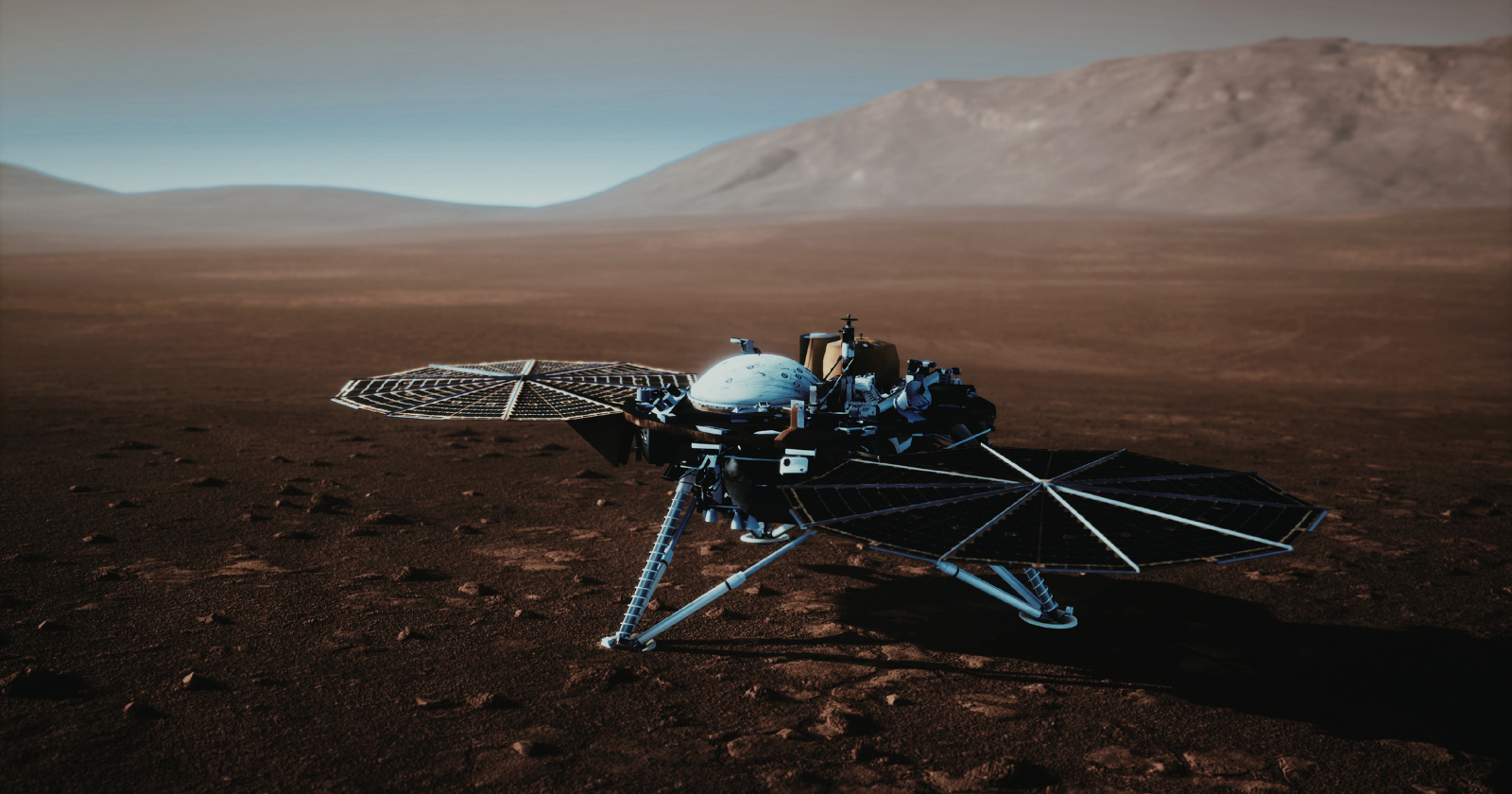
1) Mars
The most obvious candidate, and still one of the most compelling.
Mars today is cold, dry, and brutal. But billions of years ago it had rivers, lakes, even an ocean.
The question is whether anything is alive there now. Some scientists think microbial life could survive in subsurface lakes detected beneath the ice caps, shielded. We won’t know for sure until we drill. But Mars remains the planet most likely to give us our first answer.
2) Europa
This is, for many astrobiologists, the most exciting place in the solar system.
NASA’s Europa Clipper mission is now on its way to investigate, and a recent NASA study found that signs of life could survive just under the surface ice, despite the radiation. Future landers might not have to dig deep.
If anything is down there, it would represent a separate origin of life from ours. Which would change everything we think we know about how common life is in the universe.
3) Enceladus
In 2005, the Cassini spacecraft found plumes of water vapour shooting out of the moon’s south pole. Beneath its icy shell sits another global ocean, and the plumes are essentially samples of that ocean being launched into space for free.
Since then scientists have found evidence that the bottom of the ocean contains molecular hydrogen.
4) Titan
Saturn’s largest moon is the strangest world in the solar system.
It has a thick nitrogen atmosphere, weather, lakes, rivers, and a hydrologic cycle. Except instead of water, the rain and rivers are made of liquid methane and ethane. It’s the only place beyond Earth where stable liquid exists on the surface.
Beneath the surface, scientists believe Titan also hides a subsurface water ocean. Which means it has the potential for two completely different kinds of life. Earth-style biology in the hidden ocean below, or something genuinely alien up top, using methane the way we use water.
NASA’s Dragonfly mission is set to launch and explore Titan’s surface in the years ahead. We’ll find out.
5) Venus
This one surprises people.
Venus is hell. The surface is hot and the atmospheric pressure would crush a human. Nothing is alive down there.
But about 50 kilometres up, in the cloud layer, conditions are surprisingly Earth-like. And in 2020, a team led by Cardiff University astronomer Jane Greaves announced the detection of phosphine in Venus’s clouds. On Earth, phosphine is almost exclusively produced by microbial life or human industry. Its presence on Venus is hard to explain.
The finding is still being debated.
Final words
Whenever I read about this stuff, I feel something flicker that I haven’t felt since I was a kid stargazing in suburban Melbourne. Pure, undiluted wonder.
We may be alive at the moment in human history when the question of life beyond Earth finally gets answered. Not with proof of intelligent civilizations, but with something humbler and stranger. Something microscopic. Something that quietly suggests we are not, and have never been, alone.
I’d say that’s worth looking up for.
