

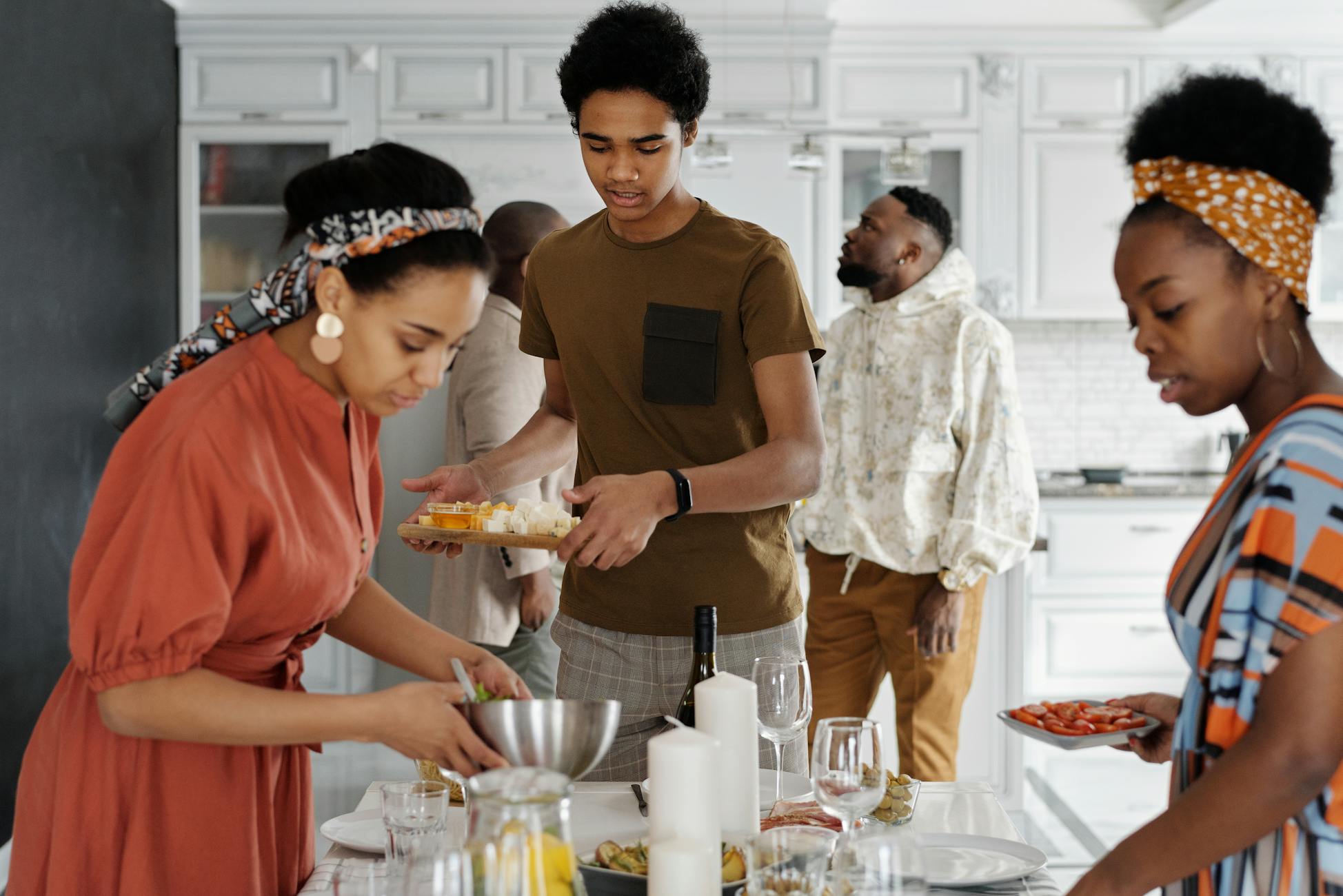
The refusal to take the last piece of food on a shared plate is one of the most misread gestures in American social life. We call it polite. We compliment people for it. We teach children to do it as if we’re handing them a virtue. What we’re actually handing them is a survival adaptation dressed up as etiquette, a small ritual of self-denial that started as a way for adults to signal who deserved to want things and who didn’t, and the people who can’t reach for that last roll without a slow internal negotiation aren’t being mannerly. They’re running a script someone wrote for them before they could read.
Most people believe that table manners are just table manners. That framing collapses the moment you watch a six-year-old hesitate over the last piece of garlic bread while three adults at the table also pretend they don’t want it. Nobody taught that child the calorie content of the bread. Nobody sat them down and explained the protocol. They watched. They cataloged. They learned that wanting the last thing too visibly was a kind of small social crime, and they noticed which adults committed it and which adults made a performance of refusing.
What gets installed in that moment isn’t politeness. It’s a hierarchy.
The performance nobody named out loud
In a lot of households I’ve heard people describe, and in the one I grew up watching, the last-piece ritual had specific casting. The mother refused first, almost reflexively. The father might take it, or might also refuse, depending on the household’s particular grammar of who was allowed to want. A grandparent might be offered it as tribute. A guest might be pressured into accepting it as a kind of social tax. Children watched all of this from a height of about three feet and absorbed something more durable than any rule about elbows on the table.
They learned that food on a shared plate was a small currency for measuring who counted. They learned that the adult who took the last piece without a moment of theater was either the highest-status person at the table or the lowest, and the difference was usually obvious from context. They learned that refusing was sometimes generosity and sometimes self-erasure, and that the two could look identical from the outside.
Children are extraordinary anthropologists of their own kitchens. Building on social learning frameworks, norms transmit without direct instruction, elaborating something parents already know in their bones: kids do what we do, not what we say. The last-piece refusal is a textbook case. No adult ever explicitly told them to restrain themselves to signal they deserve less than they want—they just performed it, three times a week, at every family dinner.

Self-denial as a measuring tool
The thing that took me a long time to see is that the refusal isn’t really about the food. The food is the prop. The actual transaction is about deservingness. Who gets to want? Who has to perform not-wanting in order to be considered a decent person at this table?
In households with scarcity, real or imagined, the answer often falls along predictable lines. The earner gets to want. The caretaker performs not-wanting. The children watch and absorb which category they’re being trained for. In households without scarcity but with a parent who carried scarcity in their nervous system from their own childhood, the same script runs anyway, because these things don’t unwind in a single generation. A mother who grew up splitting one pork chop four ways doesn’t suddenly relax when she marries into a household where the freezer is full. She still pushes the last piece toward someone else. Her children still watch.
What they watch isn’t generosity, exactly. Generosity is a choice made from abundance. What they’re watching is closer to a ranking system, where refusing the last piece is how an adult publicly demonstrates that they have correctly assessed their own position in the hierarchy of need. The child who later becomes the adult who can’t reach for that last piece isn’t being polite. They’re still performing the assessment. They’re still announcing, every time the plate goes around, that they understand they’re not the one who gets to want without negotiation.
The hierarchy you don’t know you’re signaling
There’s interesting work coming out of behavioral neuroscience on how status-dependent behavior gets encoded and expressed in social animals. A team at the University of Wyoming published a study in 2025 identifying a specific neural circuit that controls hierarchy behavior in mice, showing that what looks like simple deference or restraint is actually a finely tuned status-reading system that adjusts behavior based on perceived rank. Mice aren’t humans. But the architecture is older than either of us, and it suggests something the etiquette books have always missed: refusal is rarely neutral. It’s almost always communicating something about position.
When a human adult refuses the last piece of food, the brain is doing a version of the same calculation. Who else is at the table? What’s my rank here? What does taking it cost me in social standing, in the perception of others, in my own internal sense of whether I’m allowed to want things? People who grew up in homes where wanting was punished, or where wanting was a marker of low status, learned to keep that calculation invisible. They look polite. They feel something else.
I’ve written before about how kindness can feel like a transaction with a delayed bill for people raised in certain environments, and the last-piece thing is in the same family of behaviors. Both are about the discomfort of being on the receiving end of something. Both are about a learned suspicion that visible appetite, visible need, visible willingness to take, will be remembered and used later.
What the modeling actually looked like
The Psychology Today work on intergenerational modeling is sharp on this point. Parents transmit exactly what they haven’t resolved, often more reliably than they transmit what they’re trying to teach. A parent’s unexamined relationship to scarcity, deservingness, or self-worth shows up at the dinner table whether they intend it to or not. The child doesn’t need a lecture. They need three thousand meals.
And they get them. By the time a person is twelve, they’ve had something like thirteen thousand family meals if they ate together regularly. Even at a quarter of that, the script is well-rehearsed. The hand that hovers over the last piece of bread at age thirty-eight has been hovering, in some form, since age four. The hesitation is muscle memory. The rationalization arrives a second later: I’m full, someone else probably wants it, it would be rude.
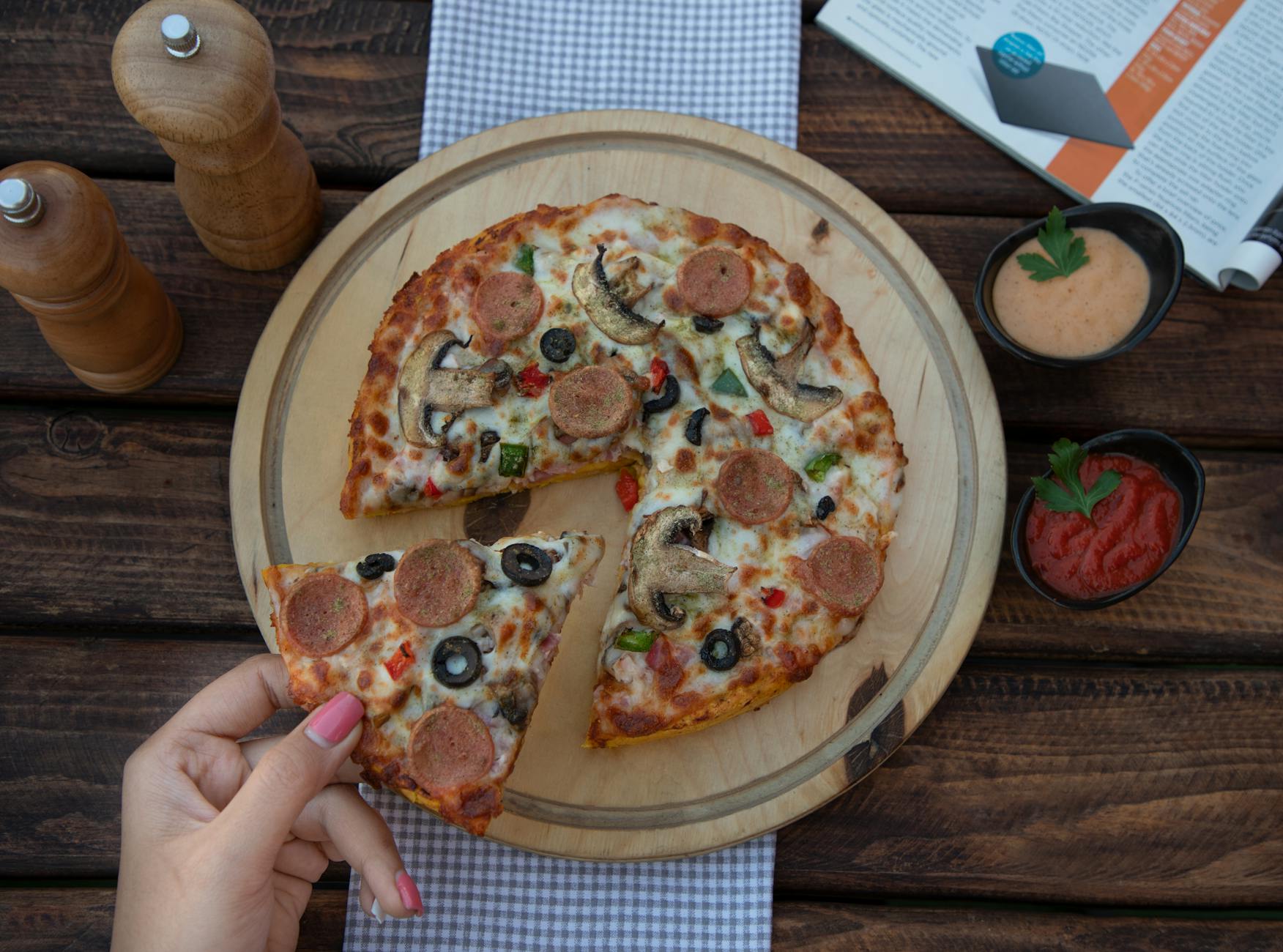
Sometimes those rationalizations are even true. That’s what makes this hard to see. Politeness is a real thing. Generosity is a real thing. The problem is that the same behavior can be either of those, or it can be a small ongoing announcement that you understand your place, and the person performing it usually can’t tell the difference from inside.
The tell that separates polite from programmed
There’s a way to distinguish the two, though, and it has to do with the body. Genuine politeness is light. You decline the last piece, you mean it, you move on. You don’t think about it again. Programmed self-denial has a different texture. There’s a small clench somewhere. A flicker of something that isn’t quite resentment but isn’t quite peace either. The thought returns later, sometimes hours later. You wonder if you should have taken it. You feel oddly hungry. You notice you’re irritated and can’t say why.
That texture is the thing. It’s the same texture I’ve described in pieces about people who can’t accept help without immediately offering something in return, and it shows up in the same population for the same reason. The body knows when it has performed a small act of self-erasure. It just doesn’t always have the vocabulary to say so.
People who grew up in households where adults performed visible self-denial to measure deservingness tend to recognize this texture once it’s named. They’ve felt it at potlucks, at family dinners, at restaurants where the last piece of shared appetizer sits on the plate while everyone politely waits. They’ve felt it when a coworker offers them the last seat on a crowded train. They’ve felt it when someone hands them the bigger half of anything.
What changes when you see it
The behavior doesn’t necessarily change once you see it, and I’m not convinced it always should. Sometimes refusing the last piece really is the right move. Sometimes you really aren’t that hungry. The point isn’t to start grabbing the last of everything to prove a recovery. The point is that the behavior stops being automatic, and once it stops being automatic, you can finally tell what’s actually happening when you do it.
You can notice, for instance, that you only refuse with certain people. That you take the last piece without hesitation with your closest friends but never with your in-laws. That the script is more active when you feel watched. You can notice which version of the adult you grew up watching is in the room with you, the one who refused or the one who took, and which one you’ve been imitating without meaning to.
The last piece of food on a shared plate is a tiny thing. It is also one of the most reliable places in adult life to watch a childhood operating system run in real time. Most people will keep refusing. A few will start to ask why. The ones who ask tend to find that the answer wasn’t about the food, and was never about politeness, and had been sitting there in plain sight at every family dinner of their lives, waiting for somebody to notice it had a name.
