
The Managing Director of AstroVision Australia, Mr Michael Hewins, announced today the signing of a marketing agreement between AstroVision Australia Limited (“AstroVision”) and Astro Research Corporation (ARC) of Japan to work together in a business development capacity to develop the Japanese, Korean, and Chinese markets for services that are based on remote sensing information from AstroVision’s planned geostationary satellite.
AstroVision, a 51% owned subsidiary of Horizon Global Limited, has an exclusive licence for the Asia-Pacific region for space imaging technology that will deliver information to governments, businesses, and private users in the region. The company will establish the first live, continuous, high-resolution and true-colour motion imagery and data of the Earth from a geostationary imaging satellite.
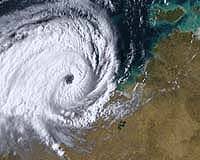
The data can be used to monitor weather and natural disasters, reduce bushfire and hail damage, improve coastal surveillance, navigational hazards for maritime and aviation industries, and improve electrical energy forecasting and delivery efficiency. It will be used to create a safer environment and cost savings to government, business and the private sector.
Michael Hewins comments: “AstroVision Australia is very pleased to have the marketing agreement with ARC in place, as it is demonstrates the strong regional applicability of our products and services. Their unsolicited interest in serving as a marketing agent for AstroVision endorses the broad appeal that AstroVision’s products will have to government, commercial, and private customers across the Asia-Pacific region.”
The Parties, through this Agreement, have formed a marketing relationship which allows ARC to conduct market development work on behalf of AstroVision in the key Japanese, Chinese, and Korean markets, particularly within Telecommunications, Media, and Government.
Capabilities of ARC
AstroVision Technology
The AstroVision system is based on mature space heritage hardware and technology, one of the keys to the low cost, high reliability of the system. The sensors are derivatives of those developed and flown initially for interplanetary missions and planetary observation by NASA, which places a high premium on sensors being lightweight, with high reliability and low power requirements. This makes for smaller payloads, with smaller satellites to carry them, and results in significantly lower costs than traditional satellite projects.
The positioning of the satellite in geostationary orbit will be at or near 130o East Longitude and will provide 24 hour continuous coverage of the region from India to mid Pacific (west of Hawaii).
The planned launch date for the satellite is in 2007 and the nominal life of the satellite is at least 9 years. The contract for the satellite bus has already been put to tender, and Ball Aerospace (Colorado, USA) was selected as the favoured entity for satellite construction and sensor integration. Ball has an established history in satellite construction with particular experience with imagery systems.
Three US patents (with numerous others in process) have been granted and issued to protect the system designed by AstroVision.
Horizon Global Moves Into Imaging Satellites
Prospects for an Australian-owned geostationary imagery satellite moved ahead with the acquisition by Horizon Global Limited of 51 per cent of AstroVision Australia Limited, a company which holds the Asia-Pacific rights for a set of advanced space cameras and sensors.
Incorporated in 2003, AstroVision Australia is a public unlisted company based in Sydney. Over the last year it has been familiarising Federal and State Government departments and research organisations on the potential uses of high speed imaging from cameras, infrared sensors, multispectral instruments and lightning detectors in Geostationary orbit.
AstroVision Australia’s Managing Director Michael Hewins comments: “We are encouraged by the strong support from Horizon Global. The financial backing will allow us to take the vital steps to developing market awareness for the capabilities of our technology and securing contracts with our targeted customer base.”
Australia and other countries in this region are currently critically dependent for weather observations on one 11-years-old, partially disabled US geostationary imaging satellite with obsolete instrumentation, operated on lease from the American National Oceanic and Atmospheric Administration (NOAA). Called GOES-9 (GOES stands for Geostationary Operational Environmental Satellite), it has only a limited remaining life. Sudden failure of GOES-9 would place our region in a precarious position, affecting a wide range of industries and economies.
A Geostationary satellite, which orbits at the same speed as the Earth’s rotation, would provide continuous coverage 24 hours a day, seven days a week from a fixed location high above the Earth, allowing cloud weather patterns and cyclones to be monitored continuously. Movements of ships, ocean temperatures, emissions of volcanic ash, growth of pastures and locations of lightning strikes causing bushfires are among many terrestrial and oceanographic observations that would be greatly enhanced through the satellite.
Advanced instrumentation, derived from equipment developed primarily for NASA interplanetary missions, will provide much more frequent observations than is possible with present day equipment. Australia has been chosen as the headquarters for AstroVision because of an obvious gap in modern geostationary satellite coverage for the Asia-Pacific.
The AstroVision 24 hour satellite coverage will be distinct from, and complementary to, that offered by rapidly-orbiting Low Earth Orbit (LEO) imaging satellites. LEOs give coverage for, at best, 15 minutes at a time once a day before disappearing over the horizon. The business model allows the total annual cost to be shared between a number of different government departments, research bodies, private clients and users across the Asia-Pacific region.
NEED URL for AstroVision Australia
