

The Philippines is approaching the end of a 15-year military modernization program with a navy that is partially armed, an air force still waiting on multirole fighters, and a procurement system bruised by scandal. The shortfall matters because Manila now faces a maritime adversary it could not have imagined when the program began. China’s gray-zone pressure across the South China Sea has turned every delayed missile and half-finished frigate into a strategic liability.
According to an analysis published this month in The Diplomat, the Revised Armed Forces of the Philippines Modernization Program — launched in 2012 under Republic Act 10349 — has produced uneven results. The country bought hardware. It did not always buy the systems that make hardware lethal.
The frigate that arrived empty
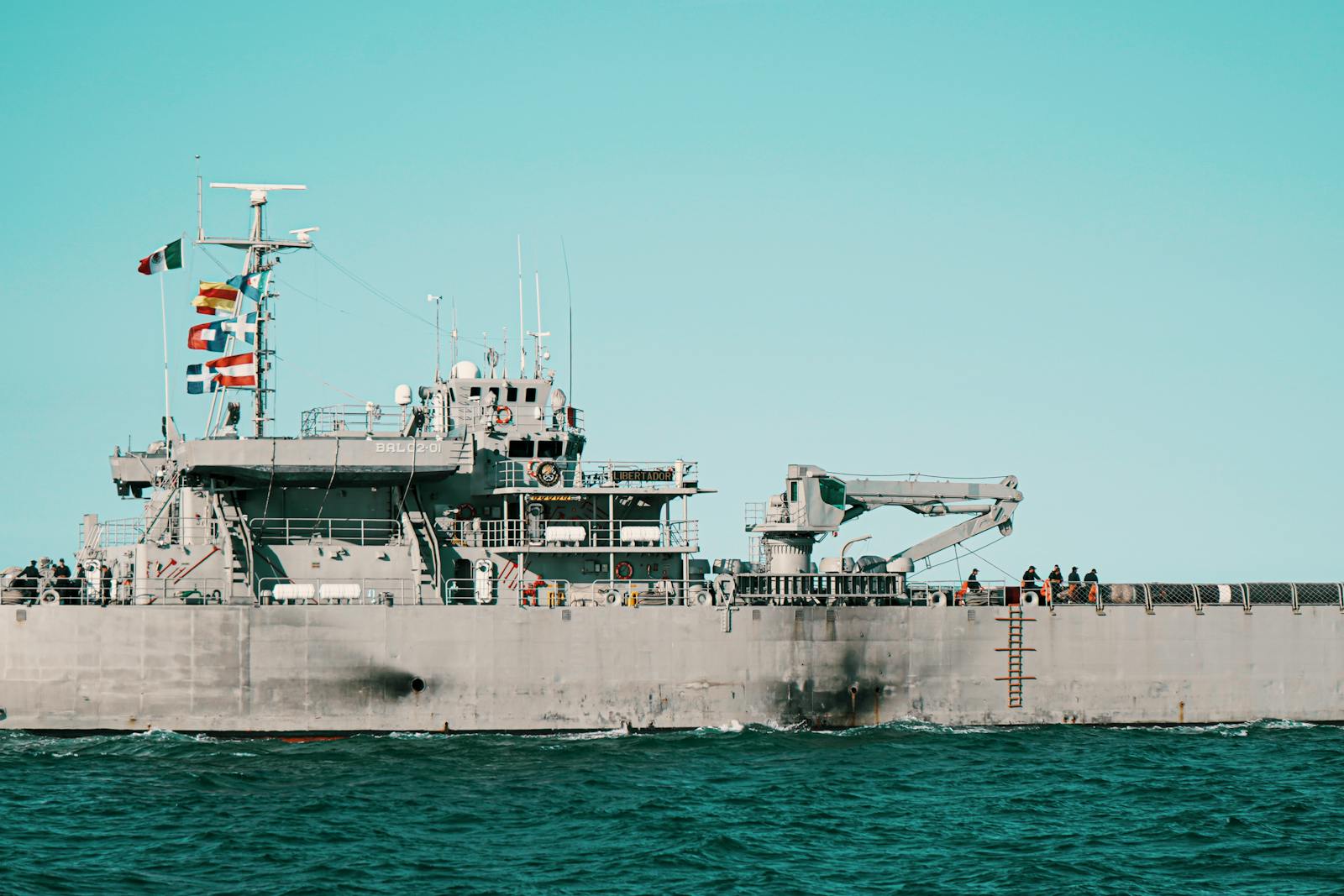
The flagship case is the Jose Rizal-class frigate. Built by Hyundai Heavy Industries and delivered in 2020 and 2021, the two ships represented the Philippine Navy’s first serious blue-water acquisition in decades. They arrived nearly bare. The original contract called for a combat management system compatible with Link 16, the NATO-standard tactical data network. Hyundai had planned to install Tacticos, a respected product of the Hanwha-Thales partnership.
That partnership dissolved. The replacement was Hanwha’s domestic Naval Shield system, a less capable substitute that nonetheless became the brain of the BRP Jose Rizal. Hanwha Systems has supplied combat management systems to more than 80 ships over four decades, including the Philippine frigates exported in 2019. The Korean firm is competent. The problem was procurement, not engineering.
The frigates went to sea armed with a 76mm Leonardo gun, a few 30mm machine guns, and not much else. The promised weapons trickled in over years. Mistral antiair missiles were announced for 2021 delivery. C-Star antiship missiles followed in 2022. The first live firing of a Mistral 3 surface-to-air missile from BRP Jose Rizal did not occur until April 2025, during the Balikatan exercise with U.S. forces. Five years after commissioning.
A pattern of deferred armament
Defense analysts have described this pattern as acquiring ships designed to carry weapons while deferring the actual weapons purchases — sometimes as a budget tactic. In Manila’s case it reflected something closer to institutional inexperience. The Philippines had not contracted for major surface combatants in a generation. The negotiators did not know what they did not know.
The Diplomat reports that Manila in 2013 rejected an offer of Italian Maestrale-class frigates that would have provided superior capabilities to what the Jose Rizal class delivered in its current state. The decision looks worse with every patrol the navy runs through contested waters.
The procurement also became politically toxic. A combat management system controversy reached the office of former Special Assistant Bong Go, whose handwritten notes surfaced as evidence in a public dispute over the contract. In August 2024, former senator Antonio Trillanes IV filed a plunder complaint against former president Rodrigo Duterte and Senator Bong Go over the 16-billion-peso frigate deal, alleging political interference in the selection of the combat system.
Why Manila waited so long
For most of its post-independence history, the Philippines underinvested in external defense. Internal insurgencies absorbed the army’s attention. The U.S. Mutual Defense Treaty was assumed to handle the rest. That logic collapsed in 1995, when China seized Mischief Reef in the Spratlys and Manila could offer no meaningful resistance.
The next humiliation came in 2012 at Scarborough Shoal, where Chinese maritime forces outclassed a Philippine cutter and effectively took control of the feature. The standoff is now treated as a textbook case in gray-zone escalation. The Philippine flagship at the time, BRP Gregorio Del Pilar, was a 40-year-old former U.S. Coast Guard cutter.
The Revised AFP Modernization Program followed. The first wins were modest. The Philippine Air Force acquired FA-50 light fighters from Korea Aerospace Industries — the country’s first new jets in nearly two decades. The army received utilitarian trucks. The navy got the Jose Rizal class, with all its compromises.
Signs of institutional learning
The newer Miguel Malvar-class corvettes, also from Hyundai, suggest the Philippines learned from the frigate experience. They arrived with more complete weapons suites integrated from the start. The contract language was tighter. The expectations were clearer.
The bigger ambition is air power. Defense Secretary Gilberto Teodoro has pushed to expand the planned multirole fighter buy from a dozen aircraft to 40, arguing that piecemeal acquisition produces piecemeal capability. According to Defense News reporting from February, the F-16 remains Manila’s preferred platform, though sticker shock has triggered political resistance.
By March, that resistance had hardened. The Department of National Defense signaled it might rethink the fighter plan entirely as funding concerns mounted.
The 2026 budget squeeze
The numbers expose the structural problem. For 2026, of 90 billion pesos allocated for modernization, only 40 billion is firmly programmed. The remaining 50 billion depends on extra income sources that may not materialize. Corruption scandals have eroded fiscal space at the worst possible moment, with Chinese coast guard and maritime militia activity intensifying around Second Thomas Shoal and other features within the Philippine exclusive economic zone. This is the paradox of Philippine modernization: the geopolitical case for spending has never been stronger, while the political case has rarely been weaker. Each scandal — the frigate plunder complaint, the fighter cost debates — feeds public skepticism about whether defense pesos buy defense, and that skepticism in turn constrains the budgets that buy ships and planes.
What partial modernization actually means
A frigate without integrated weapons is not a deterrent. It is a target with national colors. A fighter fleet of 12 aircraft cannot maintain combat air patrols across an archipelago of 7,000 islands. A modernization program that delivers hulls without missiles, planes without numbers, and contracts without oversight produces the appearance of capability rather than the fact of it.
Manila’s challenge now is not buying more. It is buying better. The Miguel Malvar contracts show the institutional muscle exists when negotiators learn from past mistakes. The plunder complaint over the Jose Rizal deal shows what happens when they do not. Whether the next tranche of frigates, fighters, and missile systems closes the gap or extends it will depend less on what Manila can afford than on whether its procurement system can be trusted to spend what it has.
The Jose Rizal fired its first surface-to-air missile in April 2025. It was a milestone. It was also a reminder of how long Manila has been catching up to a fight that arrived three decades ago.
Photo by MAKSIM ZAVIKTORIN on Pexels
