

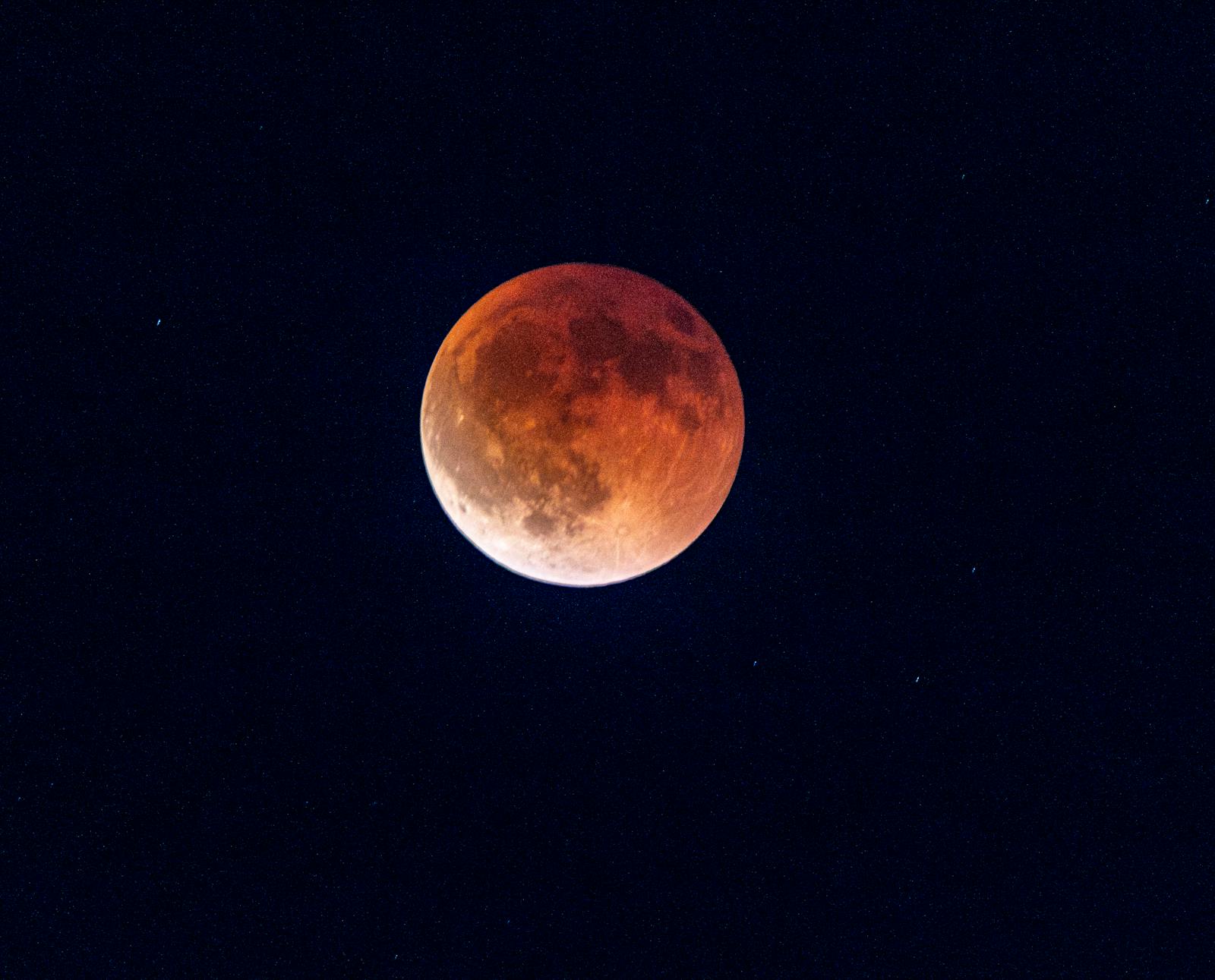
No human had ever sat inside the moon’s shadow. When Artemis II’s Orion capsule rounded the lunar far side on April 1, 2026, its four-person crew became the first, witnessing 54 minutes of totality from a vantage point that no Earth-bound observer could match in duration, scale, or perspective. The geometry of Orion’s free-return trajectory made it possible. A deliberate launch window made it inevitable.
The resulting images and astronaut accounts already rank among the most striking artifacts of the new lunar program — and they suggest that NASA’s most consequential decision about Artemis II was not engineering at all, but timing.
An eclipse engineered into the flight plan
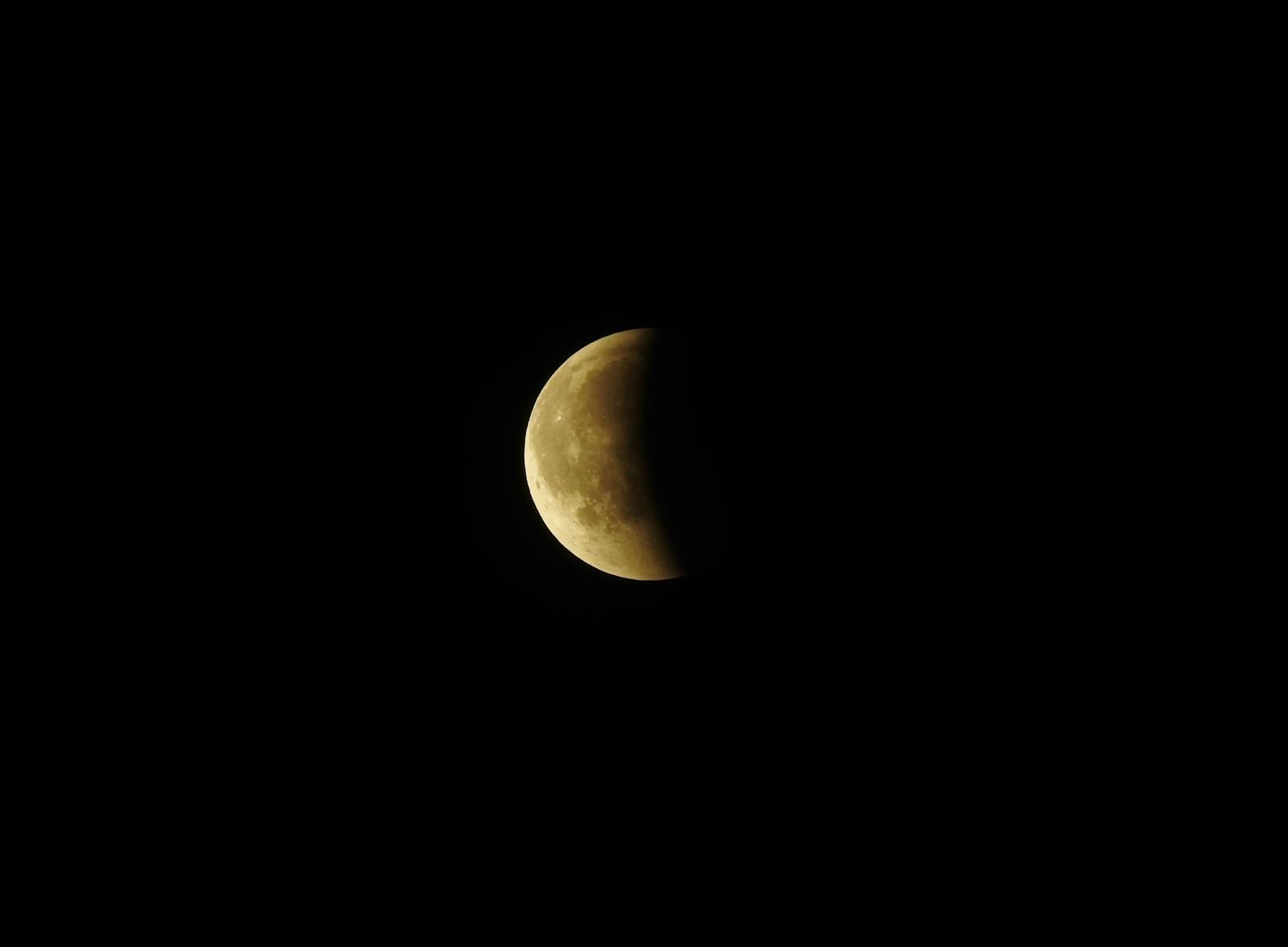
From Earth, totality typically lasts a few minutes at most. The April 2024 eclipse over North America delivered roughly four minutes of darkness to observers in the path. The Artemis II crew, by contrast, sat inside the moon’s shadow for nearly an hour because their Orion capsule was so close to the lunar surface that the moon’s apparent diameter dwarfed the sun’s. NASA confirmed the 54-minute totality figure when it released the first images from the flyby.
That extended duration was not a coincidence of orbital mechanics so much as a deliberate mission design choice. The launch window was selected with the eclipse in mind, layered onto a free-return trajectory borrowed from Apollo 13 and a science manifest centered on the moon’s far side.
It is the kind of detail that gets lost in coverage of crewed missions, where the human drama tends to crowd out the engineering. But the eclipse window said something specific about how NASA is approaching Artemis: the agency is treating each test flight as an opportunity to bank cultural moments alongside technical milestones.
What the astronauts actually saw
Pilot Victor Glover described dramatic views during the lunar flyby, according to accounts compiled by Phys.org. From behind the moon, the sun’s corona wrapped around the lunar limb while Earthshine — sunlight reflected off our planet — illuminated the cratered surface in front of them. Venus appeared as a bright pinpoint near the eclipsed sun. Mercury, Mars, and Saturn were also visible against the black sky.
Commander Reid Wiseman and crewmate Christina Koch shared unprecedented observations from their vantage point behind the Moon, with Koch documenting her experiences in remarks reported by the Associated Press.
A record set, and a challenge issued
The eclipse was only one piece of a flight that broke distance records. Orion reached a maximum distance from Earth, surpassing Apollo 13’s mark, as reported by mission control. Canadian astronaut Jeremy Hansen used the moment to needle future generations of explorers, framing the mission’s achievements as a challenge to keep pushing the boundaries of human spaceflight.
That challenge matters. The Artemis program’s stated goal is sustained lunar presence, not flag-planting. If Hansen’s record stands for decades, as Apollo 13’s did, the program will have failed on its own terms.
Why the imagery matters more than the engineering
Space agencies have always understood that the public remembers pictures, not propellant burns. Apollo 8’s Earthrise, taken by Bill Anders in 1968, became one of the most influential environmental images of its era. The New York Times noted the parallel when Wiseman captured an iPhone video of Earth slipping behind the moon — a sequel of sorts to Anders’s frame.
The eclipse photographs join that lineage. They are not just pretty. They are evidence that humans, not just satellites, can produce imagery from cislunar space that resets how the public understands distance, scale, and vulnerability.
Compare this to the orbital selfies and Earth observation timelapses that have defined ISS-era public outreach. Those images are familiar. The Artemis II eclipse frames are not. They show a sun the crew could only see from a place no human had ever been.
The psychology of the overview, scaled up
Astronaut testimony from low Earth orbit has long described the “overview effect” — a cognitive shift triggered by seeing Earth as a single, fragile sphere. The Artemis II crew’s reactions suggest something more intense at lunar distance, where Earth shrinks to a marble and the moon fills the foreground.
Glover has previously spoken about the unifying perspective space exploration can provide for humanity. Wiseman became emotional on the radio loop while requesting that two newly observed craters be named after the Orion capsule and his late wife.
Total eclipses on Earth often elicit profound emotional responses in observers. Whether deep-space awe scales linearly with distance, or whether it plateaus, is something behavioral scientists will likely study using the Artemis II crew’s debriefs and the audio descriptions NASA recorded throughout the flyby.
For readers who haven’t seen totality from the ground, Space Daily has covered the basics of eclipse viewing safety and the citizen science work that grew out of the 2024 North American eclipse. The next terrestrial total eclipse arrives August 12, 2026, visible from Greenland, Iceland, Spain, and the Balearic Islands.
What this means for Artemis III and IV
Artemis II was a test flight. It did not land. It did not deploy a payload. Its primary engineering objectives were checking out Orion’s life-support systems, communications, and trajectory accuracy ahead of future Artemis missions planned for the coming years.
The eclipse and the imagery, in other words, were a bonus. But they are the bonus that will define public memory of the mission. NASA’s communications office understood this; the agency released the eclipse photographs early, ahead of detailed mission data, and let the astronauts narrate their own emotional reactions on open mics.
For an agency that has struggled to articulate why Americans should care about returning to the moon when robots can do most of the science, the answer arrived in 54 minutes of totality. Robots cannot tell you the corona looked alive. The crew could.
Mission Commander Wiseman, in his closing news conference at Johnson Space Center, did not try to summarize the experience. He said it required new vocabulary. That admission, more than any record-breaking distance number, is what the next generation of lunar explorers will inherit.
Photo by Andrew Cutajar on Pexels
