

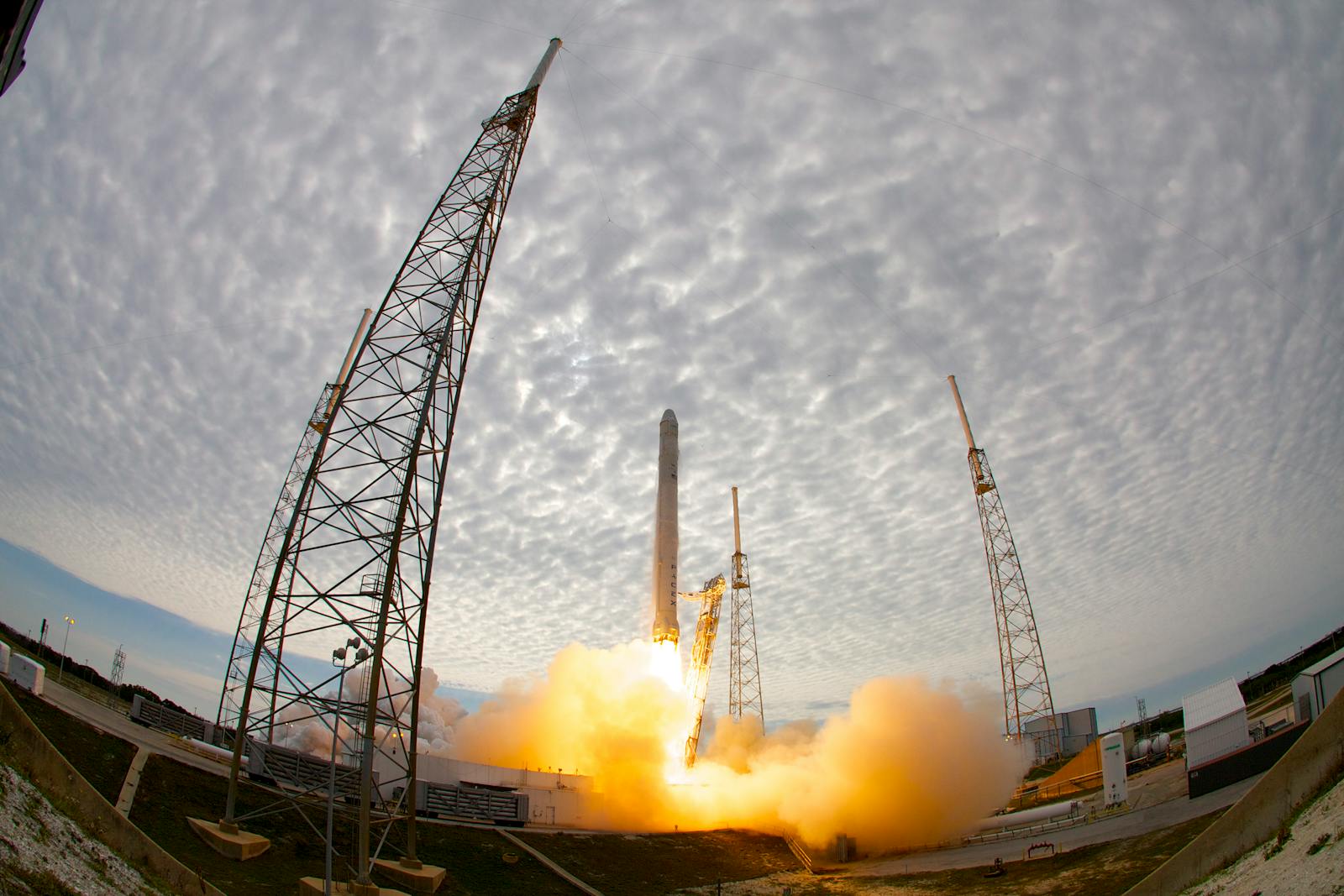
SpaceX hit its 50th orbital launch of 2026 on Sunday morning, sending another batch of Starlink satellites toward low Earth orbit and keeping the company on a trajectory that would rival its own record-setting 2025. The Falcon 9 lifted off from Vandenberg Space Force Base in California, deployed its payload, and recovered its first stage on a droneship in the Pacific, according to Space.com.
The booster has now completed multiple launches and landings.
The cadence is the story
Fifty launches by late April puts SpaceX on pace for roughly 160 orbital missions in 2026, just shy of what the company flew in 2025. The missions this year have been dominated by Falcon 9. There has been no Falcon Heavy yet — a flight is planned for late April pending weather — and Starship remains in its test phase.
What makes the number remarkable is not the absolute count but the consistency required to produce it. This sustained pace works out to a mission every few days, sustained across two coasts, multiple pads, and a fleet of reusable boosters that have to be inspected, refurbished, and requalified between flights.
No other launch provider in history has operated at this tempo. No national space program has either.
Starlink is the engine, not the side hustle
The majority of SpaceX’s launch manifest is dedicated to building out Starlink, a single product line owned by the same company flying the rockets. The constellation now consists of nearly 10,300 active satellites, tracked by astronomer Jonathan McDowell — by a wide margin the largest satellite fleet ever assembled.
The vertical integration is the business. SpaceX is essentially the world’s largest customer of SpaceX, which lets the company smooth out demand cycles, justify capital investment in reusability, and keep its production lines hot regardless of whether outside customers materialize in any given quarter. The external manifest — government payloads, commercial satellites, rideshare missions — gets layered on top of a Starlink-driven baseline that the company can throttle at will.
That structural advantage is why competitors building reusable rockets without an in-house payload pipeline face a harder problem than they often acknowledge. Cadence requires demand. Demand, in this market, requires either government contracts (lumpy, political) or a captive constellation (capital-intensive, but predictable).
Booster 1088 and the reusability flywheel
Sunday’s first stage flew for the 15th time. SpaceX’s stated design target for the current Falcon 9 Block 5 has crept upward over the years, and the company has been gradually pushing individual boosters past previous limits as inspection data accumulates. Each additional flight on a given core spreads its manufacturing cost across more missions, which is the entire economic premise of reusability.
The compounding effect matters. A booster that flies 15 times effectively replaces 14 expendable rockets that never had to be built. Multiply that across an active fleet, and the marginal cost of each Starlink launch drops well below what a competitor flying new hardware can match — even before factoring in the avoided opportunity cost of factory throughput tied up building replacements.
This is the part of SpaceX’s operation that turnaround records only partially capture. Speed between flights is one variable. Total flights per booster is the one that bends the cost curve.
Falcon Heavy and Starship in the wings
The Falcon Heavy launch will be the rocket’s first flight of 2026, and only its handful-th overall. Heavy has always been a niche vehicle in SpaceX’s manifest — flown when payload mass or trajectory demands it, otherwise sidelined in favor of Falcon 9 reuse economics.
Starship is the more consequential development. SpaceX recently completed a full-duration static fire of its Version 3 Starship, the next-generation variant that stands over 400 feet tall and can carry more than 100 tons to low Earth orbit. The next Starship test flight, targeted for May, will be the first to fly the V3 stack.
If V3 works, the implications for Starlink deployment are direct. A single Starship launch could theoretically replace a dozen or more Falcon 9 Starlink missions. That would not reduce SpaceX’s total launch count so much as redirect Falcon 9 capacity toward external customers — or accelerate Starlink buildout faster than the current cadence allows.
What the 2026 pace reveals
The 50th launch is a milestone mostly for round-number reasons. The more interesting fact is that SpaceX is now operating at a cadence where individual missions barely register as news events, even within the industry. A Starlink launch from Vandenberg on a Sunday morning is closer to a freight schedule than a space program.
That shift — from launches as rare, expensive events to launches as routine logistics — is the change SpaceX has been promising since the company started landing boosters a decade ago. The 2026 manifest is what that promise looks like when it actually materializes.
The harder question is what happens to the rest of the industry. ULA, Arianespace, Rocket Lab, Blue Origin, and a long tail of smaller providers are competing for a launch market in which the dominant player is launching its own satellites on its own rockets at a rate that no one else can match on cost or cadence. Each Starlink batch reinforces both halves of that equation.
External customers still need redundancy. Governments still want sovereign launch capability. Niche orbits and rideshare economics still create room for smaller vehicles. But the core commercial launch market is increasingly being defined by what SpaceX charges, when SpaceX has slots available, and how much of its own manifest SpaceX chooses to keep for itself.
What to watch next
Three near-term data points will sharpen the picture for the rest of 2026. First, whether the planned Falcon Heavy flight happens and what payload class it carries. Second, whether Starship V3 flies in May and how the test campaign progresses, since Starship is the prerequisite for both NASA’s Artemis 3 lunar landing and any meaningful step-change in Starlink deployment economics.

Third, whether SpaceX’s external customer manifest keeps pace with its internal one. If the Starlink share of launches stays high through the year, it will confirm that the company’s flight rate is being driven primarily by its own constellation needs rather than broader market demand. If external customers start filling more slots, it suggests the rest of the industry is finally converting interest into contracts.
Either outcome tells you something about where commercial space is heading. Neither outcome changes the underlying fact that one company now controls the dominant share of global orbital launch capacity, and is using that capacity primarily to build infrastructure it owns.
The 50th launch of 2026 is a number. The structure behind it is the story.
Photo by SpaceX on Pexels
