

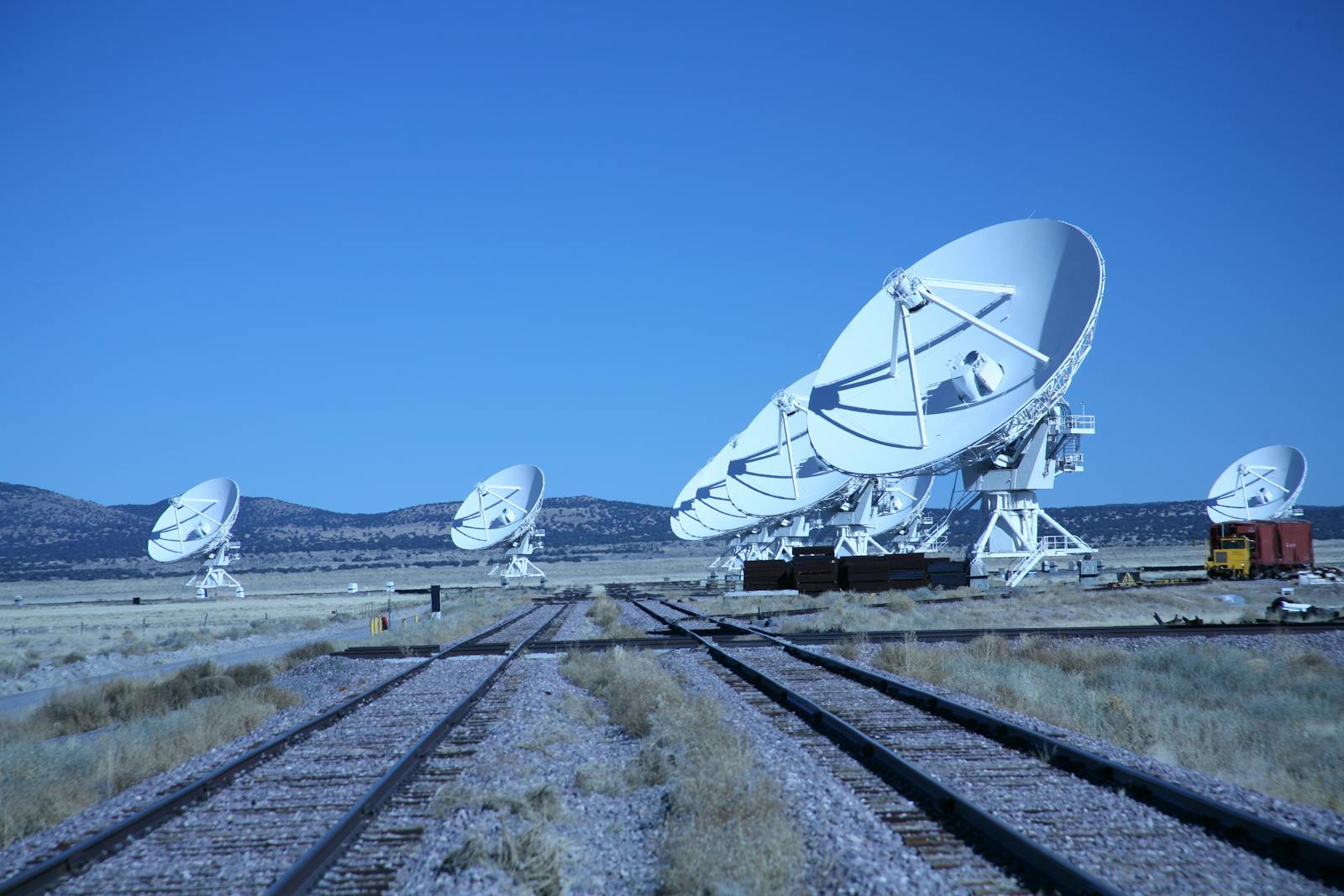
The most powerful listening devices humanity has ever built are not pointed at our enemies or our neighbours. They are pointed at the dark, waiting for spacecraft we launched decades ago to whisper home. Three antenna complexes, spaced roughly 120 degrees apart around the Earth, form a single instrument with a planet-sized aperture. When one of them goes quiet, as the largest dish at Goldstone has been since September, the silence is not metaphorical. It is the sound of our reach contracting — and, for the crews who depend on that reach, the sound of a lifeline thinning.
I should say at the outset that I am not a communications engineer. My fifteen years at the European Astronaut Centre were spent on the human end of the link: crew psychology, isolation, the question of what happens to people when they are far from home in extreme conditions. But you cannot study astronauts for long without coming to understand that the ground network is not a piece of background infrastructure to them. It is part of their psychological environment. So when I read the recent reporting on the Deep Space Network’s troubles, I read it the way a crew member would. From that side of the headset.
The link, from the crew’s side
Crews in spaceflight have a particular way of talking about ground communications. They don’t romanticise it. They treat the link the way a deep-sea diver treats a regulator: a piece of hardware whose reliability you stop noticing until it twitches. The psychological weight of knowing that a single antenna failure on the other side of the planet can turn you, for hours, into a closed system, is not nothing. It sits underneath everything else.
The research on extended isolation — much of it from Antarctic stations, submarine crews, and the isolation chambers we used in astronaut training in Cologne — is consistent on one point. Crews rely on the rhythm of contact with home more than they rely on the content. When the rhythm breaks, even briefly, the effects are noticeable: sleep patterns shift, mood changes, and small interpersonal frictions get larger. It is not the missed data packet that does the damage. It is the absence of the next one, and the one after that, and the slow recalibration of the crew’s sense of how alone they are.
For an Artemis II crew on a ten-day lunar flyby, a half-day blackout is survivable but unpleasant. For a future Mars crew six months out, with a 20-minute light-time delay already shaping every conversation, the network’s reliability would be part of their psychological baseline. It is hard to overstate how much. This is the part of deep space communications that the engineering write-ups tend to leave out, and the part the human factors literature has been quietly insisting on for years. The DSN is not just a data pipe. It is the thread that lets a crew feel, however thinly, that someone on Earth is still listening.
One instrument, three continents
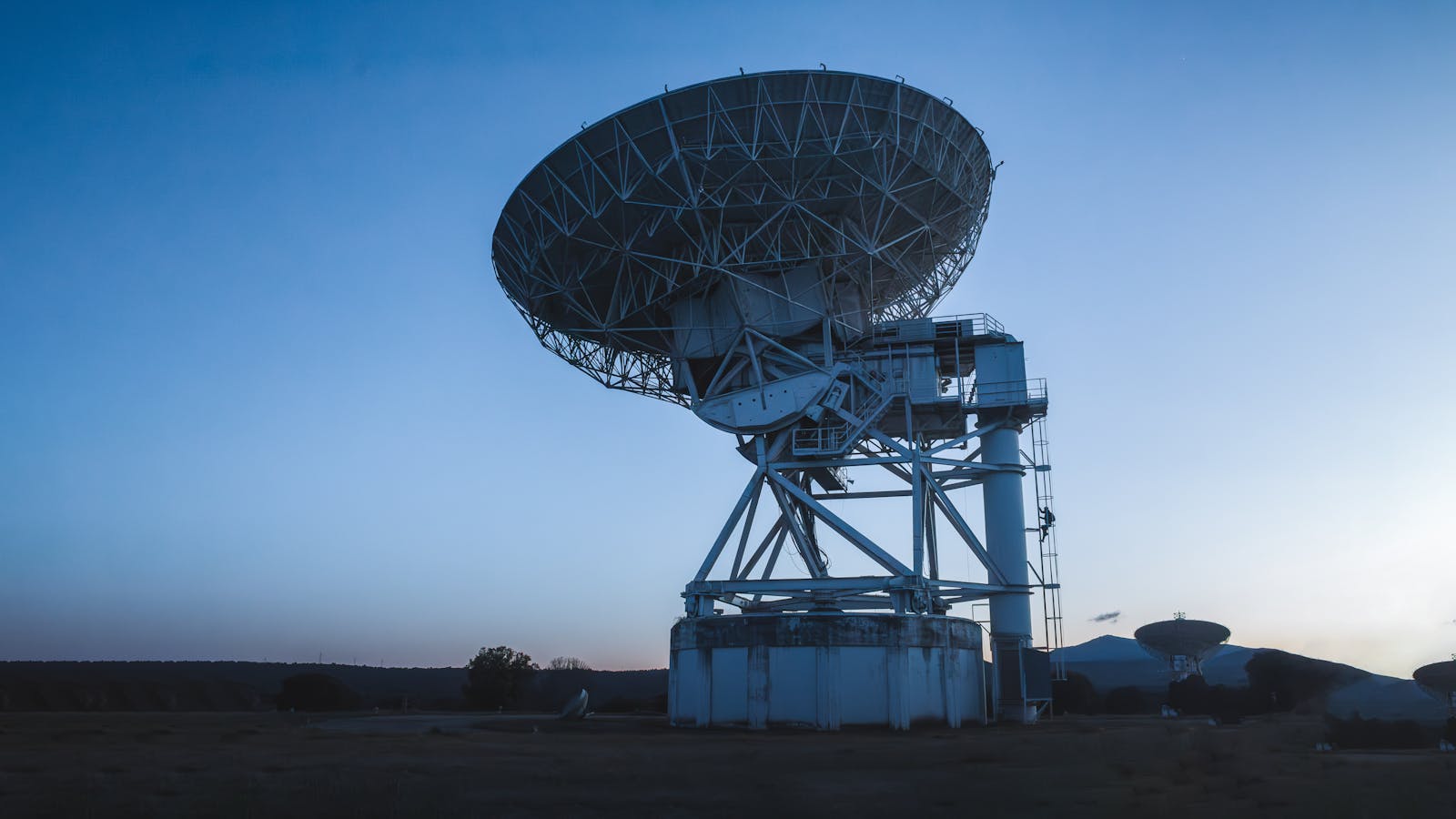
The Deep Space Network is often described as if it were three separate facilities. It is more accurate to think of it as a single instrument with three apertures — Goldstone in the Mojave, Madrid’s complex at Robledo de Chavela, Canberra’s at Tidbinbilla — deliberately distributed so that the rotation of the Earth never breaks contact with a spacecraft. Each complex has a fleet of dishes, with the largest at each site being the network’s deep ears: the only antennas sensitive enough to hold a conversation with spacecraft at the edge of the solar system, including the Voyagers. Lose one, and the redundancy of the system starts to look thinner than the brochures suggest.
That is what happened recently when the largest dish at Goldstone, the Mars Antenna, was damaged during operations. According to SpaceNews reporting based on a JPL statement, the incident strained internal cables and piping and damaged hoses from the fire suppression system, causing flooding that was quickly contained. NASA convened a mishap investigation board. Months later, there is still no public timetable for the antenna’s return. Mashable’s account of the damage notes that the dish was expanded to its current size in the late 1980s specifically to support Voyager 2’s encounter with Neptune, and is tuned to gather signals so faint that, by the time they arrive, they carry less power than a refrigerator light bulb spread across the entire planet.
The blackout that nobody quite forgot
The most uncomfortable episode in the DSN’s recent history was a communications blackout during Artemis I. Goldstone went dark, severing the link to Orion and other missions. The cause, as reported by Mashable in its follow-up on Artemis II readiness, was unglamorous: failed aging hard drives, outdated software, warning lights that never blinked on. Orion was uncrewed. The same outage during Artemis II, with four people aboard, would feel very different.
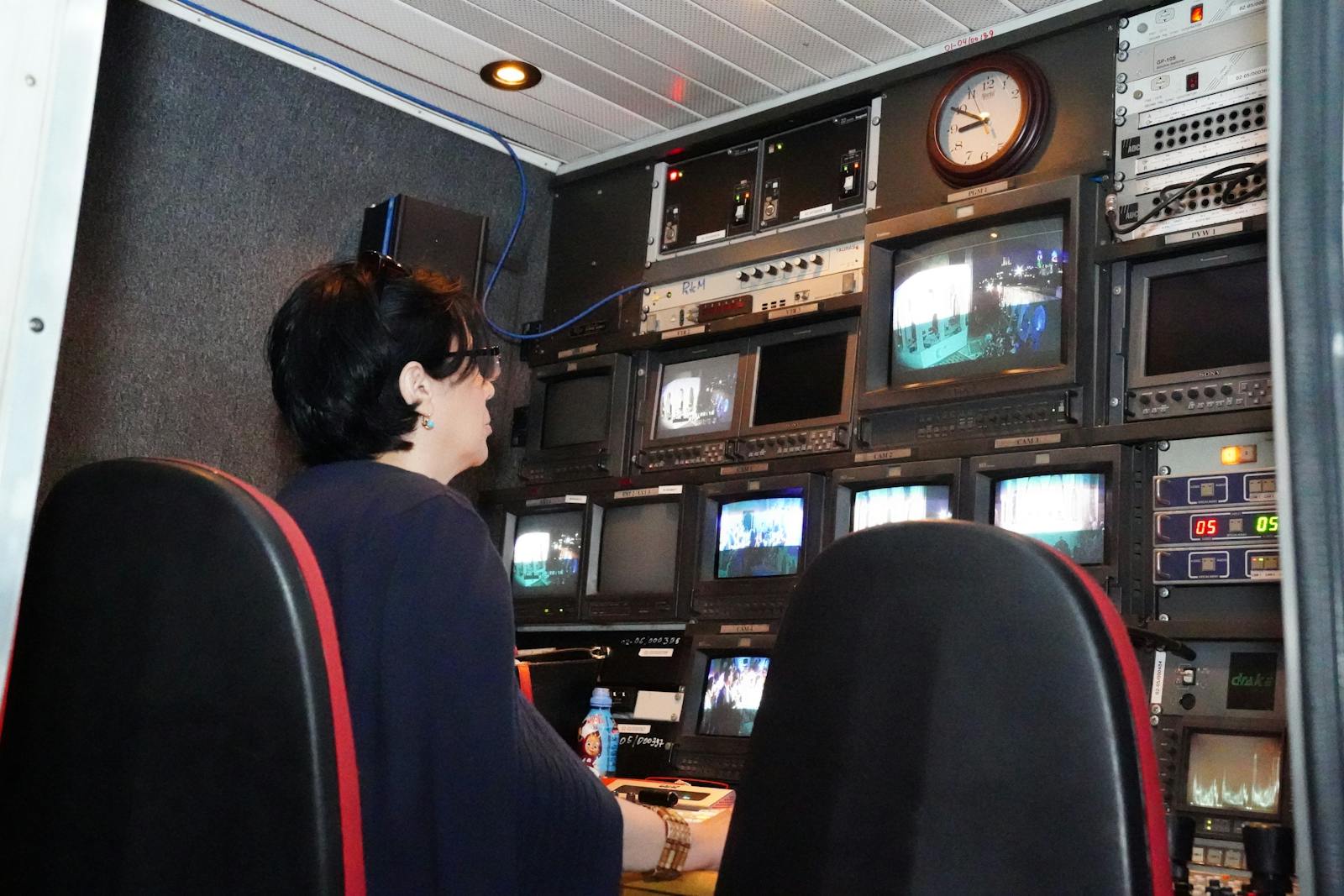
I have spoken with colleagues who have sat in mission control during a loss of signal that ran longer than expected. The room does not panic. It quiets. People stop making small talk. Coffee cups are set down carefully. Everyone watches the clock against the predicted reacquisition time, and when the seconds tick past it, you can feel the room’s centre of gravity shift. Now imagine you are not in the room. Imagine you are the signal that has gone missing. The crew on the other end is doing arithmetic of their own — checking timers, watching for the carrier to come back, reminding each other that this has happened before and resolved itself. They are also, quietly, noting that the silence has lasted longer than the last one.
NASA has insisted that the broken Mars Antenna does not affect Artemis II planning, on the grounds that the dish was not part of the mission baseline. That is technically reassuring. But it also reveals how thin the margin is. The mission can fly because it was already routed around the largest antenna at the western complex. NASA has also signed backup agreements with international partners — including ESA’s network at New Norcia, Cebreros and Malargüe, and JAXA’s tracking assets — to provide coverage if another loss of contact occurs. In my experience at ESA, that kind of cross-agency working relationship tends to function better than its paperwork suggests.
A history of quiet emergencies
The current Goldstone outage is unusual but not unprecedented. Gizmodo’s account of the incident notes that the same antenna has had previous near-misses over the decades. The Australian counterpart went through nearly a year of upgrades in 2020 and 2021 during which it could not transmit — and it is the only antenna on Earth capable of sending commands to Voyager 2. For most of a year, we could hear Voyager 2 but not talk to it. The probe ran on stored instructions and good engineering until the dish came back.
What is different now is that the redundancy is being tested while the network is already operating beyond its design capacity. The DSN was founded in the 1960s to support a handful of probes. Today it commands and monitors more than 40 missions across three complexes, around the clock, and Artemis-priority scheduling means flagship science missions like the James Webb Space Telescope receive reduced access when crewed flights are in progress. Futura’s analysis of the timing framed the Goldstone failure as arriving at the worst possible moment. NASA’s plan to array smaller dishes together to replace the workhorse role of the largest antennas is sensible, but those new dishes will not be in place for the missions flying in the next 18 months. There is less slack in the system to absorb the next surprise.
What this matters to the people on the other end
If the DSN feels abstract, consider what it carries. Every image from the Mars rovers. Every command to the James Webb Space Telescope. Every health and status packet from the Voyagers, Parker Solar Probe, Lucy, Europa Clipper. Every Artemis mission. The moment a crewed spacecraft becomes audible to the network is treated as a milestone in itself. That is not ceremonial. It is the moment the crew rejoins the human conversation. I have watched controllers visibly relax at exactly that moment, and I have watched crew families do the same.
The DSN tends to be discussed in two registers — the heroic and the bureaucratic — and neither captures what the network actually is, which is a piece of public infrastructure as essential to space activity as the GPS constellation is to ground transport, and one we have allowed to age past its design life while quietly piling on more dependent missions. The lesson of the Goldstone outage is not that NASA failed. The lesson is that the system has been operating at the edge of its capacity for years, and the next surprise will hurt more than the last one. That, in my experience, is also a description of the human beings at the other end of the link. Crews and ground systems both run closer to their limits than the public ever quite realises.
The dishes will keep turning. Somewhere in the Mojave, in the hills outside Madrid, in the Australian bush, motors will engage and structures the size of jetliners will swing slowly across the sky to find a spacecraft that left Earth before most of the engineers tracking it were born. But ask any astronaut what it is like when the link goes quiet, and you will get a version of the same answer. One ESA colleague described it to me years ago, after a brief loss of signal during a long-duration simulation. He said the strange thing was not the silence itself. It was the way you started, without meaning to, to perform composure for a microphone that wasn’t carrying. You kept your voice steady. You made the small joke you had been saving. You waited for someone to laugh, and when no one did, you understood — not intellectually, but in your chest — exactly how far away you were. Then the carrier returned, and a voice from Houston or Cologne or Tsukuba said your name, and the world re-formed around you. That is what the Deep Space Network is. That is what we are talking about when we talk about an antenna going dark.
Photo by Ray Strassburger on Pexels
