
British psychoanalyst John Bowlby’s work on attachment theory fundamentally changed how we understand early relationships and their lasting effects. His central insight was that the way a person learns to receive care in the first two years of life becomes the template for how they receive care for the rest of it. Not how much love they get. How much they can actually absorb.
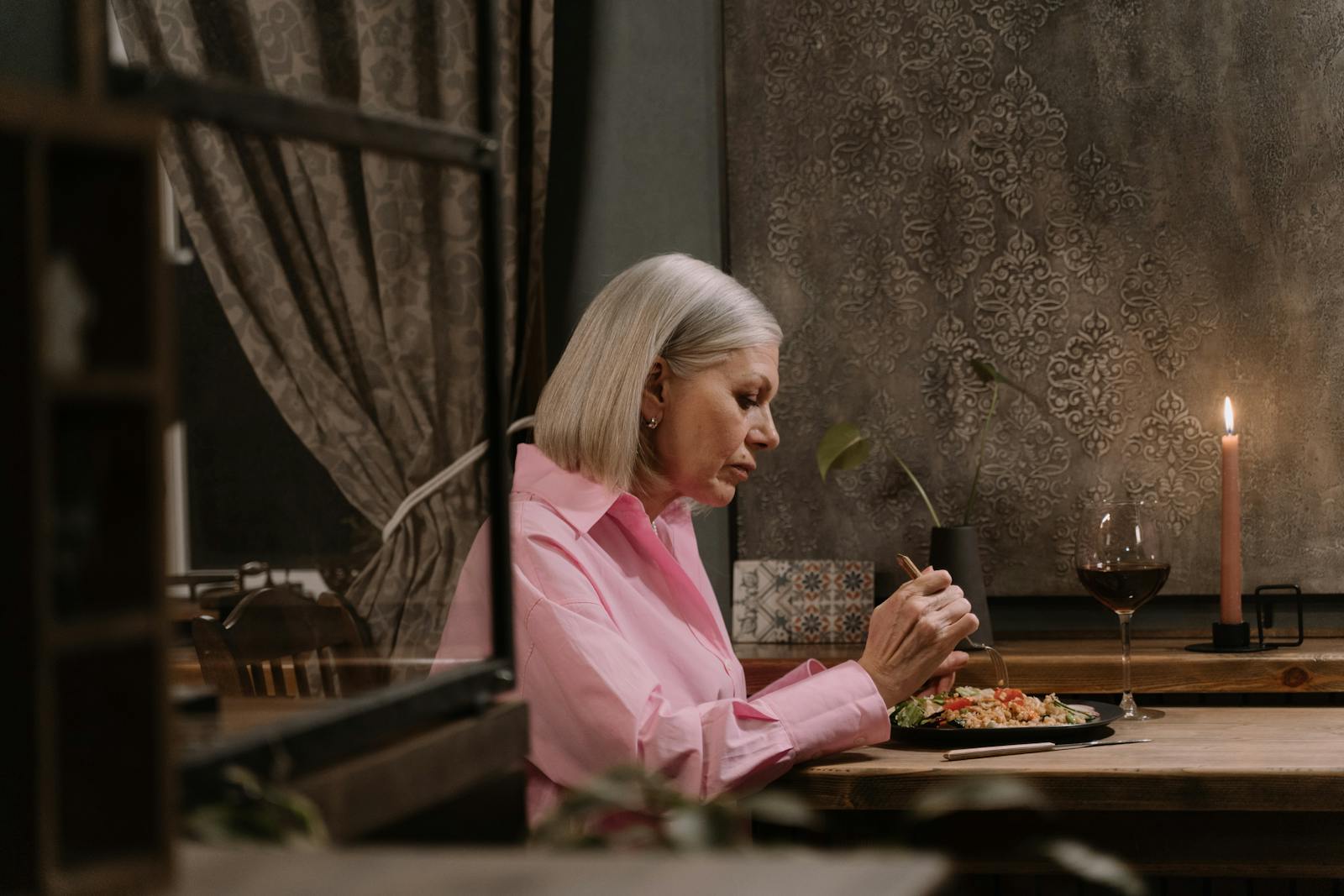
That distinction matters more than most people realize. You can sit at a dinner table surrounded by people who genuinely love you and still feel like you’re watching the evening through glass. The love is arriving. You just can’t let it land.
The quiet architecture of not-quite-receiving
Attachment patterns influence the developing brain and the way it regulates emotions. Research suggests that around 55 to 65 percent of people in Britain are securely attached. The remaining third or so carry something else: a nervous system that learned, early, that closeness requires a little bracing.
That bracing is what keeps love from landing. It’s not dramatic. It’s not cinematic. It looks like a person laughing at a joke while part of them is already mentally halfway out the door.
I’ve been thinking about this pattern a lot lately, partly because it shows up in rooms I know well. The person at the family gathering who seems warm and present but hasn’t said anything real in years. The friend who hosts everyone and confides in no one. The spouse who gives constantly and flinches when someone gives back.
Why the ones who seem fine are often the loneliest
There’s a version of loneliness that doesn’t look like isolation. It looks like competence. It looks like the person everyone leans on, who quietly believes that being leaned on is the only reason anyone stays.
Space Daily has explored this before — the specific kind of tired that comes from being the reliable one for so long you’ve forgotten what it feels like to be chosen instead of needed. It’s a real pattern. People who’ve been praised for their self-sufficiency since childhood often arrive in adulthood with a deep suspicion that love is transactional, that affection is payment for usefulness, and that the moment they stop producing, the room will empty.
This isn’t paranoia. It’s a trained response. If the caregivers you had as a small child were most warm when you were easy, most present when you were helpful, and distant when you were needy, you learned a lesson: love is available, but only on certain terms.
Studies indicate that about 20 to 25 percent of people fall into the avoidant pattern, with rates running higher in countries like Germany and the United States where children are pushed toward independence early. These are people who learn to control their emotions very effectively, but are not so good at opening up about their feelings or even acknowledging those feelings to themselves.
What letting love land actually requires
Receiving love is a skill. That sentence sounds ridiculous until you try to do it.
Try this: the next time someone gives you a genuine compliment, sit with it for ten seconds without deflecting, explaining, or returning the gesture. Most people who grew up with inconsistent care cannot do this. They feel a physical itch to throw the compliment back, minimize it, or change the subject. Their nervous system treats being seen as a threat.
Psychologist Mark Travers has written about a related phenomenon in dating contexts, where sudden revulsion toward a partner who is being kind or vulnerable can be intimacy issues wearing a costume. The partner hasn’t done anything wrong. They’ve done something right, and it registered as danger.
This is the central paradox. People with avoidant or fearful-avoidant patterns are not unloved. They’re often surrounded by people who adore them. What they lack is the internal permission to treat that love as real.
The fearful-avoidant middle ground
There’s a subset of this pattern that’s particularly painful. Fearful-avoidant attachment, called disorganised attachment in children, involves wanting closeness and fearing it simultaneously. The person reaches out, then recoils. They crave reassurance, then pull away the moment it arrives.
From the outside, this looks like mixed signals. From the inside, it’s a nervous system doing exactly what it was trained to do. Love and fear became entangled early. The person meant to provide safety was also, sometimes, the source of distress. So the adult keeps scanning for the moment when the warmth turns.
What makes this style distinct is the internal contradiction. It isn’t calm detachment. It’s hypervigilance dressed as withdrawal. And it often leaves the person feeling profoundly alone even in relationships that, by every external measure, are going well.
Self-sufficiency is not the same as healing
One of the cleverest things the avoidant mind does is convince its owner that independence is progress. Space Daily has written about people who mistake self-sufficiency for healing and don’t realize they’ve just gotten better at hiding what still hurts. The distinction is worth holding onto.
Real healing looks like being able to ask for help and let it arrive. Counterfeit healing looks like never needing to ask. One builds connection. The other builds a very well-decorated fortress.
My wife runs a startup, and we talk often about how founders fall into the second pattern constantly. The personality traits that make someone good at building a company — stoicism, control, the ability to absorb stress without showing it — can quietly corrode their close relationships. They get better at performing fine. They do not get better at being held.
How this shows up in marriages and long friendships
A dismissive-avoidant partner can be hard to spot early on because their emotional consistency reads as maturity. Partners with dismissive avoidant attachment often keep conversations surface-level, prize independence above shared emotional experience, and shut down when discussions become vulnerable. They’re not trying to be cruel. They genuinely don’t know how to stay in the room when emotions rise.
The partner on the other side of this often spends years wondering what they did wrong. The answer, usually, is nothing. The avoidant partner is doing what their nervous system taught them to do: reduce emotional intensity by creating distance.
The same pattern shows up in friendships. The friend who’s warm but never quite confides. The friend who remembers your birthday but hasn’t told you anything new about their inner life in a decade. Space Daily has described a specific kind of loneliness that comes from having plenty of friends and realizing not one of them would notice if you quietly withdrew for a month. That’s often this pattern running in the background for years.

The phone is making it worse
Modern life hands avoidant patterns a near-perfect tool. A phone lets you appear present while being mentally absent. It gives you a socially acceptable reason to break eye contact the moment a conversation deepens.
A meta-analytic study on partner phubbing — the habit of snubbing your partner by looking at your phone — found consistent associations with lower relationship satisfaction and higher depressive symptoms in the partner being ignored. The interesting finding isn’t that phones distract us. It’s that people with avoidant tendencies use phones strategically, often unconsciously, to regulate how much closeness they have to tolerate at any given moment.
Dating apps compound this. Research covered by Mashable on how avoidant attachment shapes dating app behaviour suggests that people with avoidant styles swipe differently — staying on apps longer, keeping options open, and using the optionality itself as a way to avoid the vulnerability of committing to one person.
Emotional regulation is the skill underneath the skill
Underneath all of this sits a more fundamental capacity: the ability to regulate your own emotions without either shutting them down or letting them flood. Psychology Today has covered why emotional regulation and attachment patterns matter in the most intimate parts of adult life. People who can’t regulate tend to either over-control (avoidant) or under-control (anxious). Both make it hard for love to move in either direction.
The secure person isn’t a person who never feels overwhelmed. They’re a person who has some trust that the overwhelm will pass and that the people around them can be part of the passing.
What does it take to let love land
Not all of us are born with secure attachment, but research suggests it’s something that can be achieved over time in a healthy relationship. Psychologists call this earned security. It’s not quick. It’s not clean. But it’s real.
The mechanism is almost embarrassingly simple. You practice, over and over, letting small acts of care arrive without deflecting them. You let a friend say something kind and you sit with it. You let your spouse compliment your work and you say thank you without a qualifier. You let your child climb into your lap and you stop mentally drafting emails.
I have a seven-year-old, and I’ve noticed how easy it is to be physically present and emotionally three inches away. The tell is when my kid stops what they’re saying and asks if I’m listening. They know. Kids always know. The distance registers before it has a name.
The second attachment style most people miss
There’s also a variation that often gets confused with narcissism. Writers have pointed out that the attachment style most people miss is the quietly avoidant partner who reads as cold, self-absorbed, or unreachable. The behaviour can look identical to narcissism from the outside. The difference is the interior. A narcissist feels entitled to not be bothered. An avoidant person feels genuinely afraid of being reached.
The confusion matters because it changes what the relationship actually needs. A narcissist isn’t going to change with patience. An avoidant partner, given time and a secure counterweight, often can.
The practical shift
If you recognize yourself in any of this, the first move isn’t to fix your relationships. It’s to notice what happens in your body when someone offers you warmth. Do you tense? Do you change the subject? Do you immediately start looking for the catch?
Those responses are data. They’re telling you where the old wiring still runs. Once you can see it running, you can choose, sometimes, not to obey it.
The people who feel most alone in rooms full of people who love them aren’t unloved. They’ve just never built the muscle for receiving. And muscles can be built. Slowly, awkwardly, and in the presence of people patient enough to keep offering until the offer finally lands.
That last part is the hardest to accept. You can’t do this alone. The pattern was built in relationship. It has to be unbuilt the same way.
Photo by cottonbro studio on Pexels