

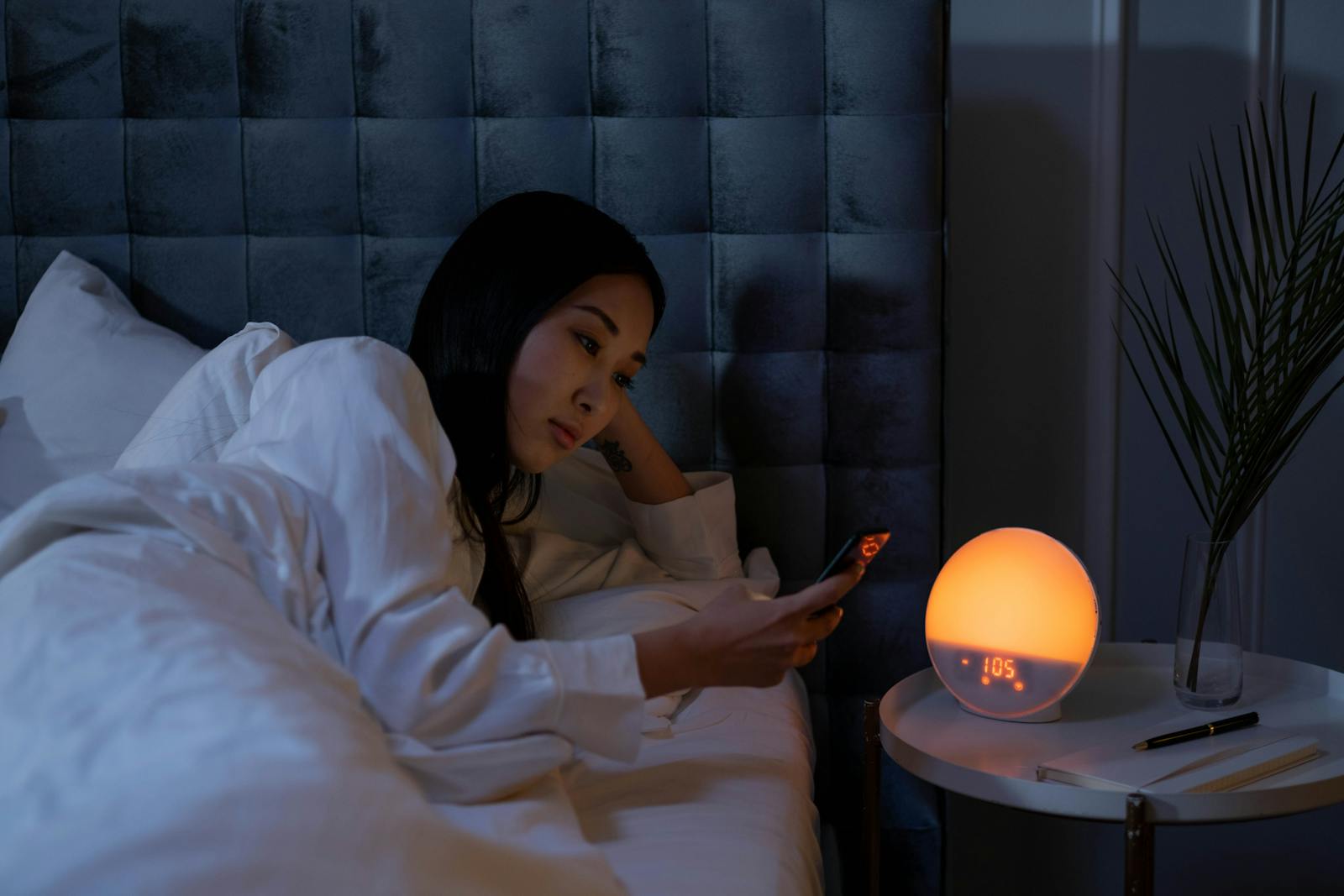
The standard explanation for adults who can’t fall asleep until everyone else in the house is out cold is that they have insomnia, anxiety, or some kind of sleep hygiene problem. That explanation is wrong, or at least incomplete. What looks like a sleep disorder is often the residue of a job a child took on long before anyone asked them to: being the one whose nervous system stayed online so the household didn’t go unguarded.
These are not people who can’t sleep. They are people who can’t sleep first.
That distinction matters. A true insomniac struggles with sleep itself. The adults described here can fall asleep fine, sometimes instantly, once a specific condition is met: every other person in the building has gone still. The footsteps have stopped. The TV is off. The dog has settled. Only then does the body release.
The Job Nobody Assigned
In a lot of households, one child becomes the unofficial monitor. Not by appointment, but by necessity. Maybe a parent drank and the night could turn at any moment. Maybe a sibling had medical episodes. Maybe the marriage was loud, and somebody had to know when to close their bedroom door. Maybe nothing dramatic happened at all, and it was just that the adults seemed distracted enough that a kid intuited somebody had to keep track of things.
This heightened state of alertness can become a persistent pattern. The children themselves never had a word for it. As one observer put it in a piece on this exact pattern, those children called it Tuesday.
The hypervigilance does not switch off when the household conditions change. It does not switch off when the child grows up and moves out. It does not switch off when the original threat is gone, the parent is dead, the sibling is fine. The nervous system learned a rule, and nervous systems are slow to unlearn rules that once kept somebody safe.
What Sleep Research Actually Shows
The clinical literature is starting to catch up with what these adults already know about themselves. A study published in Menopause by Karen Jakubowski at the University of Pittsburgh and colleagues followed 167 midlife women across five years and found that experiencing any childhood trauma was associated with doubled odds of persistently high wake-after-sleep-onset. Translation: even when these women fell asleep, their bodies kept waking them back up, year after year, decade after decade.
That is the signature of a system that does not fully trust the dark.
The study found persistent patterns of sleep disruption across multiple years. These were not flukes or short-term reactions to stress. They were stable patterns. Stable enough that the researchers concluded clinicians need to start asking about trauma history when patients present with insomnia, instead of treating the sleep problem as a free-floating disorder.
The Specific Wiring of the Last-to-Sleep Adult
What separates this group from people with general anxiety-driven insomnia is the conditional nature of their sleep. They are not lying awake worrying about work. They are listening.
One person describing the experience said they listen for footsteps, doors opening and closing, voices, water running in the pipes, cars pulling into the driveway. As a kid, they explained, they needed to know who was in the house and what they were doing. The body never got the memo that this is no longer required.
So the adult version performs a nightly inventory. Are the kids asleep? Is the partner breathing evenly? Is the back door locked? Did the heater click off normally or in a weird way? Once each item is checked, the body releases its grip and sleep arrives. Sometimes within minutes. The capacity for sleep was never the problem. The capacity to surrender to sleep before the perimeter was secured was the problem.
Why This Looks Like Care
One of the cruel things about this pattern is that it presents to the rest of the family as devotion. The mother who waits up until everyone is home. The father who can’t sleep until the dishwasher is started and the dog is in. From the outside, this is responsibility, attentiveness, love.
From the inside, it can be exhausting. Because it isn’t a choice. It’s a body refusing to power down while the building still has anyone awake in it.
The pattern overlaps significantly with the reliable ones who reach their sixties without close friends: people whose role in every system became being the one who didn’t need anything, only watched what others needed. The watching does not end at bedtime. The watching especially does not end at bedtime, because bedtime is when the household is most vulnerable.
The Generational Pattern
Adults who grew up in the 1960s and 70s, and in the older Gen X cohort that followed, often describe this pattern. Not because those decades were uniquely traumatic, but because the parenting culture of the time made it normal for kids to function as auxiliary adults. The children of that era absorbed an unspoken rule that the world was not going to soften itself for them, and that figuring it out was the assignment.
Self-reliance was treated as a virtue. Often it was. But self-reliance practiced by an eight-year-old at 11pm, listening for whether tonight is going to be a fine night or a bad one, is not really self-reliance. It is a small person doing a job too big for them, and developing the only tool available: stay alert.
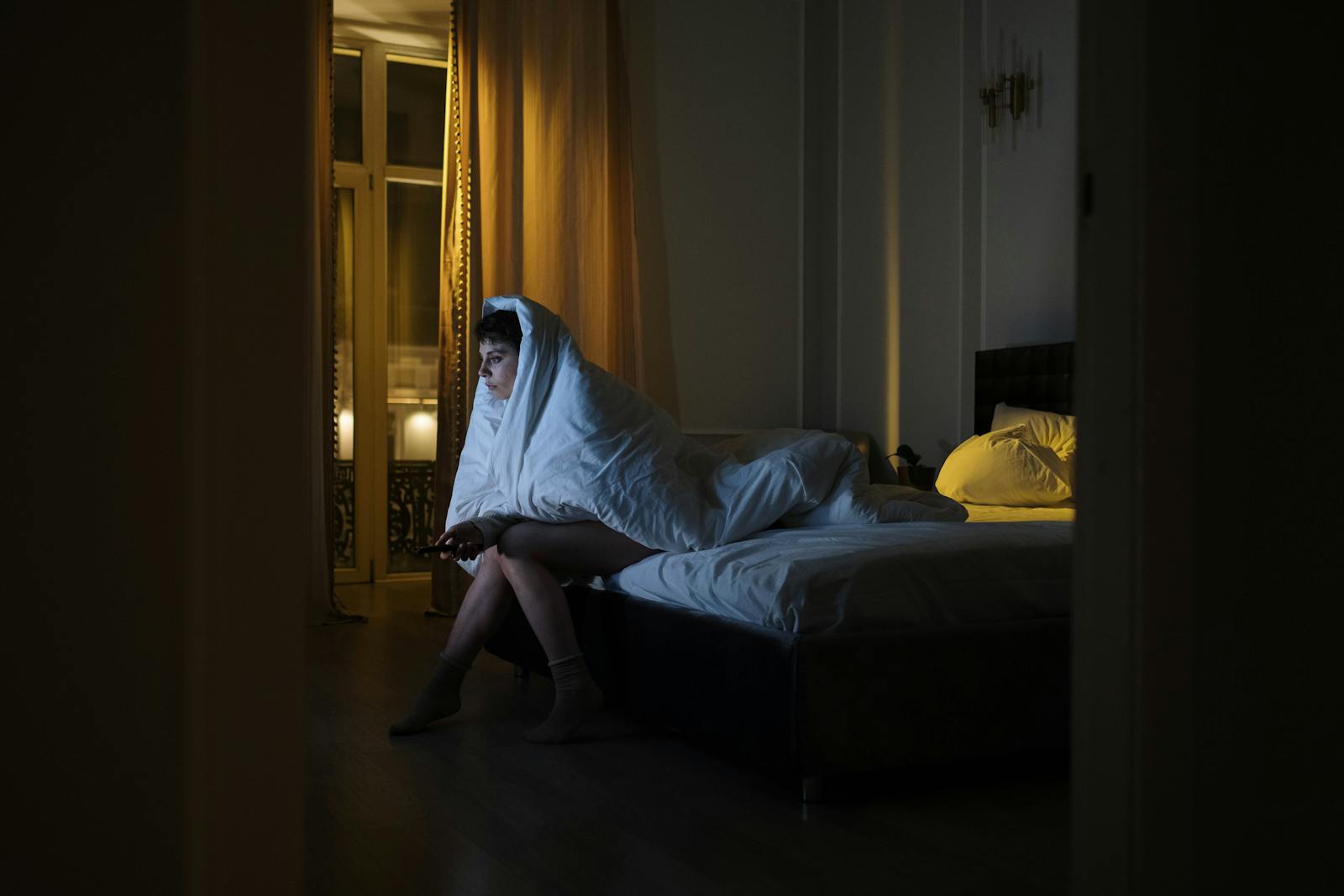
What the Brain Is Doing
The neuroscience is consistent with what people report. Research on brain signals in post-traumatic stress, published in Frontiers in Aging Neuroscience, has documented persistent alterations in the way trauma-affected brains process threat cues even at rest. The threat-detection system stays warmer than it should. Background sounds get evaluated more aggressively. The brain takes longer to give the all-clear.
This is not a metaphor. It is measurable electrical activity. The system that should be quieting down at night is, in these adults, still scanning.
And it is not limited to one type of childhood. Children of parents with substance issues develop it. Growing up with a parent’s alcohol use disorder often creates a similar imprint: the child who becomes the household’s monitor, the one who knows the sound of the car in the driveway and what mood is attached to it.
The Attachment Layer
There’s another piece to this that the sleep research alone doesn’t capture: how attachment patterns formed in childhood interact with bedtime. People who developed anxious attachment in childhood often experience sleep as a small abandonment. Going under means losing track of the person they’re attached to.
Purdue researcher Susan South has discussed how attachment styles continue to shape adult relationships in ways most people don’t recognize. For the adult who can’t sleep until the house is settled, the partner being awake registers as the partner being potentially unsafe, or potentially leaving, or potentially needing something. Sleep cannot proceed until that variable resolves.
Writing in Psychology Today, clinicians have noted that attachment anxiety extends into the most intimate and physiological corners of adult life, including the sense of being safe enough to let go.
Why Standard Insomnia Treatment Often Misses
The default treatment for chronic insomnia is cognitive behavioral therapy for insomnia, or CBT-I. It works on the maladaptive thought patterns that perpetuate sleeplessness. It is a strong treatment for many people.
It tends to be less effective for the last-to-sleep adult, because the issue is not really a thought pattern. It is a body pattern installed before the person had thoughts complex enough to argue with. You can’t reason a nervous system out of a vigilance habit it learned at age seven. You have to convince it, over time, that the building no longer needs a guard.
That is closer to somatic work, trauma-informed therapy, and, frankly, repetition. The body needs new evidence. Years of new evidence. The partner who comes home reliably. The kid who is, in fact, fine. The house that, in fact, did not catch fire while you slept.
The Quiet Cost
The cost of being the last to sleep is not just tiredness, though tiredness compounds. It is that the person never quite gets to be off duty in their own life. They are always the backstop. Always the one who would notice if something went wrong. Always the one whose internal alarm is set to the household.
Parents in this pattern often notice it most acutely once they have their own children. I have a seven-year-old, and I’ll admit there’s a version of this I recognize: the inability to fully relax until I know she’s asleep, until the bedtime routine is closed out, until the day’s last variable has gone still. For me it’s mild and mostly chosen. For people with the deeper version of this wiring, it isn’t chosen at all. It’s the only setting their system has.
Watching my own parents run their dry cleaning business, I remember my mother doing the books at the kitchen table well after midnight, listening for everything in the house at once. I didn’t know then what that was. I think I do now.
What Begins to Help
The adults who recover some flexibility around sleep tend to do a few things in common. They stop framing their pattern as a character flaw or a sleep disorder, and start understanding it as a learned response that once made sense. That reframe alone reduces the shame loop that keeps the pattern in place.
They build a different bedtime ritual that explicitly tells the body the watch is over. Not a screen. Not a glass of wine. Something concrete: the doors are locked, the lights are off, the day is closed. A small ceremony of handing the perimeter over to nobody, because nobody needs to hold it.
They work with a trauma-informed therapist when they can. The pattern responds better to approaches that engage the body than to approaches that only engage thinking. Research on intergenerational trauma suggests the imprint is durable but not permanent.
And they tell somebody. Out loud. The pattern is so internal, so private, that many people who have it have never described it to another human. Saying it out loud to a partner, a sibling, a friend, a therapist, sometimes loosens its grip more than any sleep hygiene protocol ever has.
The Reframe
The adult who lies awake until everyone else is asleep is not broken. They are not lazy about sleep hygiene. They are not anxious in the diffuse modern sense.
They are a former child who once held a watch they were too small to hold, and who has never been formally relieved of duty. The cure, to whatever extent there is one, is not better sleep advice. It is the slow, repeated discovery that the household will be fine without them tonight. That somebody else can hold the perimeter. That the dark is not the same dark it used to be.
Most of them figure this out late, if at all. Many of them are still up right now, listening, while the rest of the house breathes evenly around them.
It is one of the quietest forms of childhood loyalty there is. And one of the last ones to go.
Photo by cottonbro studio on Pexels
