


The apology comes faster than the tears do. Before the second one falls, before anyone in the room has had time to register what’s happening, the words are already out: I’m sorry, I don’t know why I’m crying, just give me a second. The crying person is doing two things at once. They’re feeling something, and they’re managing the discomfort of everyone watching them feel it. The second job arrived first, decades ago, when they were small enough to fit in a lap that wasn’t always offered.
Most people who do this think they’re being polite. They believe the apology is good manners, evidence of self-awareness, a courtesy extended to people who didn’t sign up to witness a feeling. That framing is wrong. The apology isn’t manners. It’s a fossil — the preserved shape of a much older transaction, where tears were a problem the household needed managed and the easiest person to assign that management to was the kid producing them.
The conventional wisdom about so-called oversensitive adults says they need to develop thicker skin, learn to regulate, build resilience. That advice keeps missing the actual mechanism. These adults aren’t unregulated. They’re over-regulated. They learned regulation so early and so thoroughly that the regulation itself became the problem. Crying without apologizing requires a specific belief that wasn’t installed in their childhood: the belief that another person can witness sadness without needing to fix it, leave the room, get angry, or feel personally attacked by its existence.
The household where tears became a logistical issue
There’s a particular kind of home where a child’s crying registered the way a smoke alarm registers — as something that had to be silenced before anyone could think clearly. Sometimes the silencing was gentle: shh, you’re okay, you’re okay, you’re okay, repeated until the child understood that being okay was the price of being held. Sometimes it was sharp: stop it, I’ll give you something to cry about, you’re being dramatic, why are you doing this to me. The tone varied. The lesson didn’t. Tears were data the adult couldn’t tolerate, and the cleanup was your job.
Child psychiatrist Willough Jenkins has called telling kids to stop crying the most common parenting mistake she sees, and the reason isn’t that it’s cruel in the moment. It’s that it teaches a child that the natural physiological discharge of grief or fear or overwhelm is a behavior to be suppressed for the comfort of the surrounding adult. The kid learns the math quickly. My feeling is making them feel something they don’t want to feel. My job is to stop my feeling.
Run that loop for fifteen years and you don’t get a regulated adult. You get an adult who experiences their own tears as an imposition on the room.
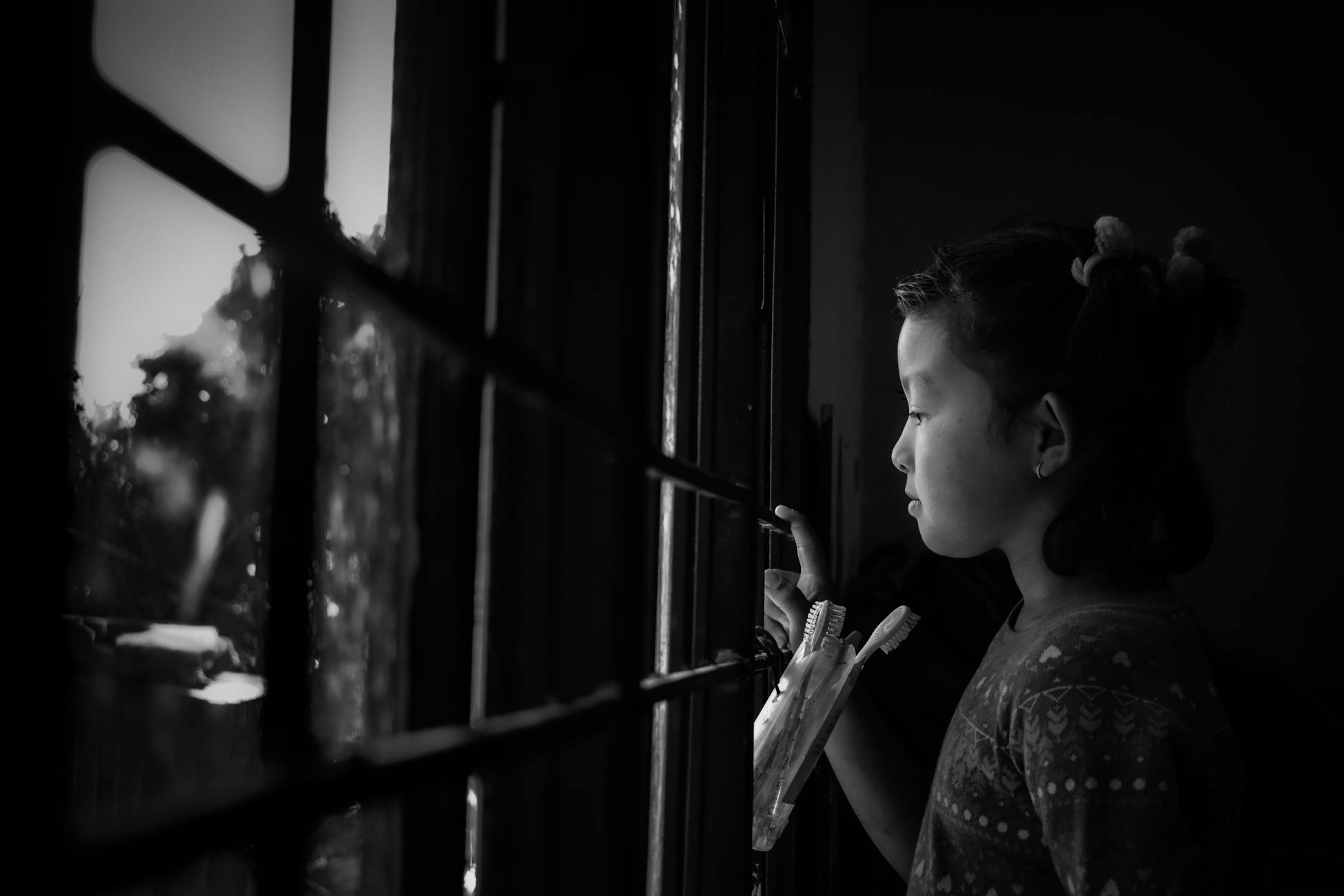
What the apology is actually doing
Watch the choreography closely the next time you see someone apologize for crying. The apology isn’t directed at the tears. It’s directed at the witness. The crier is checking in: I see this is uncomfortable for you, I’m aware I’m doing this, I will not require anything from you, please don’t withdraw, please don’t escalate, I’m working on it. The whole sentence is compressed into two or three words and a quick swipe at the eyes.
The function is appeasement. The crier is preempting the response they were trained to expect — irritation, withdrawal, problem-solving, fixing, advice, performative concern that costs the witness nothing and signals the crier should wrap it up. The apology is a thirty-year-old reflex doing exactly what reflexes do: firing before the conscious mind can review whether the threat is still present.
The threat almost never is. Most adult witnesses are not the parent who couldn’t tolerate the original tears. Most adult witnesses are bystanders who would, if asked, simply sit there. But the nervous system that learned to apologize at age six doesn’t run a fresh threat assessment at age forty. It runs the old one. It assumes the room is the room it grew up in.
Why the early years matter so completely
The window for installing emotional baseline is narrower than people want to believe. Recent research on infant brain development suggests that connectivity patterns visible at three months already predict differences in later emotional development, which is to say the architecture of emotional response is partially scaffolded before a child has language to describe what they’re feeling. The home environment isn’t editing a finished system. It’s doing the original wiring.
By the time a child can form the sentence I’m sorry I’m crying, the underlying belief has been pre-verbal for years. The kid isn’t choosing to apologize. The kid is articulating a structural fact about the household — that tears are a problem and the problem belongs to the person producing them. Psychology Today’s writing on emotional development milestones emphasizes how much early co-regulation shapes the child’s later capacity to sit with their own feelings without panicking. An adult staying calm and present while the child is not gives the child a model for tolerating their own distress. When that doesn’t happen, the child develops self-regulation prematurely and badly. They learn to manage their feelings alone because the alternative — needing someone — got punished or ignored.
This is the same architecture I traced in my piece on inbox-zero people — the management of small things to prevent larger consequences. Premature self-regulation is the same defense applied to feelings instead of email.
The two flavors of household
The homes that produce apologetic criers aren’t always the obviously bad ones. Two distinct environments produce nearly identical adult patterns.
The first is the volatile household, where a parent’s emotional state was the weather everyone tracked. A child’s tears in that house could trigger an explosion, a long sulk, a lecture about ingratitude, or the silent treatment. The kid learned to pre-empt their own crying because the cost-benefit was brutal. Whatever you were sad about was nothing compared to what would happen if the sadness landed wrong. Writers on this site have explored how calm in arguments often comes from this same training.
The second is the brittle household, where the parent loved the child but couldn’t tolerate the child’s pain. These were the parents who cried when their kid cried, who got visibly distressed at a scraped knee, who said things like you’re breaking my heart when the kid was upset. Children in these homes also learned to suppress, but for a different reason — their tears hurt the people who loved them. So they swallowed the tears as a kindness. They became the parent’s emotional caretaker before they finished losing baby teeth.
Both households produce adults who apologize for crying. The volatile-household kid apologizes to prevent danger. The brittle-household kid apologizes to prevent harm to the witness. The reflex looks identical from the outside.

The body keeps producing tears anyway
The interesting thing about tears is that the body produces them whether or not the mind has approved their release. They’re a discharge mechanism. The tears finish. Nobody dies. Nobody leaves.
Which means the apologetic crier is in a small private war. The body is trying to do something necessary. The mind is trying to apologize for it. The result is the half-cry, the throat-clear, the laugh that turns into a sob and back into a laugh, the careful breathing exercises that are really just an attempt to stop the breathing exercises the body was already trying to do. None of this is regulation. It’s interruption.
The cost shows up in places that don’t look connected. Sleep, for one. Research on adolescents has linked emotion regulation difficulties to disrupted sleep, and adult studies have found that consistent emotional discharge matters for the same downstream systems. Feelings you don’t process don’t disappear. They go somewhere. They become tension headaches and 3 a.m. wake-ups and a vague sense that something is always slightly wrong.
What it looks like when the reflex finally loosens
The first time someone raised in this pattern cries without apologizing, it usually happens by accident. They’re too tired to perform the management. Or they’re with someone who, against all probability, simply doesn’t react — doesn’t fix, doesn’t comfort, doesn’t withdraw, doesn’t get nervous, just stays in the room. The crier waits for the consequence. The consequence doesn’t come. The witness stays. The tears finish. Nobody dies. Nobody leaves.
That’s the disconfirming experience. It has to happen multiple times before the nervous system updates its threat model, and it usually doesn’t happen with the original family — those people are still running the original software. It happens with a partner who didn’t grow up the same way, or in therapy with someone trained to do exactly that, or, occasionally, with a friend who has done their own work and knows what stillness costs.
The reflex doesn’t disappear. It softens. The apology gets shorter. Then it gets quieter. Eventually, sometimes, it just doesn’t show up at all, and the person crying realizes halfway through that they haven’t said sorry yet, and the realization itself is a kind of grief — for all the times they did say it, all the tears they spent half-managing, all the rooms they exited early, all the hugs they cut short because they could feel the witness wanting to be released.
The lens worth keeping
If you apologize for crying, the question to sit with isn’t how do I stop apologizing. The question is who taught me my tears were a problem, and what did they do that made me believe it. The answer is usually specific. A face. A sentence. A pattern of leaving the room. The reflex isn’t free-floating. It was installed by particular people in particular moments, and naming those moments is the slow work of figuring out which parts of your current behavior belong to the present and which parts are still negotiating with someone who isn’t even here.
The tears were never the problem. The household’s inability to sit with them was. The kid who learned to apologize was solving the wrong equation, brilliantly, with the only tools they had. The adult version of that kid isn’t oversensitive. They’re someone who, very early, took on a job nobody should have given them, and who has been quietly trying to put it down ever since.
