

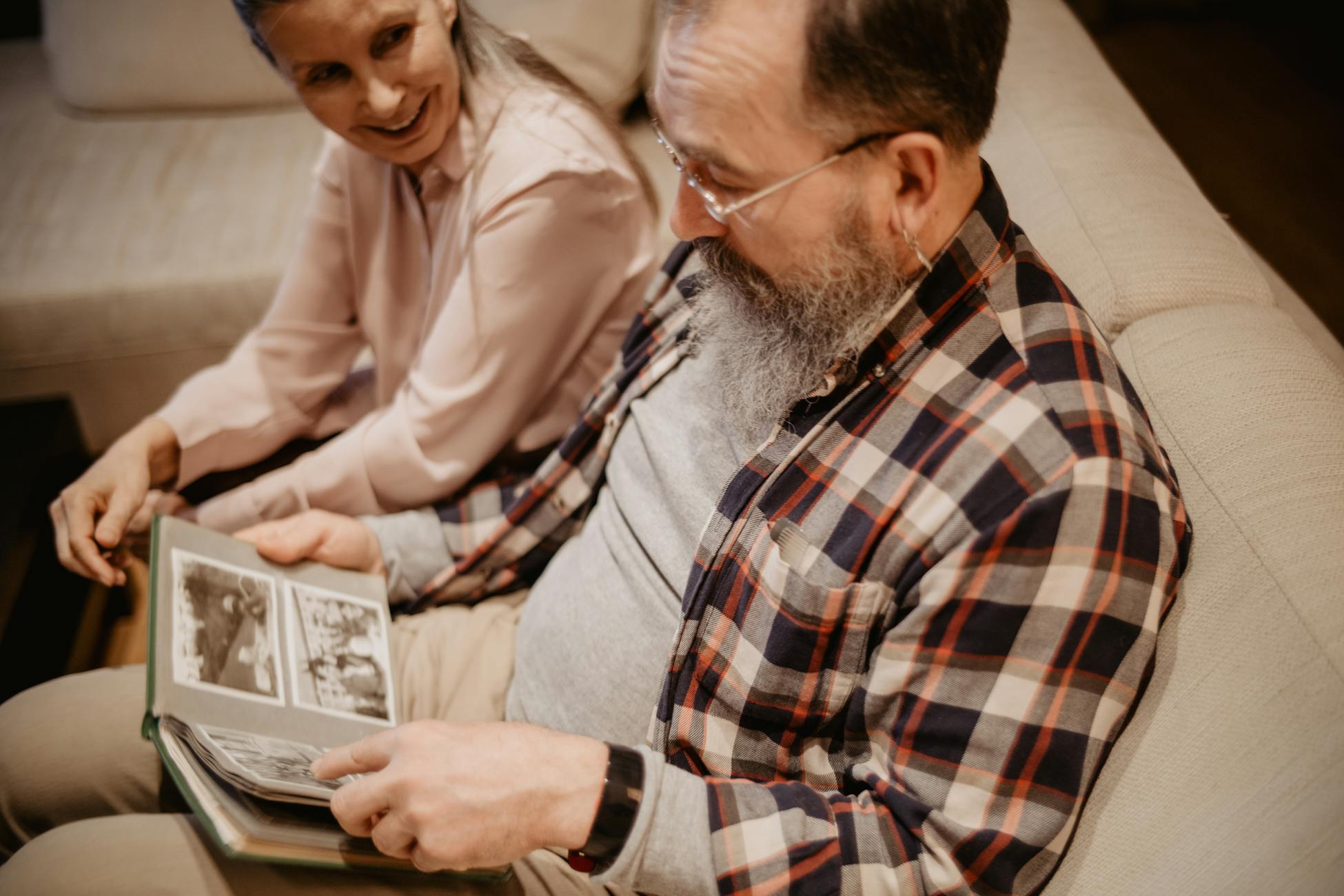
Margaret is seventy-three and keeps a photograph on her dresser of her father in a wool suit, standing on the steps of a Glasgow tenement in 1952, holding a cigarette he hasn’t lit yet. She can tell you what his hands looked like before the arthritis bent them. She can describe the particular way he laughed when something genuinely surprised him, a sound she says she hasn’t heard come out of any other human in fifty years. When she dies, that sound dies. Not the photograph. The sound. The texture of him at twenty-six, standing in a doorway he no longer stands in, alive in a country that no longer exists, held only in the soft tissue of one woman’s brain.
This is the bereavement no one schedules. The 1950s generation — those born roughly between 1946 and 1964, depending on which demographer you ask, which is itself a contested act of naming — is the last cohort whose lived memories of their parents include those parents as young adults. They watched their mothers in housedresses on linoleum kitchens. They watched their fathers come home from factories and offices that have since been demolished or converted into lofts. When they go, those parents go a second time.
Most discussions of grief end at the funeral. The cultural script tells us that mourning has stages, that there is a beginning and a middle and something resembling an end, that you eventually integrate the loss and carry it forward. What the script doesn’t account for is the slow second death of the dead — the moment when the last person who remembers them not as a name on a stone but as a young man slicing an apple, a young woman braiding her hair before a mirror, finally stops breathing.
The grief no one names
Researchers have begun to map a category of bereavement that doesn’t fit the standard model. Anticipatory grief, the kind that arrives before death, has gotten attention in dementia and terminal illness literature — psychologists describe grieving someone who is still here as a quiet, persistent shape of loss that runs alongside ordinary life. But the bereavement Margaret carries is the inverse. It’s grief for someone who already died, whose dying she survived decades ago, and whose final disappearance is now scheduled to coincide with her own.
She is not just mourning her father. She is mourning what will happen to her father when she stops being his witness.
That’s a different nutrient. The standard architecture of grief assumes the deceased is the object being lost. This is grief in which you are also the thing being lost — specifically, your function as the last living archive of someone else’s youth. You are the load-bearing wall in a memory structure that will collapse when you do. And nobody talks about it, because the language for it doesn’t exist yet, and because the people who feel it most acutely are also the people most reluctant to admit how heavily they are carrying it.
What photographs cannot do
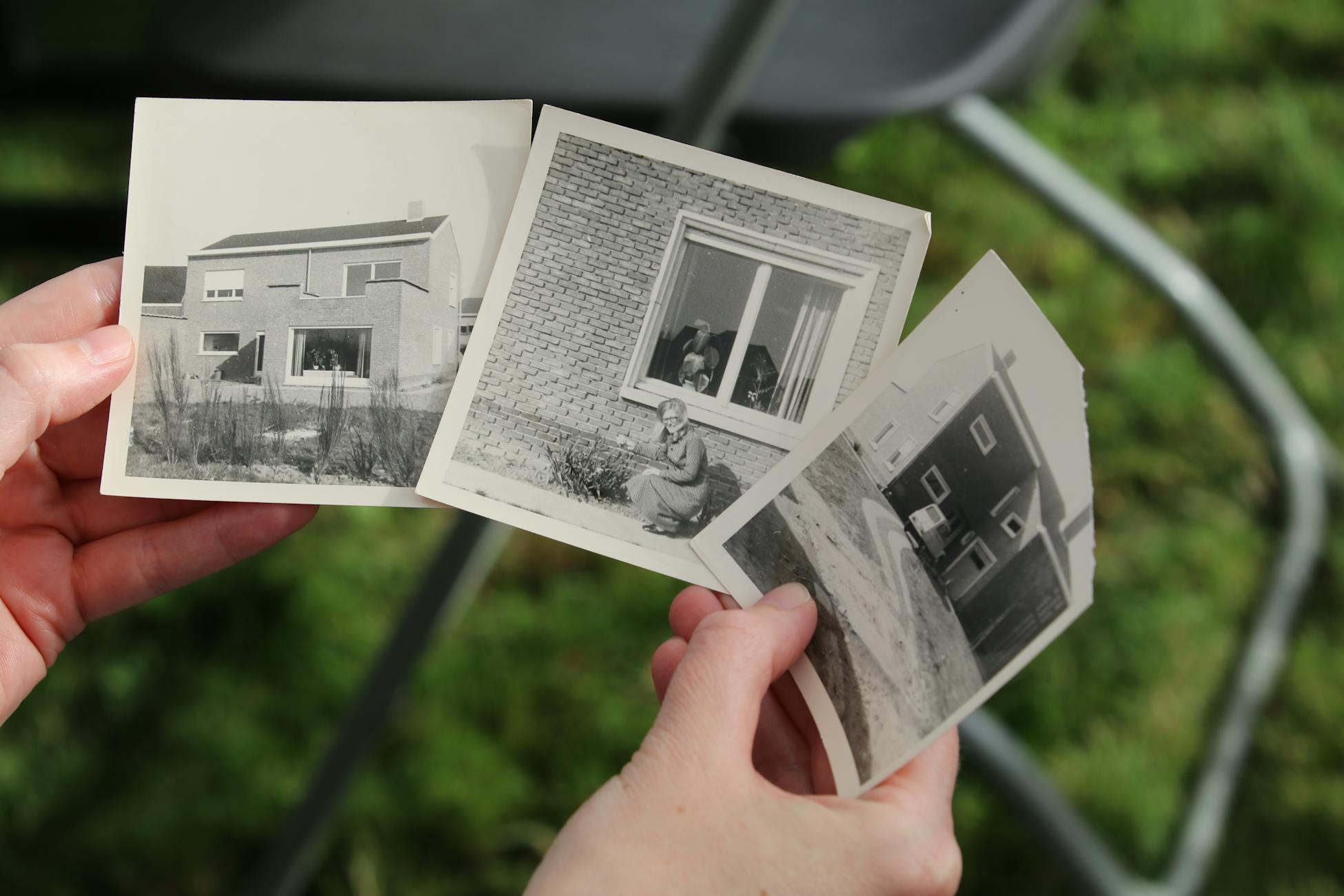
People assume photographs preserve the dead. They don’t. Photographs preserve a flat surface, a single frame, a frozen second of light bouncing off a face. What they cannot preserve is the way a person moved between frames — the gait, the gesture, the half-second before a smile when you could see them deciding whether to give it.
Lived memory is fundamentally embodied. We don’t store the dead the way we store data. We store them as patterns of motion, smell, voice timbre, the specific way they entered a room. These are not transferable. You can describe your mother’s perfume to your grandchildren until your throat gives out, and they will never smell it. They will smell the words.
This is why the death of an elderly person who knew their parents as young people is a categorically different event from the death of someone whose parents were already historical when they were born. The grandchildren and great-grandchildren of Margaret’s father know him as a sepia photograph and a few anecdotes. They have never known him as a presence. When Margaret goes, the last sensory record of him — the smell of his pipe, the weight of his hand on her shoulder when she was six, the particular Scottish lilt that her American grandchildren have never heard and now never will — is filed in the same biological archive that stops working when she does.
Research into mental imagery and embodied recall has begun to clarify how dramatically people differ in their ability to summon sensory memory at all. Some can rebuild a face in vivid color; others cannot. But for those who can, the experience is closer to a private screening than a description. Margaret can see her father. When she dies, the last screening room shuts down.
The 1950s generation as the final witnesses
Every generation is, in its way, the last to remember the one before it. But there is something specific about this cohort. They are old enough to have known parents shaped by the Depression and the Second World War — parents who came of age in a world without television, without antibiotics in widespread use, without the interstate highway system. The parents of the 1950s generation lived inside a sensory environment that has been almost entirely replaced. The smells are gone. The sounds are gone. The objects are gone.
And the children of those parents are, right now, the last living people who watched all of that be ordinary.
The 1950s generation grew up watching their mothers iron with steam from a glass bottle, their fathers shave with a brush and a cake of soap. They remember party-line telephones, milkmen, the specific smell of carbon paper. None of this is exotic to them. It was Tuesday. When they go, the last people who experienced these things as Tuesday — not as nostalgia, not as a museum exhibit, but as the unremarked texture of being alive — go with them.
This is why a certain kind of conversation with an elderly parent feels so freighted. You are not just hearing a story. You are taking a final transcription of a world.
The compounding effect
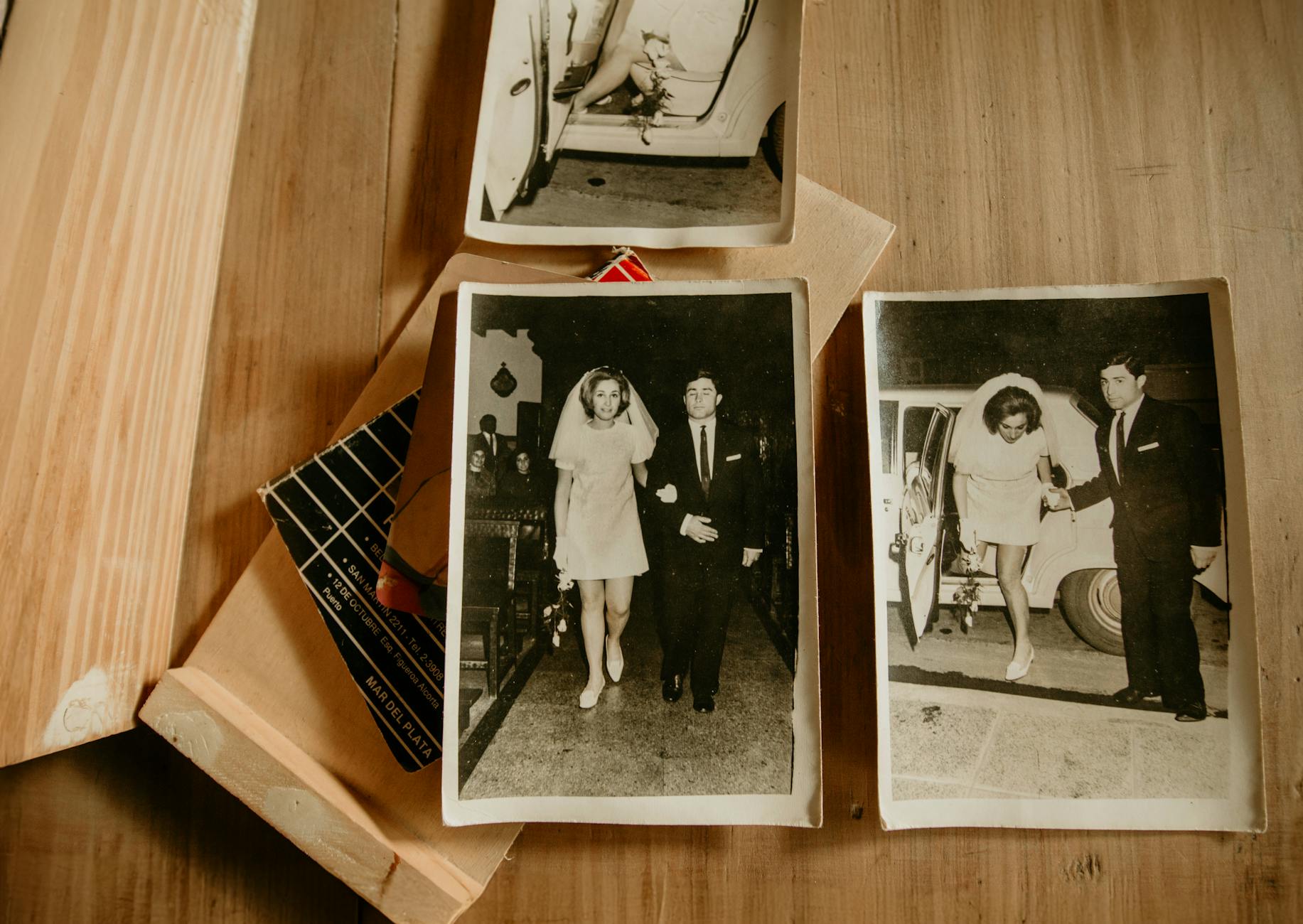
What makes this grief particularly disorienting is that it lands twice — once in anticipation, once in retrospect. Margaret has already begun mourning the loss of her father’s second death, even though she is the one who will cause it by dying. She is grieving an event she will not be present for, on behalf of a man who has been gone since 1989.
Chronic loneliness often camouflages itself as ordinary fatigue, registering not as sharp sadness but as a baseline exhaustion many mistake for aging, introversion, or just how life is supposed to feel. The grief of being a final witness camouflages itself similarly. It registers as a vague sadness in old age, an unwillingness to throw away certain objects, a tendency to repeat stories that the listener has already heard. The repetition is not senility. It is liturgy. Margaret tells the story of her father lighting that cigarette in Glasgow because she is trying to install it in someone else’s brain before her own brain stops broadcasting.
The act of repeating the story is the final, desperate technology for transferring embodied memory across the wall that separates living witnesses from descendants who only know the dead through inheritance. It almost never works. The grandchildren listen politely. They cannot smell the cigarette. They cannot hear the laugh.
What gets passed down, and what doesn’t
Family systems researchers have long studied how parenting patterns transmit across generations — the unconscious inheritance of gestures, tones, ways of handling conflict. What transmits is the behavior. What does not transmit is the source. A woman in her forties might find herself humming the same lullaby her grandmother sang to her mother, but she will never hear the grandmother sing it. The melody survives. The voice does not.
This is the cruelty inside the architecture of generational memory. The patterns persist. The people don’t. And the 1950s generation occupies the strange historical position of being the last bridge between the parents who established those patterns and the descendants who will carry them without ever having met their origin.
When Margaret dies, her grandchildren will inherit her father’s stubbornness, his particular way of cutting an apple, his suspicion of small talk. They will not know that’s what they are inheriting. They will think these are just things about themselves.
The funeral that doesn’t happen
There is no ceremony for the second death. No one sends flowers when the last person who remembers your father as young finally dies. The grandchildren bury Margaret. They do not also bury her father, even though they are. They eulogize her life, her work, her marriages, her grandchildren. They do not eulogize the fact that the only remaining sensory archive of a Glasgow shipyard worker who died in 1989 has just been closed permanently.
Which is why this grief belongs to Margaret alone. She is the only person who knows what is being lost when she goes. Everyone else is mourning her. She is mourning him, again, in advance, with the additional weight of knowing that her own mourning will end the mourning, because there will be no one left to do it.
The kindest thing anyone can do for the 1950s generation is to listen to the stories the way you would listen to a recording you knew was about to be erased. Ask the questions you’ve been too embarrassed to ask. What did her hands look like? What did the kitchen smell like in 1958? What did he say the night before he proposed?
You will not be able to keep what you hear. The transmission is lossy. But the act of asking tells the witness that their archive matters, that the second funeral has at least one mourner besides them, and that someone tried — even if only briefly, even if imperfectly — to slow the disappearance of a young man in a wool suit on a tenement step in a city that doesn’t look like that anymore, holding a cigarette he never quite got around to lighting.
