


I’ve stopped pretending the 3am conversations with my ceiling are a sign something is wrong with me. For years I treated them as evidence of an overactive mind, a personality flaw, a failure to achieve the kind of serene sleep hygiene the wellness industry keeps selling. My wife sleeps. The house is quiet. And there I am, at 3:14, running back through a comment a colleague made six hours earlier, rehearsing what I should have said, what they probably meant, what it reveals about a working relationship I’d assumed was stable. The loop feels involuntary. It also feels, if I’m honest, purposeful in a way I couldn’t name for a long time.
The conventional wisdom says this is anxiety. You hear it from everyone. Friends, therapists, the aggressively cheerful sleep apps, articles that tell you to try a weighted blanket or cut caffeine after noon. The framing is always the same: your brain is malfunctioning, your threat-detection system is miscalibrated, you need to soothe it back into compliance. Take the magnesium. Do the breathing. Stop ruminating.
What the research tells is a more uncomfortable story. The people who replay conversations at 3am aren’t broken. They’re finishing something. They’re completing a cycle of processing that the waking day—with its meetings and deadlines and the social performance of being fine—never gave their nervous system permission to work through in real time.
The interrupted loop
Here’s the part almost no one explains clearly. When something happens during the day that registers as emotionally significant—a tense exchange, a compliment that felt hollow, a sentence from your mother that landed differently than she intended—your nervous system begins a processing sequence. It wants to orient, assess, complete. That’s the baseline function. Under conditions of threat or intensity, the autonomic nervous system shifts into states that polyvagal theory describes as mobilization or withdrawal. Adrenaline rises. Attention narrows. The body prepares to respond.
The problem is that most of us can’t respond. Not fully. Not honestly. You can’t cry in a Senate hearing room. You can’t tell your boss that the way she phrased something cut into an old wound. You can’t interrupt a family dinner to say that a sibling’s throwaway comment has reorganized how you think about the last decade. So the signal gets filed. Deferred. The nervous system notes: we did not finish this.
And it waits.
It waits until you stop. Until the inbox goes quiet, until the dishes are done, until your body is horizontal and the cognitive load drops below whatever threshold was holding the material at bay. Then, in the dark, it opens the file.

Why the dark is when it surfaces
There’s a specific kind of alertness that arrives in the early morning hours, and it isn’t random. Research on sleep and memory consolidation has shown how the brain uses different sleep stages to consolidate memory and regulate emotion. REM sleep in particular appears to be where the brain reprocesses emotionally charged material, stripping the physiological intensity from a memory while preserving its informational content. Studies on how disrupted REM sleep correlates with memory-related brain changes suggest that this isn’t optional maintenance work. It’s structural. The brain needs this window, and when it doesn’t get it, things compound.
The 3am replay often happens at the boundary between sleep cycles, when the brain surfaces briefly between stages. If there’s unprocessed material in queue, it floats up. This is why the conversations that hijack you at that hour are rarely the ones you resolved cleanly. They’re the ones where something was unsaid. Where you felt the wrong thing at the wrong time. Where the social script required one response and your interior required another, and the gap between them got recorded as unfinished business.
Notice what’s missing from this framing. Nothing is wrong. The system is doing exactly what it’s designed to do. The discomfort of being awake at 3am rehearsing a three-minute exchange from Tuesday afternoon isn’t pathology. It’s a nervous system that finally has the bandwidth to complete a process you interrupted fourteen hours earlier by being a functional adult in a meeting.
The people this happens to most
The pattern isn’t evenly distributed. The people I know who replay conversations at 3am are almost always the ones who’ve built their lives around keeping their composure during the day. They’re the reliable ones. The ones who don’t cry at work, don’t escalate in traffic, don’t tell the family member that the comment was out of line. They’ve spent years, sometimes decades, training themselves to absorb and redirect. Writers on this site have explored how the people who seem unshakeable in a crisis aren’t calmer by temperament—they’ve just internalized that visible dysregulation has costs they can’t afford.
Those costs don’t disappear. They’re paid later. At 3am, usually, with interest.
I’ve written before about how patience is often strategic suppression learned in childhood, and the 3am replay is the direct physiological consequence of that suppression. You can’t actually delete an emotional response. You can only defer it. The nervous system keeps its own books, and it reconciles them whether you want it to or not.
What the replay is actually doing
If you pay close attention to the conversations your mind returns to at 3am, you’ll notice something. They’re rarely pleasant memories. They’re also rarely catastrophic ones. They sit in a specific middle register: exchanges where something subtle went wrong, where the social surface held but something underneath did not.
This is not your mind torturing you. This is your mind trying to solve something.
Psychologists who study rumination have increasingly distinguished between unproductive rumination and genuine processing. The difference lives in what the mind does with the material. Productive processing generates insight, updated understanding, a shift in how you’ll handle a similar situation next time. Unproductive rumination loops without resolution, rehearsing the same pain on the same track. Most 3am replays, in my experience, are doing the productive version—but we’ve been trained to interpret any nighttime thought as the destructive kind, and so we try to shut it down before it can finish.
The irony is that shutting it down is what keeps it coming back. The nervous system doesn’t mark material as complete until it has actually been processed. If you wake up, grab your phone, scroll until you’re distracted enough to pass out again, you’ve interrupted the cycle a second time. The file goes back into the queue. Tomorrow night, same hour, same conversation, same ceiling.
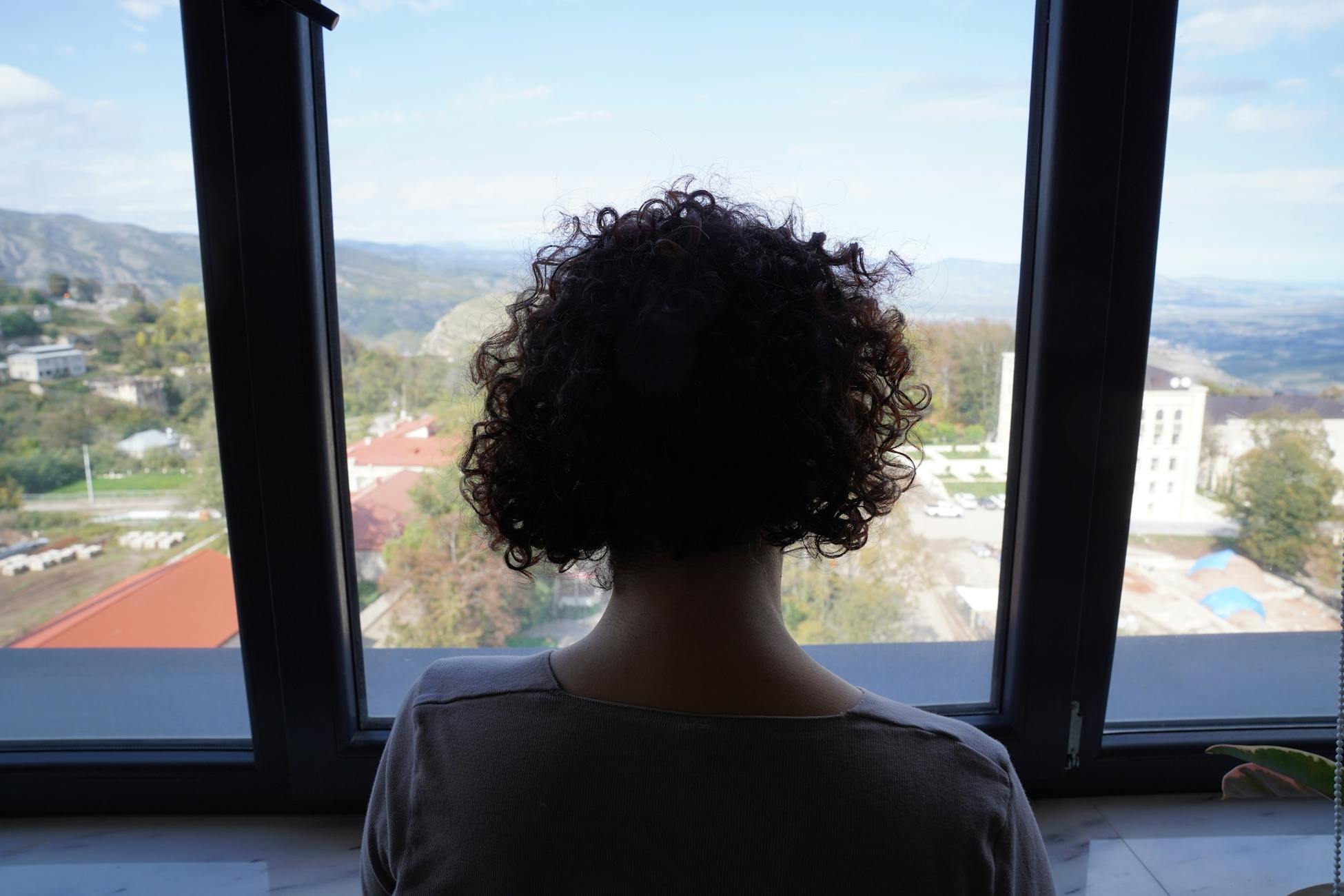
The permission the day never grants
What the daylight hours demand is a particular kind of containment. You are a professional. You are a partner. You are the person who keeps things running. Those roles require that certain feelings get metabolized silently, on the fly, while you continue to perform. The cost of not performing is real—careers, relationships, reputations depend on the steadiness. So you learn to hold the intensity without expressing it.
This is where polyvagal theory gets specific about what’s happening physiologically. The ventral vagal system—the branch of the nervous system associated with social engagement—is what allows us to stay regulated while interacting with others. It’s also what gets exhausted by prolonged performance. When you’ve spent a full day in ventral vagal mode, modulating your face and voice and body language to keep the room calm, your system needs to discharge the activation it absorbed and never released. Therapists trained in this framework talk about the window of tolerance as the zone in which the nervous system can process experience without becoming overwhelmed or shut down. The waking day, for many people, is spent at the edges of that window, holding the line. At night, the system finally moves back toward its center—and the material it couldn’t touch during the day becomes accessible.
The replay is the processing. It’s not a sign your nervous system is malfunctioning. It’s a sign it’s still working.
The difference between this and anxiety
I want to be careful here. There is a version of nighttime rumination that is pathological. Clinical anxiety disorders exist. Chronic sleep disruption causes measurable harm. If your 3am mind is spinning on existential dread, catastrophizing about scenarios that will never occur, or replaying the same conversation for the ninth month in a row with no insight accumulating, something else is happening and that something deserves professional attention.
But the distinction matters. The occasional, targeted 3am replay of a specific conversation—one that ended hours ago, one that had real emotional weight, one that you couldn’t respond to honestly in the moment—is not the same phenomenon. It’s the nervous system completing a cycle. It usually resolves within a few nights. The conversation gets processed, the physiological charge dissipates, and you move on. The cost is some interrupted sleep. The benefit is that you actually finish the emotional work instead of letting it accumulate into something heavier.
Research on how emotional memories consolidate during sleep suggests this processing has a biological endpoint. It’s not designed to loop forever. The brain integrates the material, files it, and the loop stops. The system trusts itself to complete the cycle if you let it.
What changes when you stop fighting it
The most useful thing I’ve done, over the last couple of years, is stop treating my 3am mind as an enemy. When a conversation surfaces now, I don’t reach for my phone. I don’t run through the list of sleep hygiene interventions. I let the replay happen. I notice what’s being worked on. Sometimes I’ll name it quietly: right, this is the comment from Tuesday, I wasn’t able to say what I thought, we’re processing that now. And then I let the mind do what it was going to do.
Most of the time, within ten or fifteen minutes, something shifts. An insight arrives, or a sense of completion, or just a release of the physiological tension that had been holding the material in place. Then I fall back asleep. The conversation rarely returns the next night.
The people I know who’ve made this shift describe something similar. The 3am wake-ups didn’t stop, exactly. But they stopped being a source of dread. They became something closer to a signal—a sign that the day had asked more of them than they’d been able to process in real time, and the body was balancing the books.
This is what the nervous system was asking for all along. Not silence. Not sedation. Not another app. Permission to finish what the day made you hold.
