


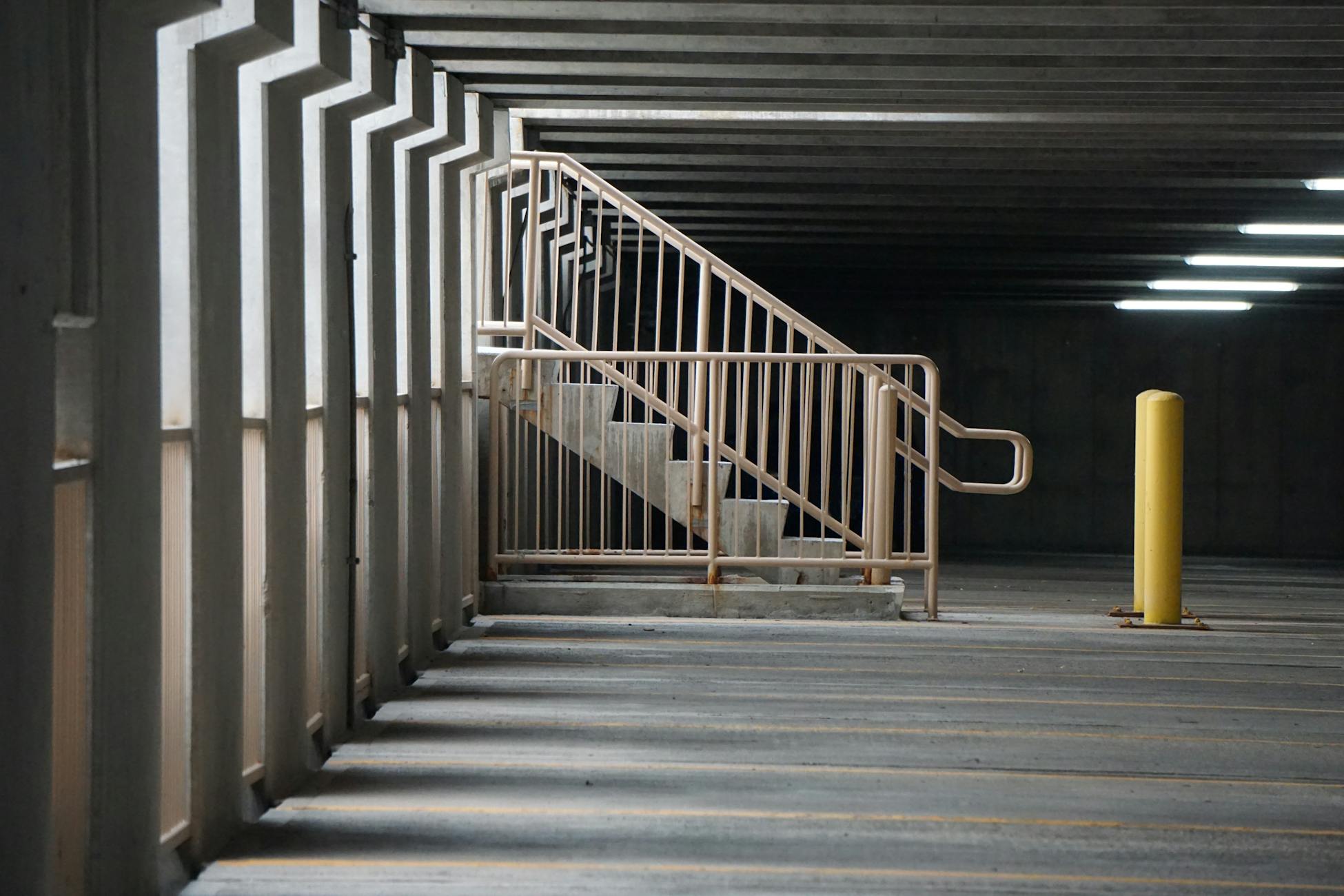
The people who get good at seeing everyone else are almost always the people nobody has bothered to look at closely. That is the arrangement. That is how the trade works. You pay attention because someone in your early life needed you to, and then you kept paying attention because other people kept accepting the currency, and by the time you are forty years old and crying in a parking garage on P Street after a perfectly ordinary meeting, you realize the transaction has been running one direction your entire life.
The conventional wisdom about perceptive people is that we are gifted, or empathic, or emotionally intelligent, or whatever flattering vocabulary the culture has attached to the skill this quarter. That framing collapses the second you look at what it actually costs to maintain. Nobody describes a bookkeeper as emotionally intelligent for tracking expenses. We describe perceptive people this way because the skill is invisible, and because calling it a gift is cheaper than admitting it was a job we were assigned before we could consent.
The meeting itself was not remarkable. A colleague was going through something, and I could see it in the way she held her coffee cup and the way her sentences ended three words early, and I spent most of the hour doing what I always do in rooms like that — tracking the emotional weather, adjusting my contributions to keep her from being asked the question she couldn’t answer, noticing which of our seven colleagues registered that something was off (two of them, briefly) and which were completely oblivious (the other four). I walked out. I took the elevator down. I got in my car. And somewhere between the second and third level of the garage I started crying, and I could not stop for about eleven minutes.
The Arithmetic Nobody Admits To Doing
What broke open was not sadness, exactly. It was a calculation finally completing itself. I had been tracking her all meeting. Nobody had been tracking me. This was not an indictment of my colleagues, who are decent people with their own preoccupations. It was an observation about a pattern I could suddenly see across decades — the quiet bookkeeping I have been doing on other people’s interior lives, and the corresponding absence of anyone doing that work for mine.
Researchers who study emotional labor at work have started to name this cost in institutional terms — the exhaustion that accrues in people whose job, formal or informal, is to read rooms and manage affect. A 2025 study out of the University of Mississippi and Lebanese American University found that employees who regularly perform emotional labor experience a specific kind of depletion that standard workload metrics fail to capture. Which is a polite way of saying that the people who hold the emotional infrastructure together are burning out in ways their performance reviews will never measure.
The emotional labor tax, as Psychology Today has recently framed it, is not metaphorical. It is an actual transfer of energy from one person’s nervous system to the relational field around them, and it comes out of the same finite account that would otherwise fund your own life.
I have written before about children who were called too sensitive and who grew up into adults who cannot stop monitoring the room. What I did not fully understand, until that afternoon in the garage, was the second half of that equation. The monitoring is not just a habit. It is a habit that was supposed to be reciprocated and never was.
The Silent Contract
Here is what happens in a certain kind of childhood. Somewhere between ages five and ten, a child is assigned a role. The family needs someone to read the weather — to notice when the mood in the kitchen is shifting, when the adult in the next room is about to snap, when the sibling is about to cry, when the guest is uncomfortable. The child who gets this job becomes very good at it very quickly, because the alternative is watching the system fall apart. The skill gets reinforced every time it works.
What the child does not understand, and what no one explains, is that this arrangement is not mutual. The adults are not watching the child back with the same intensity. They cannot, in most cases — they are too busy being the people whose weather is being tracked. So the child grows up inside a peculiar asymmetry: the person who sees everyone is the person nobody is seeing.
In healthy families, this gets corrected. Someone eventually turns to the tracker and says, How are you, actually? In less healthy families, it never does. The tracker just keeps tracking, and the skill migrates into adulthood, and at age twenty-five the tracker becomes the friend who remembers everyone’s birthdays, and at thirty the colleague who knows which of her teammates is about to have a breakdown, and at thirty-five the spouse who has already identified the marital problem three months before it surfaces, and at forty the person crying in a parking garage because she has just realized she has been performing unpaid emotional labor for thirty-two years and nobody was going to stop her because nobody noticed it was happening.
What Seeing Actually Costs
The cost is not abstract. Forbes recently published a piece on emotional exhaustion in senior leaders that quietly documents what perceptive people have known for years — that the expectation to read, absorb, and manage the emotional field around you produces a specific kind of depletion that does not show up on any clinical intake form. The symptoms are things like flat attention, low-grade irritability, a bone-level tiredness that sleep does not fix, and the creeping sense that your inner life has become a background process running in a window nobody else can see.
What makes it worse is that the skill looks, from the outside, like competence. People who see everything are the people you want in a crisis, in a meeting, in a marriage. They are reliable. They are composed. They are, as the performance reviews say, exceptional at stakeholder management. Nobody in the room is thinking about the fact that the exceptional stakeholder manager has not been asked a real question about her own interior life in six months.
And because the skill looks like competence, the people who possess it are often the last to recognize what it is costing them. I spent most of my thirties believing I was just better at reading people than average. The possibility that this was not a neutral talent — that it was, in fact, a tax being withdrawn from the same account that should have been funding my own attention to my own life — did not occur to me until the meeting.

The Forty-Year Audit
Midlife gets pathologized in our culture as a crisis, which is a framing that serves nobody. What actually happens, for a lot of people around forty, is that the audit finally runs. The accumulated evidence of three or four decades becomes impossible to ignore, and the pattern you have been living inside your whole life becomes visible because the sheer weight of data finally tips it into view.
NPR recently reported on a booming industry of midlife transition programs — retreats, schools, quizzes designed to help people ask what’s next. The framing is almost always forward-looking. What nobody talks about is that most of the useful work at forty is backward-looking, and most of it involves recognizing arrangements you made when you were too young to consent to them and have been honoring ever since out of sheer habit.
I wrote recently about the particular loneliness of looking back at who you were a decade ago and not knowing which version of yourself you owe an apology. What I was circling around then, and what I can say more directly now, is that some of what looks like personal growth is actually the slow accumulation of evidence that the contract you have been honoring was never signed by anyone but you.
What Being Seen Would Even Feel Like
The hardest part of the garage cry was not the recognition of the imbalance. It was realizing I did not know what being seen would feel like, because I have no functional memory of it. Not from childhood. Not from any sustained adult relationship. There are moments, scattered — a friend who once asked the right question at the right time, a therapist who caught something I was trying to hide — but no sustained experience of being the object of the kind of attention I have spent my life giving other people.
This is where the essay would, in a different kind of publication, pivot to advice. How to ask for what you need. How to cultivate reciprocal relationships. How to set boundaries with emotional extractors. I am not going to do that, partly because I do not know how, and partly because I am suspicious of frameworks that treat a thirty-year structural pattern as a communication problem.
What I will say is that the recognition itself does something. It does not fix the imbalance. It does not produce the reciprocal attention I have never had. But it does change what happens the next time I walk into a meeting and start tracking someone else’s weather. There is now a second process running alongside the tracking — a quiet internal witness asking, and who, exactly, is tracking you?
The answer, most of the time, is still nobody. But at least I am asking the question. That is not healing. It is not growth. It is just the small, specific dignity of no longer participating unconsciously in an arrangement that was never fair to begin with. At forty, I am willing to accept that as a starting place. It is more than I had at thirty-nine.
