

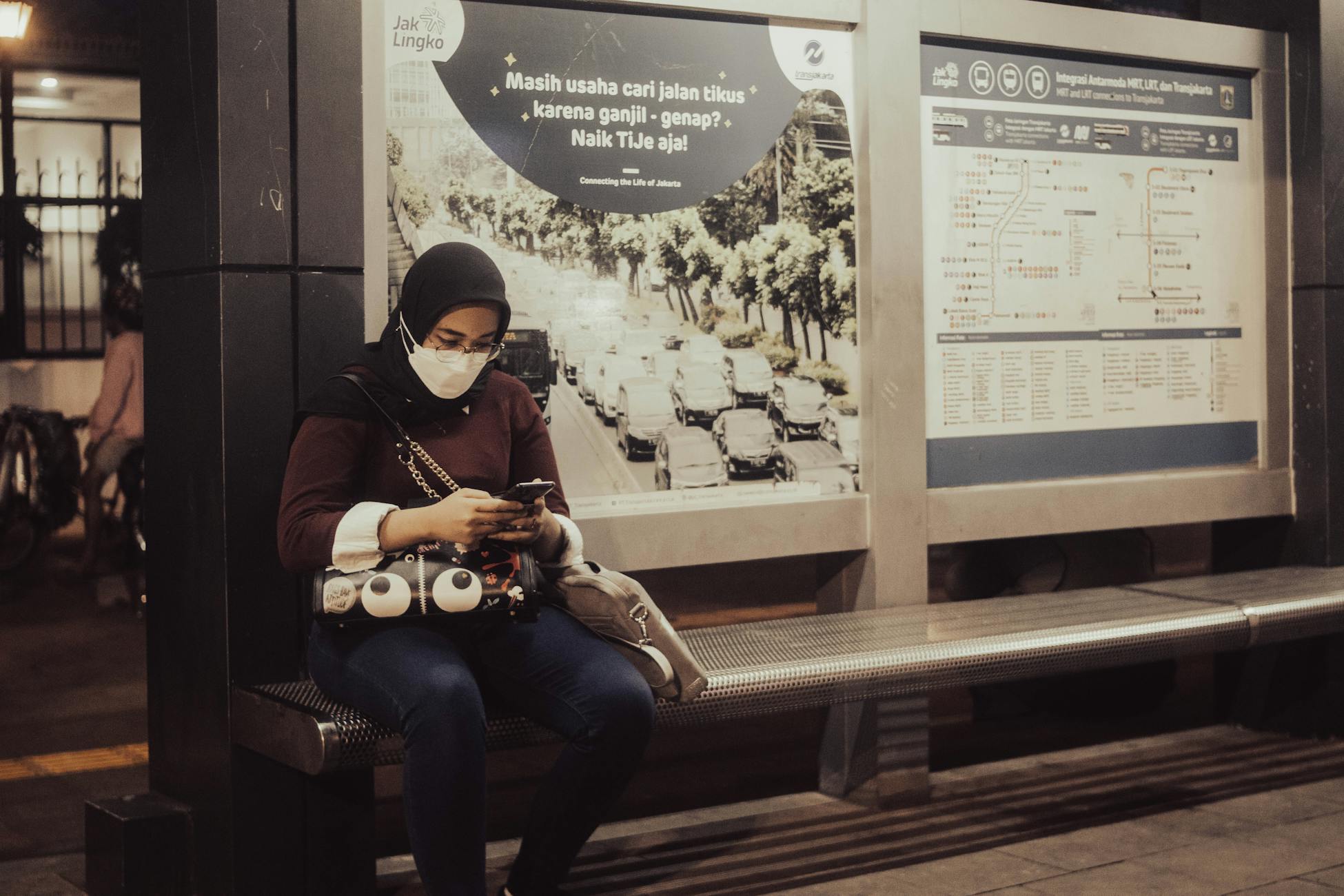
The person in your life who handles everyone else’s catastrophes is usually the one most likely to survive their own alone. Not because they’re stoic or private or any of the other flattering words we use. Because the architecture of the role, built across decades of 2 a.m. phone calls and hospital parking lots and friends sobbing into your kitchen towel, quietly eliminates the possibility of reciprocity long before anyone notices it’s gone.
I learned this last spring, sitting on my bedroom floor at around four in the morning, holding a phone I could not figure out how to use. My own crisis had arrived, the kind that requires another human voice to metabolize, and I had scrolled through my contacts three times before I understood what was happening. There was no one. Not no one who loved me. No one I had ever practiced needing.
The conventional wisdom about friendship says that if you show up for people, they show up for you. It’s the folk physics of relationships, and most of us operate on it without examining whether it’s true. What I’ve come to understand, after thirty years of being the designated crisis friend and one full season of being the person in crisis, is that the exchange is nothing like that clean. The role of helper is not neutral. It shapes what people can see you as, and more quietly, what you can let yourself become in front of them.
The first friend who called me, when we were both nineteen, called at three in the morning from a pay phone outside a hospital. I remember feeling something click into place that I mistook, for most of my adult life, for my actual personality. I was useful. I was steady. I said the right things. She called me again six months later, and then her roommate called me, and then someone I barely knew called me because the roommate had given her my number. By twenty-five I had a reputation. By thirty-five it was a vocation. By forty-five it was so fused with my sense of self that I could not separate the person I was from the person people needed me to be.
Here is what nobody tells you about becoming that person. The role is self-reinforcing in ways that feel, from the inside, like virtue. Every crisis you handle well makes you more qualified for the next one. Every friend you carry through a divorce becomes part of a network that funnels more people to you. The referrals are invisible but constant. Your competence at emergencies makes you, in the folk reasoning of your social world, someone who does not have them.
There’s a body of clinical literature on what happens to professional caregivers under sustained asymmetric emotional load. Researchers at Case Western Reserve have written about compassion fatigue and the specific depletion that comes from long-term caregiving, the way sustained witness to other people’s pain erodes the caregiver’s own reserves without the caregiver noticing until the reserves are gone. The literature is mostly about nurses and hospice workers and therapists. It applies, almost without modification, to the friend who has been taking the 2 a.m. calls since 1995.
The role does something stranger than deplete you, though. It trains the people around you to see you as someone who is, constitutively, not in crisis. You become a fixed point in their emotional geography. The lighthouse. The one who is always there, which means, operationally, the one who never needs anyone to be there. This is not because your friends are cruel or self-absorbed. It’s because you’ve spent three decades answering every version of “how are you?” with a deflection that redirects the question back to them, and they believed you. Why wouldn’t they. You were very convincing.
I used to think I deflected because I was humble, or because I didn’t want to burden people. After last spring I understand I deflected because I had never actually learned the other thing. The muscle for saying “I am not okay, can you come over” is built the same way any muscle is built, through repetition starting young, and I had been using the opposite muscle since before I could drive. I was fluent in the language of receiving other people’s pain and completely illiterate in the language of offering my own.
Research on vulnerability and emotional connection suggests that asking for help requires a kind of practiced reciprocity most of us never develop. The help-asker has to believe, at a cellular level, that their need will not cost them the relationship. Every crisis friend I know lacks that belief. We are not worried that our friends will refuse to show up. We are worried, in a way we couldn’t articulate if pressed, that being the one who needs something will reveal us as not who they thought we were. That the role is the whole bridge. That under it there is nothing.
The economy of asymmetric care
Friendship, in the version most of us actually practice, runs on an informal ledger that no one admits exists. New research from social psychologists, summarized in The Conversation, suggests that close friendships operate less on tit-for-tat reciprocity and more on something called communal orientation, where help flows according to need rather than scorekeeping. This is true, and it’s a beautiful way to frame healthy friendship. What the research doesn’t yet address is what happens when the flow has been unidirectional for so long that one side no longer registers as having needs at all.
In communal friendship, the assumption is that need will eventually surface on both sides. The crisis friend is the person for whom that assumption has been quietly suspended, usually by both parties, usually unconsciously, over years. I used to think this was something my friends were doing to me. Last spring, on the floor, I understood it was something I had been doing to them. I had refused help so gracefully, so many times, for so long, that I had trained an entire social network in the art of not offering it.

The loneliness that results from this is specific. It’s not the loneliness of having no one. It’s the loneliness of having many people, any of whom would technically pick up the phone, and discovering that you cannot dial. The number of contacts in your phone means nothing if the script for using them hasn’t been written. A large European study on loneliness and cognition, published in 2026, found that subjective loneliness predicted worse cognitive function even among older adults with extensive social networks. The network is not the cure. The usable network is the cure. And for crisis friends, much of the network is technically there and functionally unreachable.
Writers on this site have covered the particular loneliness of the social performer, the person whose visible competence at connection makes them invisible as someone who needs it. Crisis friendship is a variant of the same pattern. The performance is not cheerfulness but reliability. The invisibility is the same.
What the physical body does
The stakes of this are not only emotional. Research has increasingly shown that loneliness, particularly the kind that persists across years, is a physical health variable comparable to smoking or obesity. A recent analysis found that social isolation significantly elevates mortality risk in cancer patients, and studies have documented similar effects across cardiovascular disease and immune function. The body keeps score whether or not the social world does. The crisis friend who appears to be fine is, at the level of cortisol and vagal tone and sleep architecture, often not fine in ways that take decades to surface.
Psychology Today and similar outlets have noted that the loneliness of self-imposed isolation is particularly pernicious because it resists the usual interventions. You cannot tell someone to call their friends when the problem is that the calling muscle has atrophied. The solution is not more contacts. It’s the slow, strange work of learning to let yourself be a person with needs in front of people who have only ever seen you as the one who meets theirs.
The first phone call is the hardest one you’ll ever make
I did eventually call someone. Not at four in the morning. It took me eleven days. The person I called was not the person I would have predicted. She was a woman I had known for about six years, not particularly close, someone whose crisis I had never handled. That turned out to be the entire qualification. She didn’t have a fixed idea of who I was in an emergency. She could meet me where I actually was because we hadn’t built the other architecture.
She came over. She made tea. She asked what had happened and didn’t look away when I told her. It was the most ordinary interaction a person can have with another person, and I had spent thirty years making it impossible.
I’ve written before about the unnamed grief of friendships that change shape, but this is a different kind of reckoning. It’s not about losing friends. It’s about looking at the ones you have and understanding that the terms of your relationship were set by you, decades ago, without your quite meaning to. The terms can be renegotiated. But only if you start the conversation, and the conversation is brutal, because it begins with admitting that the person they thought you were, the competent and unshakeable one, was always partly a performance you had gotten too good at to recognize.
The research on resilience as rebuilding rather than bouncing back is useful here. What I’ve been doing since last spring is not recovering. It’s constructing something that wasn’t there before. A small, deliberate network of people who have seen me in the state I used to only witness in others. It is awkward. It is slow. The muscle is weak and gets tired quickly.
What I understand now, which I didn’t understand sitting on my floor with the phone, is that the role of crisis friend was not an accident of temperament. It was a contract I had signed with myself, at nineteen, without reading. The contract said: you get to be useful, and in exchange you agree to never be the one who needs. For thirty years the terms felt fair. They were not fair. They were just familiar. And familiarity, as any crisis friend will tell you, is the thing that feels the most like safety right up until the moment you need something safety was never going to give you.
