

The Defense Advanced Research Projects Agency has selected Benchmark Space Systems, Quantum Space, and Revolution Space to develop competing concepts for a small lunar orbiter capable of hunting water ice from altitudes most spacecraft cannot survive. The agency confirmed the three Phase 1 awards on April 30 for its Lunar Assay via Small Satellite Orbiter program, known as LASSO.
The mission profile is unusually demanding. LASSO would operate in very low lunar orbit while mapping locations where water ice exceeds 5% concentration, a threshold that matters because anything less is unlikely to be economically extractable for either NASA’s Artemis architecture or commercial lunar operators.

What DARPA is actually buying
DARPA structured the program in stages. Phase 1A is a six-month concept design study. Phase 1B runs 18 months and carries the design through a critical design review. A separate Phase 2 would fund actual spacecraft construction. The agency has not committed publicly to which contractors, if any, would advance to flight hardware.
The unusual feature here is the orbital regime. Very low lunar orbit is not a stable place to be. The Moon’s lumpy gravity field, driven by mass concentrations beneath the maria, perturbs low-altitude spacecraft on timescales of weeks. Without active station-keeping, orbiters tend to either rise, drift, or impact. Sustained operations close to the surface require both propellant efficiency and the autonomy to react faster than ground controllers can.
Three different bets on how to stay low
Benchmark Space Systems, primarily known as a propulsion vendor, disclosed its selection on April 20 and is pitching a mission architecture it calls Sapphire. The design pairs chemical and electric propulsion with terrain-relative navigation and hazard avoidance. According to a company statement, Ryan McDevitt, the company’s chief technology officer, described the award as an important milestone toward enabling sustained operations in very low lunar orbit, which presents significant technical challenges.
For Benchmark, LASSO is also a strategic move. The company has spent years selling thrusters to other people’s spacecraft. Bidding LASSO as a prime contractor with an integrated platform is an attempt to climb the value chain.
Quantum Space announced its own LASSO win on April 22. The company has been developing a maneuverable cislunar platform called Ranger, and last year acquired the propulsion assets of Phase Four, a startup that had been working on hybrid chemical-electric thrusters. That acquisition now looks less like a portfolio bet and more like preparation for exactly this kind of mission. Kerry Wisnosky, the company’s president and chief executive, said the award reflects the growing importance of the cislunar domain to U.S. national security.
Revolution Space, the third awardee, has not publicly described its concept.
Why 5% matters
The 5% concentration threshold is not arbitrary. Lunar Reconnaissance Orbiter data has shown that hydrogen, a proxy for water, is unevenly distributed across the polar regions, with elevated concentrations on pole-facing slopes where permanent shadow protects volatiles from sublimation. But “elevated” in the LRO data set still spans a wide range. A 5% concentration is roughly the line below which the energy and infrastructure cost of extraction starts to exceed any plausible payoff.
For a robotic prospector, that threshold also defines the sensitivity required of the instruments. A spacecraft that can only detect ice at 20% concentration would miss most of what is actually there. One that can resolve 5% deposits at the spatial resolution achievable from very low orbit produces something closer to a usable resource map.
This is the same scientific question other space agencies are now racing to answer. China’s Chang’e-7 mission carries a similar prospecting brief, and the data it returns could reshape the politics of lunar resource claims.
The national security frame
DARPA’s interest in LASSO is not principally scientific. The agency has been steadily building out a portfolio of cislunar capabilities, including the DRACO nuclear thermal propulsion program and a series of studies under its 10-Year Lunar Architecture initiative. The through-line is maneuverability. The cislunar volume is large, slow to traverse, and increasingly contested. Spacecraft that can change orbits efficiently, operate close to surfaces, and survive without constant ground intervention are the prerequisite for almost everything else the U.S. military might want to do beyond geosynchronous orbit.
Wisnosky’s framing of cislunar as a national security domain is not marketing. It tracks current Pentagon thinking about space as a logistics and operational space rather than just a sensing layer.
What the contractors actually have to solve
The hardest engineering problem is not propulsion alone. It is the loop between propulsion, autonomous navigation, and onboard decision-making. At very low altitudes, communications round-trip times to Earth are short by interplanetary standards but still long compared to the timescale on which a spacecraft must respond to a gravitational perturbation or a terrain feature. The vehicle has to fly itself.
That requirement explains why Benchmark’s Sapphire concept bundles terrain-relative navigation and hazard avoidance with a hybrid propulsion stack. Chemical thrusters provide the impulsive maneuvers needed to recover from perturbations quickly. Electric propulsion handles efficient station-keeping over long durations. Without both, sustained operations are difficult to close on a small-satellite mass budget.
Past lunar smallsats have demonstrated pieces of this. China’s Longjiang-2 microsatellite, which entered lunar orbit in 2018, showed that small platforms can operate in lunar orbit and return useful data. But Longjiang-2 was not flying at the altitudes LASSO contemplates, and it was not maneuvering aggressively. LASSO is asking for something genuinely new.
What to watch next
The Phase 1A studies will run through roughly the end of this year. By the time Phase 1B critical design reviews are expected in 2027 and 2028, DARPA will have a clearer view of which architectures actually close. Not all three contractors will likely advance. The agency tends to use Phase 1 competitions to surface the strongest design and quietly retire the others.
The deeper question is whether LASSO will produce a single demonstrator or seed a class of low-altitude lunar prospectors. The science case for resource mapping is broad. The national security case for sustained low-altitude maneuverability is broader still. If the program works, the spacecraft that flies will be less interesting than what it makes routine afterward.
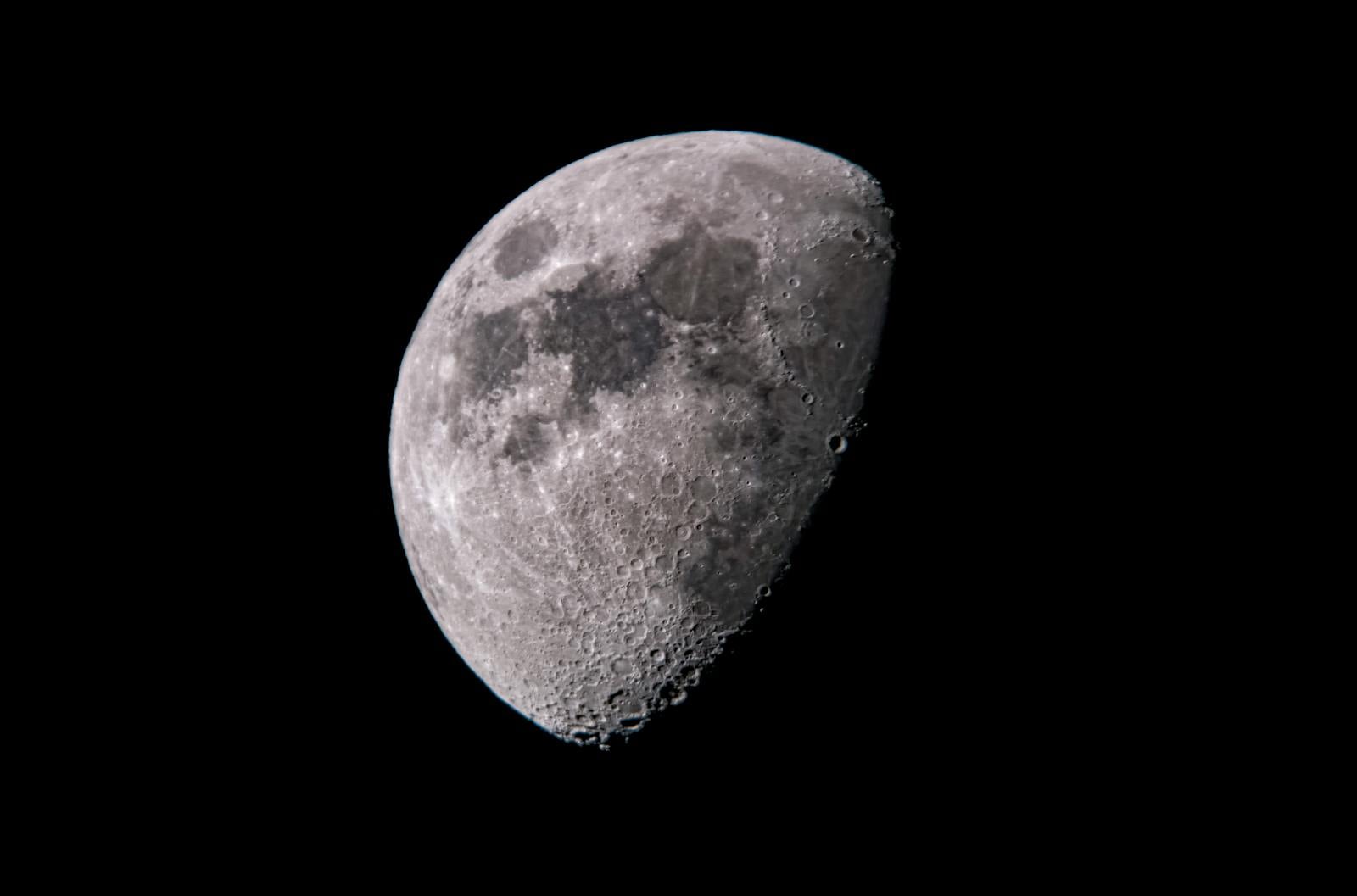
Photo by Çağlar Çarkacı on Pexels
